
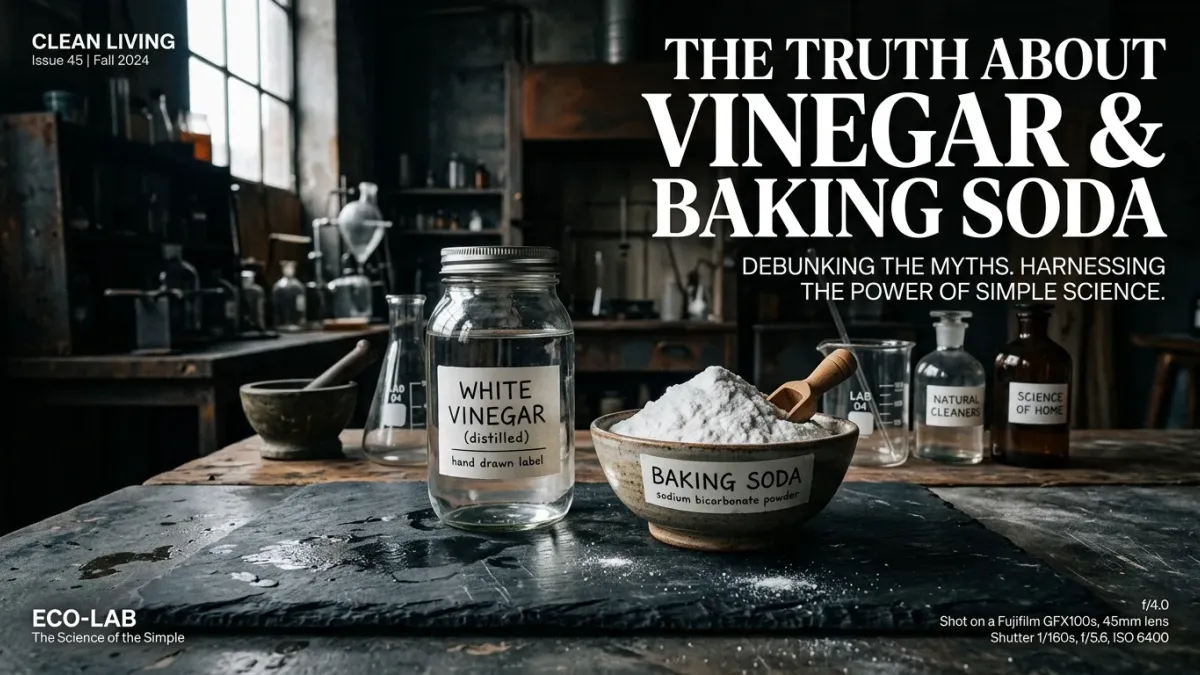
The Allure of Natural Cleaners: Separating Fact from Fiction
In the world of house cleaning, few ingredients command as much attention and loyalty as white vinegar and baking soda. Touted as the ultimate eco-friendly cleaners, these pantry staples promise a chemical-free path to a sparkling home. It’s easy to see why they’ve become so popular; they’re affordable, readily available, and seemingly harmless. But what truly happens when these two titans meet the grime in your home? As a seasoned home maintenance specialist, I’ve seen countless homeowners, eager for natural solutions, sometimes fall prey to misconceptions about their capabilities.
The goal isn't to dismiss these wonderful natural products, but rather to empower you with accurate knowledge. Understanding their scientific principles and limitations is crucial for effective and safe cleaning tips. You deserve to know exactly what you're using and what results to expect. Let's delve into the chemistry and practical applications to help you master natural cleaning for a truly clean and well-maintained home.

The Science of Vinegar: What It Really Does (and Doesn't Do)
Vinegar, specifically white distilled vinegar, is primarily an aqueous solution of acetic acid, typically 5% by volume. This acetic acid is its secret weapon. It’s a mild acid that reacts with alkaline substances, making it particularly effective against certain types of grime. For general home maintenance, it's a versatile tool when used correctly.
However, many assume vinegar is a powerful disinfectant capable of killing all germs. While it does possess some antimicrobial properties, especially against certain bacteria and molds, it's important to understand its limitations. It does not meet the EPA's criteria for a disinfectant or sanitizer, meaning it won't eradicate 99.9% of common household germs like many commercial products. Relying solely on vinegar for areas requiring true disinfection, like after handling raw meat, might leave you vulnerable.
Vinegar's Strengths: Descaling and Deodorizing
Where vinegar truly shines is in its ability to dissolve mineral deposits. Think of that stubborn limescale build-up around your faucets, showerheads, or inside your coffee maker. The acetic acid in vinegar works wonders by breaking down these alkaline mineral deposits. For example, soaking a showerhead in a baggie of white vinegar overnight can effectively clear blockages and restore water pressure. Similarly, running a cycle of diluted vinegar through your coffee machine is an excellent way to descale it, improving both performance and taste.
Beyond descaling, vinegar is an exceptional deodorizer. It doesn't just mask odors; it neutralizes them. The acetic acid binds with odor-causing molecules, making it perfect for removing stale smells from refrigerators, cutting boards, or even laundry. Adding half a cup of white vinegar to your washing machine's rinse cycle can eliminate mildew smells and soften fabrics naturally. Honestly, for pure deodorizing power, vinegar is hard to beat.
Vinegar's Weaknesses: The Limits of Disinfection and Surface Damage
Despite its reputation, vinegar is not a universal disinfectant. While it can inhibit the growth of some bacteria like E. coli and salmonella, its efficacy isn't broad enough for critical sanitation needs. If you're dealing with viral contaminants or serious pathogens, deep cleaning with an EPA-registered disinfectant is crucial. Furthermore, its acidic nature means it's not safe for all surfaces. Avoid using vinegar on natural stone (like marble, granite, or travertine) as the acid can etch the surface, leaving dull spots. It can also degrade grout over time and damage certain wood finishes. Always test in an inconspicuous area first.
Baking Soda Unveiled: Abrasive Power and Odor Neutralization
Baking soda, or sodium bicarbonate, is another powerhouse in the natural cleaning arsenal. Unlike vinegar, baking soda is an alkali. It's a mild abrasive, a natural deodorizer, and can react with acids. Its crystalline structure makes it excellent for scrubbing, while its pH-buffering capabilities help absorb odors.
Many people use baking soda interchangeably with other harsh abrasives, expecting the same results. To be fair, while it is abrasive, it’s a much gentler option than powdered cleansers containing harsh chemicals or silica. This gentleness is both its strength and, in some cases, its limitation. It won't scour away baked-on grease with the same speed as a heavy-duty degreaser, but it also won't scratch delicate surfaces.
Baking Soda's Strengths: Gentle Scrubbing and Odor Absorption
Baking soda excels as a gentle abrasive for scrubbing away dirt and light grease without scratching surfaces. A paste made from baking soda and a little water can effectively clean sinks, bathtubs, and even stovetops. Imagine this situation: you have some dried-on food in your stainless steel sink. Instead of reaching for a harsh scourer, sprinkle some baking soda, add a few drops of water to make a paste, and gently scrub with a damp sponge. The mild abrasive action will lift the grime without damaging the finish. It's also fantastic for polishing dull silverware or removing scuff marks from floors.
Its alkaline nature also makes it an incredible odor absorber. Baking soda is amphoteric, meaning it can react with both acidic and basic odor molecules, neutralizing them rather than just masking them. This is why an open box in your refrigerator works wonders, or why sprinkling it on carpets before vacuuming helps eliminate pet odors. For pet urine accidents, I believe baking soda is one of the most effective immediate treatments to absorb odors and moisture before more intense deep cleaning is required.
Baking Soda's Limitations: Not a Universal Cleaner
While baking soda is excellent for scrubbing and deodorizing, it's not a degreaser or a disinfectant in the traditional sense. It won't break down heavy grease like an alkaline degreaser would, nor will it kill a broad spectrum of germs. For heavily soiled areas or those requiring sanitization, a dedicated cleaning product is necessary. Furthermore, while it's generally safe, excessive use on some surfaces, particularly those with porous finishes, can leave a white residue that requires thorough rinsing. It's also not ideal for cleaning glass, as it can leave streaks if not rinsed meticulously.
The Infamous Duo: When Vinegar and Baking Soda Mix
Here's where a significant myth needs to be debunked. The internet is awash with "miracle cleaner" recipes combining vinegar and baking soda, promising a powerful, fizzing reaction that will clean anything. But what truly happens when these two titans meet? Chemically, when an acid (vinegar) meets an alkali (baking soda), they neutralize each other. The fizz and foam you see are carbon dioxide gas escaping – a fun reaction, but not necessarily a cleaning powerhouse.
When combined, they essentially cancel each other out, leaving you with mostly salt water. The vigorous bubbling might dislodge some loose debris, but it's not the result of super-powered cleaning action. In my opinion, this combination is one of the most misunderstood cleaning "hacks." You're losing the individual strengths of both products when you mix them, which is counterproductive for effective house cleaning.
The Chemical Reaction: Fizz and Foam, But Little Cleaning Power
The reaction between acetic acid and sodium bicarbonate produces sodium acetate, water, and carbon dioxide gas. The visible fizz is the CO2 being released. While this can be useful for unclogging a very minor drain blockage by physically pushing things along (like a power equipment alternative for a very small job), it's not dissolving grease or hair like a commercial drain cleaner. The moment the fizzing stops, the cleaning action essentially ends. Honestly, if you're looking for serious cleaning power, using them separately will yield far superior results.
Best Practices: Using Them Separately for Maximum Impact
The key to harnessing the power of vinegar and baking soda for eco-friendly cleaners is to use them independently or sequentially. For instance, to tackle a stubborn drain, first pour baking soda down the drain, let it sit for 15-30 minutes, then follow with hot vinegar. The vinegar will react with the baking soda, causing a fizz that can help dislodge grime. However, for serious clogs, you'll need a plunger or a plumber – these natural methods are more for maintenance than for emergency home maintenance. Similarly, you can clean a sink with a baking soda paste to scrub, rinse, and then follow with a vinegar spray to disinfect and shine. This sequential approach capitalizes on each ingredient's unique strengths.
Safe & Effective Eco-Friendly Cleaning: Beyond the Basics
Understanding the truth about vinegar and baking soda empowers you to clean more intelligently and safely. While they are fantastic for many tasks, they are not a one-size-fits-all solution. For truly comprehensive deep cleaning and sanitization, especially in bathrooms and kitchens, you might need to supplement with other effective products. This could include hydrogen peroxide for disinfection, or specialized commercial eco-friendly cleaners that are formulated for specific challenges.
For example, if you're dealing with mold and mildew, a combination of scrubbing with baking soda, followed by a spray of hydrogen peroxide (letting it sit for 10-15 minutes before wiping), can be very effective. Always remember to check labels and understand the specific task at hand. If a cleaning challenge exceeds your comfort or expertise, consider reaching out to professional cleaning services. They have the specialized tools and knowledge to handle any situation, ensuring your home is not just clean, but truly pristine.
Ultimately, the goal of cleaning tips from Clean & Cleaner is to provide actionable guidance. By understanding the distinct roles of vinegar and baking soda, you can confidently integrate them into your house cleaning routine, making your home a cleaner, safer, and more environmentally friendly space. Don't fall for the hype; embrace the science, and you'll achieve truly remarkable results.