Quick answer: Canister steam cleaners deliver the highest pressure (3.5 to 4.5 bar) and continuous steam, making them the best choice for deep cleaning dirty tile grout and extensive areas. Dedicated steam mops excel at routine maintenance on sealed hard floors due to their fast 30-second heat-up times and upright ergonomics. For localized fabric spot treatments, upholstery, and bathroom fixtures, portable handheld steam units provide unmatched maneuverability and convenience.
Understanding Steam Cleaner Types and Thermal Capabilities
Selecting the right equipment begins with evaluating boiler construction, water reservoir size, and heating mechanics. Steam cleaners fall into three core categories: handheld steam units, upright steam mops, and heavy-duty canister steam systems. Each design serves specific square-footage demands and surface requirements based on its thermal output and operational pressure.
Handheld steamers feature compact heating element blocks paired with small reservoirs ranging from 200 ml to 350 ml. They reach working temperatures within 1 to 3 minutes, generating localized steam bursts between 2.5 and 3.0 bar of pressure. While their 10 to 15-minute runtimes are insufficient for whole-house floor care, their lightweight frames (typically under 4 lbs) make them ideal for vertical cleaning, such as tiled shower walls, stove burners, and vehicle seats.
Upright steam mops utilize continuous-flow heating systems to produce low-pressure dry steam designed specifically for horizontal floor maintenance. Equipped with 300 ml to 560 ml water tanks, models like the Bissell PowerFresh 1940 heat up in 30 seconds using 1,500-watt internal boilers. These devices distribute vapor evenly across microfiber pad attachments (300 to 400 GSM density) to clean sealed tile, vinyl, and hardwood floors without soaking the subfloor.
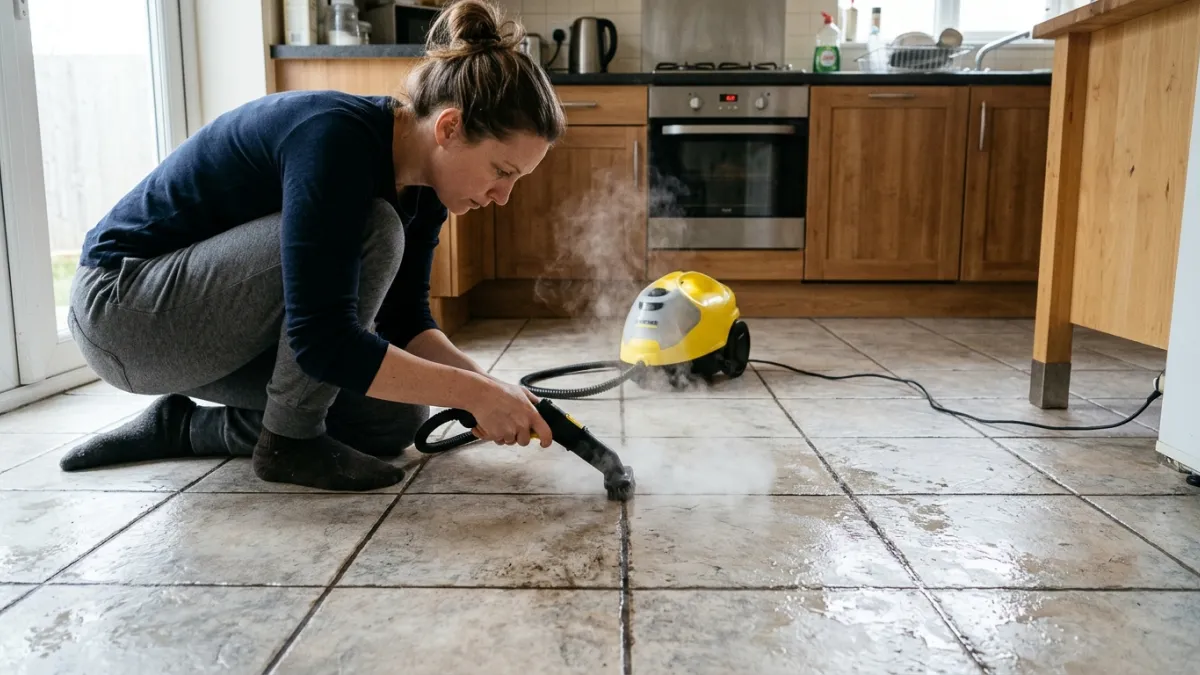
Canister steam cleaners represent the heavy-duty tier of home maintenance tools. Featuring enclosed aluminum or stainless steel pressure boilers of 48 oz (1.4 L) or larger, continuous-duty machines like the McCulloch MC1275 produce steam pressures up to 43 PSI (around 3 bar) and internal tip temperatures reaching over 200°F to 212°F (93°C to 100°C). With continuous operating times between 45 and 90 minutes, canister units offer the heat capacity and mechanical force needed to tackle deep grease, exterior window tracks, and neglected grout installations.
Performance Comparison Across Surfaces
To assist you in selecting the right machine for your home, the following comparison matrix details how different steam cleaner configurations handle specific surface challenges, moisture constraints, and operational workloads.
| Feature / Surface | Handheld Steamer | Upright Steam Mop | Canister Steam Cleaner |
|---|---|---|---|
| Best Surface Use | Faucets, sink drains, oven doors, upholstery spots | Sealed hardwood, porcelain tile, vinyl, laminate floors | Tile grout lines, multi-room flooring, car detailing, outdoor gear |
| Typical Boiler Rating | 900W - 1000W | 1200W - 1500W | 1500W - 1800W |
| Pressure Output | 2.5 - 3.0 Bar (36-43 PSI) | Low (Flow-through pad design) | 3.5 - 4.5 Bar (50-65 PSI) |
| Water Tank Capacity | 200 mL - 350 mL | 300 mL - 560 mL | 1.2 L - 2.0 L |
| Average Heat-Up Time | 1 - 3 Minutes | 30 Seconds | 8 - 12 Minutes |
| Continuous Steam Time | 8 - 15 Minutes | 15 - 25 Minutes | 45 - 90 Minutes |
Cleaner's tip: Never apply concentrated high-pressure steam directly to unsealed tile grout or damaged wooden floor seams. Excessive moisture forced into porous grout lines can dissolve beneath the surface sealer and trap water under tiles, eventually loosening the adhesive bed. Keep your steamer moving continuously over grout, and always follow up with a dry microfiber cloth to pick up lifted dirt before it dries back into the pores.
Cleaning Tile Grout: Why Pressure and Temperature Matter
Grout consists of a porous mixture of sand and cement that readily absorbs oils, dirty mop water, and airborne cooking vapors. Standard surface wiping fails to lift embedded dirt because soil settles deep into the grout's micro-cavities. Steam cleaning relies on high thermal transfer and targeted physical pressure to expand grout pores, break down bound greases, and force out dark stains.
When scrubbing grout lines, equipment needs to maintain a continuous nozzle temperature of at least 200°F (93°C) alongside narrow jet-stream concentration. Canister systems and high-output handhelds equipped with detail brass or nylon bristle nozzles excel here. The concentrated stream blast melts oily binders instantly, while the small brush head agitates trapped dirt out of the trench.
To avoid damaging delicate surfaces, select nylon bristle attachments for standard ceramic tiles and color-dyed grouts. Reserve heavy-duty brass wire brushes strictly for unpainted masonry, concrete, or cast iron grates, as metal bristles can permanently scratch glazed ceramic tile surfaces or strip away protective topcoats.
Cleaning Upholstery and Fabrics without Over-Wetting
Refreshing fabrics, sofas, mattresses, and drapery requires precise moisture management. Traditional liquid extraction carpets cleaners saturate upholstery foams, which can lead to extended drying times, mold development, or water-ring stains if managed improperly. Steam cleaning offers a low-moisture alternative, provided you use dry steam attachments correctly.
Dry steam refers to vapor produced at elevated temperatures (typically above 245°F/118°C inside the boiler) containing less than 5% liquid water droplets. When applied through an upholstery tool encased in a dense microfiber bonnet, the steam penetrates fabric fibers, neutralizes trapped odors, kills dust mites, and lifts organic soils without soaking the foam core below.
Always inspect the manufacturer’s fabric cleaning code before steaming any furniture item. Fabrics marked with code "W" (water-based cleaners safe) or "WS" (water or solvent safe) respond well to steam treatment. Avoid steaming items labeled code "S" (solvents only) or "X" (vacuuming only), as high heat and vapor can shrink delicate synthetic fibers, degrade backing glues, or cause color bleeding in natural wools and silks.
Safe Floor Cleaning Techniques for Hardwood, Tile, and Vinyl
Hard floor maintenance demands different steam levels depending on the flooring material's tolerance for heat and moisture. Porcelain and ceramic floor tiles feature non-porous glazed finishes that easily withstand maximum heat and moisture output. Conversely, engineered wood, solid hardwood, luxury vinyl plank (LVP), and laminate require precise controls to prevent plank warping or adhesive failure.
When maintaining sealed hardwood or laminate flooring, use an upright steam mop equipped with multi-stage digital steam selection (such as Low/Medium/High settings). Set the appliance to its lowest steam emission level to ensure vapor dries within 15 to 30 seconds of passing over the surface. Never allow a hot steam mop head to rest motionless on wood floors while powered on, as lingering thermal energy can dull polyurethane clear coats or leave cloudy white rings.
Avoid using steam cleaners on unsealed hardwood, oiled timber floors, or floating click-lock laminates with damaged edge seams. Pressurized moisture can migrate past open joints, causing wood fibers to swell, cup, or buckle over time. For delicate floor surfaces, ensure the steam pad remains damp—not soaking wet—and replace dirty microfiber pads frequently during house cleaning sessions to prevent dull streaks.
To preserve your equipment and ensure optimal performance, use distilled or demineralized water in the reservoir rather than tap water. Tap water contains dissolved calcium and magnesium minerals that form hard scale deposits inside thermal boilers over time. Flushed boiler chambers should be descaled periodically using a diluted white vinegar solution (1:1 ratio with water) every 15 to 20 uses to keep steam lines clear. Never add chemical detergents, perfumed cleaners, or floor waxes directly into the water tank, as non-water additives can burn onto heating elements, clog internal valves, and invalidate manufacturer warranties.
Key Features to Evaluate Before Buying
Before purchasing a steam cleaner, evaluate key technical specifications against your main home cleaning tasks. Focus on these core operational parameters:
- Heating Wattage & Warm-Up Time: Systems rated between 1,400W and 1,800W heat water faster and maintain stable boiler temperatures during continuous use. Upright mops usually heat within 30 seconds, while sealed canister boilers take 8 to 12 minutes.
- Steam Pressure (Bar / PSI): For heavy grout lines, outdoor surfaces, and deep vehicle cleaning, select machines providing at least 3.5 bar (50 PSI) of continuous steam pressure. Routine floor mops function effectively with continuous flow-through boilers.
- Boiler vs. Continuous-Flow Tanks: Sealed boiler tanks require cooling periods before refilling, whereas continuous-flow dual-tank designs allow uninterrupted water top-offs during extended deep cleaning sessions.
- Attachment Versatility: Ensure the unit includes high-quality accessories, such as brass and nylon utility brushes, grout jet nozzles, window squeegees, carpet gliders, and washable high-density microfiber pads.
- Cord Length & Hose Reach: Look for a minimum power cord length of 16 to 20 feet combined with an 8 to 10-foot steam hose to clean high tile walls and overhead spaces without constantly changing electrical outlets.
Matching the Right Steamer to Your Needs
If your cleaning routine consists primarily of weekly floor care across tiled kitchens and sealed hardwood spaces, an upright steam mop like the Bissell PowerFresh provides the ideal balance of fast setup, lightweight handling, and efficient floor sanitization. Homes with extensive tile installations, dirty grout lines, pet messes, and vehicle detailing needs will benefit most from a multi-purpose canister steam cleaner like the McCulloch MC1275. Choose compact handheld steamers for localized surface touch-ups, sink fixtures, and small apartment layouts where storage space is at a premium.
Frequently Asked Questions
Can steam cleaners sanitize surfaces without using chemical disinfectants?
Yes. Steam cleaners sanitize hard, non-porous surfaces by raising surface temperatures above 175°F to 200°F (80°C to 93°C) at the nozzle tip. Maintaining direct steam contact against an area for 5 to 10 continuous seconds effectively kills up to 99.9% of common household bacteria, mold spores, and dust mites using only plain water.
Can I use regular tap water in my steam cleaner?
While standard tap water is safe to use in a pinch, manufacturers strongly recommend using distilled or demineralized water. Tap water contains dissolved minerals that create scale deposits inside internal heating elements, reducing steam output pressure and shortening the appliance's lifespan over time.
Is steam cleaning safe for all types of carpet and fabric upholstery?
Steam cleaning works well on synthetic carpeting and water-safe upholstery fabrics labeled with cleaning code "W" or "WS." However, high steam heat can damage delicate natural fibers like silk, unsealed wool, or velvet, as well as solvent-only upholstery (code "S"). Always check the fabric manufacturer's care tag and perform a small patch test in an inconspicuous area before cleaning whole pieces.
How often should I clean tile grout lines with a steam cleaner?
For high-traffic spaces like kitchen floors and main bathroom showers, steam-cleaning tile grout lines every 3 to 6 months effectively prevents mold buildup and discoloration. After deep steam cleaning, apply a quality penetrating grout sealer to protect the pores from grease and moisture absorption.
Sources
- McCulloch Steam Equipment & Technical Manuals
- BISSELL Floor Care Product Documentation
- US Environmental Protection Agency (EPA) Surface Sanitization Guidelines
- Centers for Disease Control and Prevention (CDC) Environmental Hygiene Recommendations
Looking for the Right Supplies?
Check out our verified Top Cleaning Products & Tools on Amazon.
As an Amazon Associate, we earn from qualifying purchases.