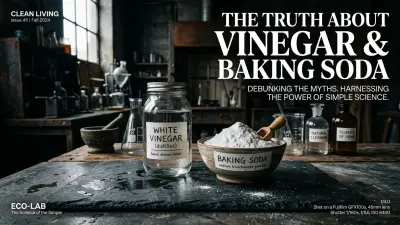
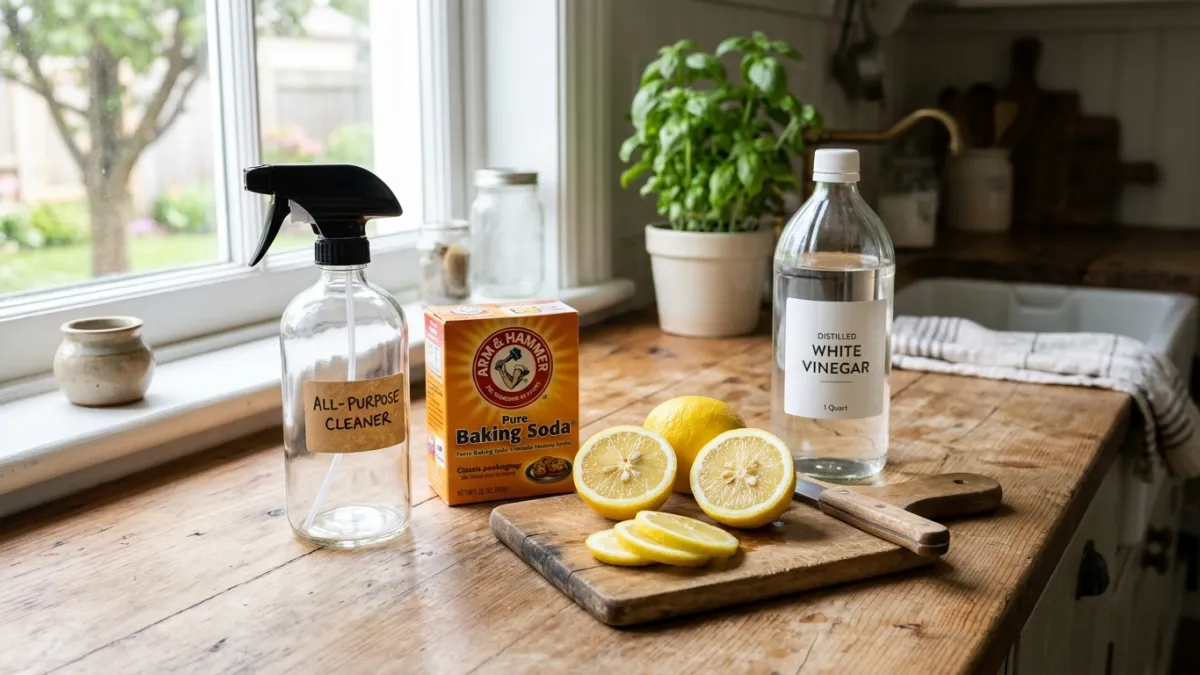
Walk down any eco-friendly lifestyle blog or social media feed, and you will be told that white distilled vinegar is a miracle fluid capable of sanitizing your entire home. While natural DIY spray recipes have exploded in popularity over the last decade, much of what circulates online relies on internet myths rather than actual surface chemistry. In reality, vinegar is a fantastic acid for specific mineral deposits, but using it as a universal cleaner often leads to dull natural stone, etched metals, and ineffective grease removal.
Quick answer: Vinegar is an acidic solvent (pH ~2.4) brilliant for breaking down hard water stains and soap scum, but it is not an all-purpose miracle cleaner, nor is it a broad-spectrum disinfectant. Truly effective DIY all-purpose cleaning relies on matching pH levels to the job—using surfactant-based dish soap mixtures for greasy dirt and rubbing alcohol formulations for streak-free sanitizing without stripping delicate surfaces.
The Chemistry of DIY Cleaners: Acidic vs. Alkaline Solutions
To craft home maintenance solutions that genuinely work, you have to understand the pH scale. Soil on most household surfaces—ranging from kitchen grease to body oils—is slightly acidic. Basic chemistry dictates that acids dissolve minerals, while bases (alkalines) break down fats, oils, and organic grime. When you spray standard household vinegar onto a greasy stovetop, you are attempting to fight acid with acid, which merely moves grease around instead of breaking it down.
Furthermore, one of the biggest viral DIY cleaning mistakes is mixing vinegar (acetic acid) with baking soda (sodium bicarbonate) in a spray bottle. While the resulting bubbling reaction looks impressive, the chemical reaction leaves you with sodium acetate, carbon dioxide gas, and water. You are essentially paying to create weak salt water that has lost both the abrasive power of baking soda and the acidity of vinegar. Knowing how each ingredient operates individually is the key to mastering eco-friendly cleaners.
Cleaner's tip: Never mix vinegar with castile soap or liquid dish soap in the same bottle without alcohol or water balance. Vinegar will instantly unsaponify the soap, turning your smooth cleaning solution into a curdled, oily mess that coats counter surfaces in a greasy film that takes twice as long to scrub off.
Vinegar Hype Debunked: Where It Fails and What Damaging Risks Exist
White distilled vinegar (typically sold at a 5% acetic acid concentration) has a pH of roughly 2.4 to 2.8. This high acidity makes it a aggressive solvent against calcium carbonate, making it excellent for descaling faucets or removing limescale inside kettle interiors. However, relying on vinegar as your main house cleaning spray presents serious risks to common modern building materials and surfaces.
Natural stone countertops such as granite, marble, travertine, and limestone contain calcium carbonate or resin binders. Applying an acidic vinegar spray etches the stone, permanently removing the polish and leaving hazy, dull spots. Similarly, vinegar degrades rubber gaskets and seals inside washing machines and dishwashers over time, leading to premature leaks. Finally, vinegar is incapable of killing tough bacteria like Staphylococcus aureus or viruses within standard dwell times, meaning it should never replace EPA-registered disinfectants during infectious outbreaks.
| DIY Ingredient | pH Level | Best Used For | Surfaces to Avoid |
|---|---|---|---|
| Distilled White Vinegar (5%) | 2.4 – 2.8 (Acidic) | Limescale, hard water spots, glass, soap scum | Marble, granite, quartz, hardwood, rubber seals |
| Liquid Dish Soap (e.g., Dawn) | 7.0 – 9.0 (Neutral/Slightly Alkaline) | Everyday dust, grease, kitchen counters, synthetic tile | Unsealed wood (if saturated) |
| Isopropyl Alcohol (70%) | 7.0 (Neutral) | Disinfecting, quick-drying glass, stainless steel polish | Shellac, lacquered wood finish |
| Washing Soda (Sodium Carbonate) | 11.0 (Strongly Alkaline) | Heavy baked-on oven grease, grout lines, laundry booster | Aluminum, painted surfaces, delicate fibers |
4 Formulated DIY All-Purpose Recipes That Actually Work
Instead of relying on a single flawed ingredient, professional housekeepers use specialized formulations tailored to specific tasks. These proven DIY recipes provide high cleaning efficiency while protecting your home's finishes.
1. The Everyday pH-Neutral Countertop & Table Spray
This neutral solution relies on non-ionic surfactants to lift dust and oil without etching stone or leaving streaks. It is safe for sealed granite, quartz, laminate, and painted baseboards.
- Ingredients: 2 cups distilled water, 1 teaspoon concentrated clear dish soap (such as Dawn or Seventh Generation), 2 tablespoons 70% isopropyl rubbing alcohol.
- Method: Combine in a 24 oz spray bottle. Shake gently before use. Spray directly onto surfaces and wipe clean with a high-density 300+ GSM microfiber cloth.
2. The Heavy-Duty Degreaser for Kitchen Ranges and Range Hoods
To cut through polymerised oil splatters on stovetops, you need an alkaline booster combined with a surfactant. Washing soda raises the pH to roughly 11, cutting grease instantly.
- Ingredients: 2 cups warm distilled water, 1/2 teaspoon washing soda (sodium carbonate), 1 teaspoon degreasing dish liquid, 5 drops lemon essential oil (optional for aroma).
- Method: Dissolve the washing soda in warm water first. Add soap, spray over greasy surfaces, and allow a dwell time of 3 to 5 minutes before scrubbing with a non-scratch nylon scrub sponge.
3. The Mineral & Soap Scum Dissolver (Shower & Fixtures)
This is where vinegar truly shines. When paired with a surfactant, the acetic acid clings to vertical shower doors and bathtub porcelain to dissolve mineral build-up.
- Ingredients: 1 cup 5% white distilled vinegar, 1 cup plant-based liquid dish soap, 10 drops tea tree oil.
- Method: Warm the vinegar in the microwave for 30 seconds, mix with dish soap in a spray bottle. Spray on glass shower doors or chrome faucets, leave for 10 minutes, then rinse thoroughly with warm water.
4. The Evaporating Streak-Free Glass & Mirror Polish
Traditional vinegar glass cleaners can leave streaks if your tap water contains high mineral levels. Using isopropyl alcohol ensures rapid evaporation without film buildup.
- Ingredients: 1 cup distilled water, 1 cup 70% isopropyl alcohol, 1 tablespoon white vinegar.
- Method: Spray lightly onto glass or chrome, then wipe using a flat-weave waffle microfiber towel designed specifically for glass cleaning.
Safety Practices and Proper Storage for Homemade Cleaners
Mixing your own eco-friendly cleaners requires strict adherence to safety protocols. First and foremost, never combine chlorine bleach with vinegar, ammonia, or rubbing alcohol. Mixing bleach with acid creates lethal toxic chlorine gas, while mixing bleach with alcohol forms chloroform and toxic chloramines. Always label your spray bottles clearly with the exact contents and creation date.
Additionally, use distilled water rather than tap water for your DIY spray mixtures. Tap water contains minerals and microscopic organic matter that can foster mold growth inside the bottle within two to three weeks. Store your home maintenance mixtures in a cool, dark cabinet away from direct sunlight, especially recipes containing rubbing alcohol or essential oils, which break down under UV exposure.
Choosing Your Path to a Spotless Home
For routine daily maintenance and safe stone care, stick to the pH-neutral surfactant spray made with distilled water, dish soap, and rubbing alcohol. When tackling tough bathroom scale or glass clarity, leverage vinegar's acidic properties in targeted applications—keeping it far away from granite, marble, and unsealed grout. If your schedule leaves little time for mixing custom solutions or tackling heavy buildup, engaging professional cleaning services for an initial deep cleaning establishes a manageable baseline for your ongoing routine.
Frequently Asked Questions
Can I use vinegar to disinfect my kitchen cutting boards after handling raw meat?
No. While vinegar has mild antibacterial properties, it is not an EPA-registered disinfectant and does not reliably kill pathogens like Salmonella or E. coli. Wash cutting boards with hot, soapy water and sanitize them using a diluted bleach solution (1 tablespoon bleach per gallon of water) or an EPA-certified kitchen disinfectant.
Why does my homemade vinegar cleaner leave white streaks on glass?
Streaking typically occurs if you mixed your cleaner with hard tap water instead of distilled water, or if there is leftover residual wax from previous commercial glass cleaners. Switch to a mixture of 50% distilled water and 50% isopropyl alcohol paired with a clean glass-weave microfiber towel.
Is vinegar safe to clean hardwood floors?
No, long-term use of vinegar on polyurethane-finished or waxed hardwood floors causes the acid to slowly strip away the protective finish, leaving wood looking dull and susceptible to moisture damage. Use a pH-neutral hardwood floor cleaner designed specifically for wood finishes.
Sources
- EPA: Antimicrobial Testing and Disinfectant Guidelines
- CDC: Cleaning and Disinfecting Your Home Guidelines
- Wikipedia: Acetic Acid Properties and Safety Data
Looking for the Right Supplies?
Check out our verified Top Cleaning Products & Tools on Amazon.
As an Amazon Associate, we earn from qualifying purchases.