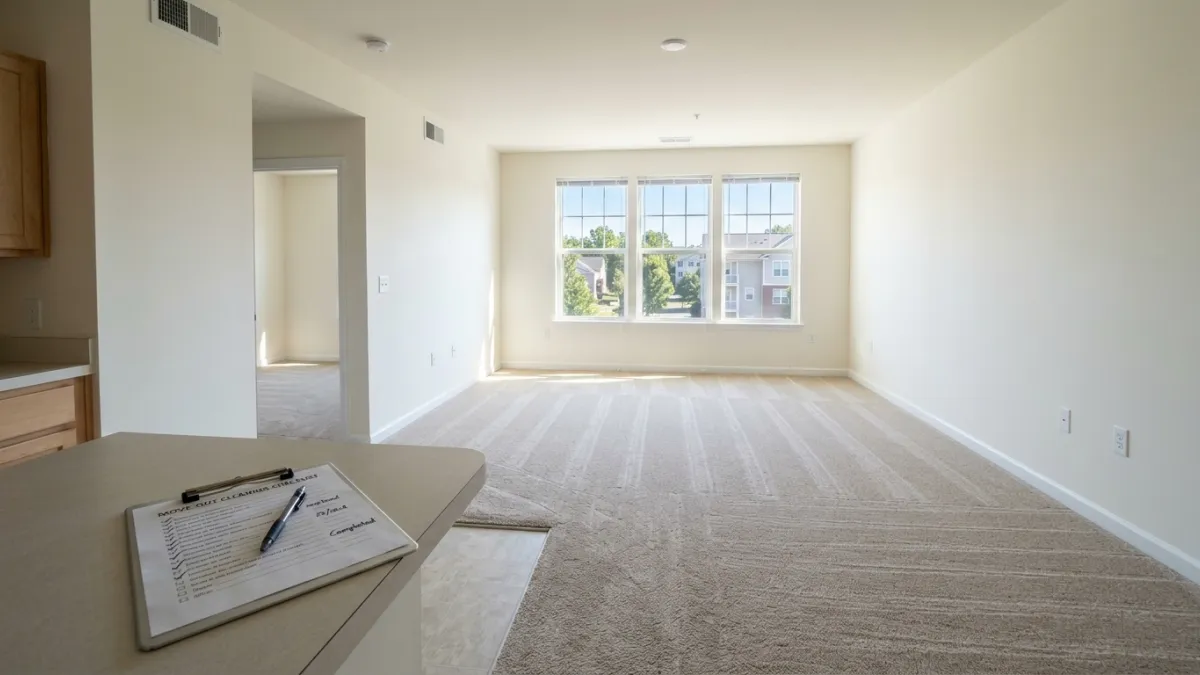
Transitioning between rentals is notoriously stressful, and nothing ruins the excitement of a new home faster than losing a security deposit over unaddressed dirt. Landlords and property managers approach tenant move-outs with a trained eye, scanning for overlooked buildup that requires hiring professional cleaning services. Understanding precisely what inspectors scrutinize allows you to target your efforts effectively, saving hundreds of dollars while leaving the property in pristine condition.
Quick answer: Property managers focus heavily on high-deposit deduction zones including kitchen appliance grease, bathroom limescale, window tracks, light fixtures, and baseboards. Executing a systematic move-out deep cleaning with alkaline degreasers, acidic descalers, and HEPA-grade vacuuming ensures you meet standard lease requirements and secure your full refund.
The Inspection Mindset: Where Deposit Money Gets Lost
Property inspectors do not just glance around the center of a room; they systematically inspect high-friction, hard-to-reach, and heavy-use areas. When a tenant moves out, dust settles into exposed gaps where furniture once stood, and neglected grime becomes glaringly obvious under full room lighting. Landlords calculate cleaning fees based on the labor hours required to return a unit to turnkey condition, often charging premium rates for tasks that take tenants under an hour to complete.
The standard benchmark for move-out cleanliness is a state of "broom-clean plus sanitization," meaning surfaces must be free of surface dust, grease, soap scum, and personal debris. Kitchens and bathrooms account for roughly 75% of all cleaning-related security deposit deductions. Failing to pull out the oven, leaving mineral spots on shower glass, or ignoring greasy range hood filters are the top triggers for professional service call-outs billed directly to your account.
Systematic home maintenance requires working top-to-bottom and clean-to-dirty. By tackling ceiling fans, high trim, and door frames before vacuuming flooring, you prevent falling dust from ruining previously cleaned surfaces. Preparing the right sequence of chemical cleaning agents and equipment streamlines the entire process, cutting labor time significantly while producing landlord-ready results.
Kitchen Deep Cleaning: Tackling Built-Up Grease and Food Residue
Kitchens demand the highest concentration of effort due to burnt-on carbon, food splatter, and persistent grease film. Landlords always open appliances, pull out drawers, and look underneath structural elements. A surface wipe down is never enough to pass a rigorous walkthrough.
Ovens, Stoves, and Range Hoods
Burnt carbon on oven walls and glass requires a heavy-duty alkaline cleaner with a pH level between 11 and 13 to dissolve baked-on oils. Spray the interior, allowing a minimum contact dwell time of 20 to 30 minutes before scrubbing with a non-abrasive scrubbing pad. For range hood aluminum mesh filters, submerge them in hot water mixed with concentrated liquid degreaser or dish soap and baking soda to emulsify trapped grease within 15 minutes. Avoid using aggressive steel wool on stainless steel surfaces, as visible scratches can result in replacement costs charged against your deposit.
Refrigerators and Freezers
Unplug the unit, defrost the freezer completely, and remove all shelving and crisping drawers. Wash removable parts with warm water and a neutral cleaner (pH 7). Wipe down the internal rubber door gaskets using a soft microfiber cloth; mold spores frequently collect in the flexible folds of these seals. Don't forget to slide the refrigerator forward to sweep dust off the condenser coils and mop the floor underneath—a classic inspection checklist item.
Cleaner's tip: Never use heavy oven cleaner on self-cleaning enamel or glass windows without testing a small spot first. Instead, apply a thick paste of sodium bicarbonate (baking soda) and water, let it sit overnight, and mist with distilled white vinegar (pH 2.5) the next morning. The mild reaction lifts tough carbon effortlessly without dulling enamel or releasing toxic fumes.
Bathroom Sanitization: Eliminating Scale, Scum, and Mold
Bathrooms are evaluated on sanitation and surface clarity. Water spots, soap residue, and mildew along grout lines signal inadequate maintenance to property inspectors. Addressing these requires understanding the chemistry of mineral deposits versus organic grime.
Limescale and soap scum consist of alkaline mineral deposits from hard water combined with fatty acids from soaps. Neutralizing them demands an acidic cleaner with a pH between 2.0 and 3.0, such as phosphoric acid or citric acid formulations. Spray the shower walls, tub surround, and glass doors, allowing a contact time of 10 minutes to dissolve mineral bonds before scrubbing with a medium-bristle nylon brush. Inspect grout lines thoroughly; any black spotting should be treated with an EPA-registered disinfectant spray to kill active mold spores.
To ensure a flawless inspection, clear all hair from drain stoppers, scrub behind the toilet base near the mounting bolts, and polish chrome fixtures with a dry microfiber cloth (aim for a high-density 300 to 350 GSM cloth) to achieve a streak-free shine. Ensure vanity mirrors are clear of haze by wiping with an isopropyl alcohol-based glass cleaner.
Living Areas, Bedrooms, and Structural Touchpoints
Once wet areas are spotless, shift focus to architectural elements across bedrooms, hallways, and living rooms. Landlords pay close attention to high-touch points that collect skin oils and ambient dust over long tenancies.
- Baseboards and Trim: Wipe down all baseboards, window sills, and door casings using a damp microfiber cloth and a mild neutral detergent solution to remove accumulated dust and scuff marks.
- Window Tracks and Blinds: Vacuum window tracks using a narrow crevice tool before wiping with a damp rag. Dust individual blind slats top to bottom using a double-sided microfiber duster.
- Light Fixtures and Ceiling Fans: Dust fan blades and clean light globes. Replace any burned-out lightbulbs with matching wattage to prevent quick deduction penalties.
- Walls and Switch Plates: Spot-clean smudges around light switches, door handles, and high-traffic walls using a damp magic eraser or diluted dish soap. Avoid scrubbing flat paint too hard to prevent removing wall color.
- Floors and Carpets: Vacuum all carpeted areas using an upright vacuum equipped with a HEPA filter and motor-driven brush roll providing strong suction (aim for at least 150 Air Watts or 20,000 Pa). Hard floors require a micro-fiber flat mop paired with a neutral floor cleaner to avoid leaving soapy films.
Move-Out Deep Cleaning Specifications & Checklist
The following table outlines key targets, recommended chemical profiles, and optimal tools necessary to pass standard property management inspections:
| Target Area | Recommended Chemistry & pH | Key Tool / Technique | Landlord Inspection Focus |
|---|---|---|---|
| Oven Interior | Alkaline Degreaser (pH 11–13) | Non-scratch pad, 30-min dwell time | Baked-on carbon, bottom racks, glass clear of haze |
| Shower Glass & Fixtures | Acidic Descaler / Citric Acid (pH 2–3) | 350 GSM microfiber, nylon brush | No mineral spots, clean drain, soap scum removed |
| Baseboards & Trim | Neutral Detergent (pH 7) | Damp microfiber cloth, spot eraser | Dust-free tops, scuffs removed, no pet hair build-up |
| Carpets & Rugs | Extraction Detergent (pH 8–9) | HEPA Vacuum (150+ AW), Carpet Extractor | No visible stains, deep dirt extracted, edges clean |
| Window Tracks | All-Purpose Cleaner (pH 7–8) | Detail crevice brush, shop vacuum | Free of insect debris, dirt track, smooth operation |
Frequently Asked Questions
Do I need to hire professional cleaning services to get my full deposit back?
Unless your lease agreement explicitly specifies mandatory professional receipts, you are generally permitted to clean the property yourself. However, your DIY results must match professional standards, covering appliances, fixtures, window tracks, and flooring exhaustively.
How long should a standard move-out deep cleaning take?
A comprehensive move-out clean for a standard two-bedroom apartment typically takes between 6 to 10 active labor hours for one person. Homes with multiple bathrooms, heavy grease buildup, or large carpeted areas will require additional time or specialized power extraction equipment.
What happens if I accidentally mix household cleaning chemicals?
You must strictly avoid mixing cleaning products. Combining bleach (sodium hypochlorite) with ammonia creates toxic chloramine gas, while mixing bleach with acidic cleaners like vinegar produces dangerous chlorine gas. Always work in well-ventilated space, read manufacturer chemical safety labels, and rinse surfaces with clean water between chemical applications.
Can landlords charge for carpet cleaning if it is just normal wear and tear?
Laws vary by jurisdiction, but generally, landlords cannot deduct for standard wear and tear like light traffic paths. However, active stains, pet odors, candle wax, or neglected ground-in dirt fall outside normal wear and justify cleaning deductions from your deposit.
To secure your security deposit quickly, start by assessing your home's most challenging areas—specifically the kitchen oven and main bathroom—at least three days before your official handover. Stock up on high-density microfiber cloths, an alkaline degreaser, a citric acid scale remover, and a high-suction HEPA vacuum so you can execute this targeted checklist systematically without last-minute rush.
Sources
- U.S. Environmental Protection Agency (EPA) - Safer Choice Standard & Criteria
- Centers for Disease Control and Prevention (CDC) - Cleaning and Disinfecting Guidelines
- Wikipedia - Surface Active Agents and Detergent Chemistry
Looking for the Right Supplies?
Check out our verified Top Cleaning Products & Tools on Amazon.
As an Amazon Associate, we earn from qualifying purchases.