The Unsung Hero of Home Maintenance: Why Power Washing Matters
Imagine your home's exterior looking as fresh and inviting as the day you moved in. That weathered deck, the mossy driveway, or the streaky siding—they don't just detract from curb appeal; they can harbor mildew, algae, and grime that, if left unchecked, can lead to costly repairs down the line. This is precisely where the power washer steps in, transforming your home maintenance routine and delivering a level of deep cleaning that traditional scrubbing simply cannot match. It’s an incredibly efficient tool for revitalizing nearly any outdoor surface.
For homeowners, DIY enthusiasts, and even seasoned renters, understanding how to effectively and safely wield a power washer is an invaluable skill. It not only saves you money on professional services but also empowers you to take direct control of your property's appearance and longevity. But before you rush out to buy the first machine you see, it's crucial to understand your options and, more importantly, master the essential safety protocols. After all, this isn't just a garden hose; it's a powerful piece of equipment that demands respect.
Understanding Your Options: Electric vs. Gas Power Washers
The first decision you'll face when venturing into the world of pressure washing is choosing between an electric or a gas-powered unit. Each has its distinct advantages and limitations, tailored for different house cleaning needs around your property.
Electric Power Washers: The DIY Darling
Electric power washers are typically lighter, quieter, and require less maintenance than their gas counterparts. They’re fantastic for most residential tasks, making them a popular choice for beginners. You simply plug them into an outdoor outlet, connect a garden hose, and you're ready to go. They produce no exhaust fumes, making them a more eco-friendly option for enclosed areas like garages or shaded patios.
- Pros: Lighter, quieter, easier to start, less maintenance, no fumes, generally more affordable.
- Cons: Limited power, requires a power outlet, restricted by cord length.
- Typical Specs: 1500-2000 PSI (Pounds per Square Inch) and 1.2-1.6 GPM (Gallons Per Minute).
- Ideal for: Cleaning cars, grills, outdoor furniture, small decks, fences, and light patio grime. A model like the Sun Joe SPX3000 (2030 PSI, 1.76 GPM) is a strong contender for general home maintenance.
Gas Power Washers: The Heavy-Duty Champion
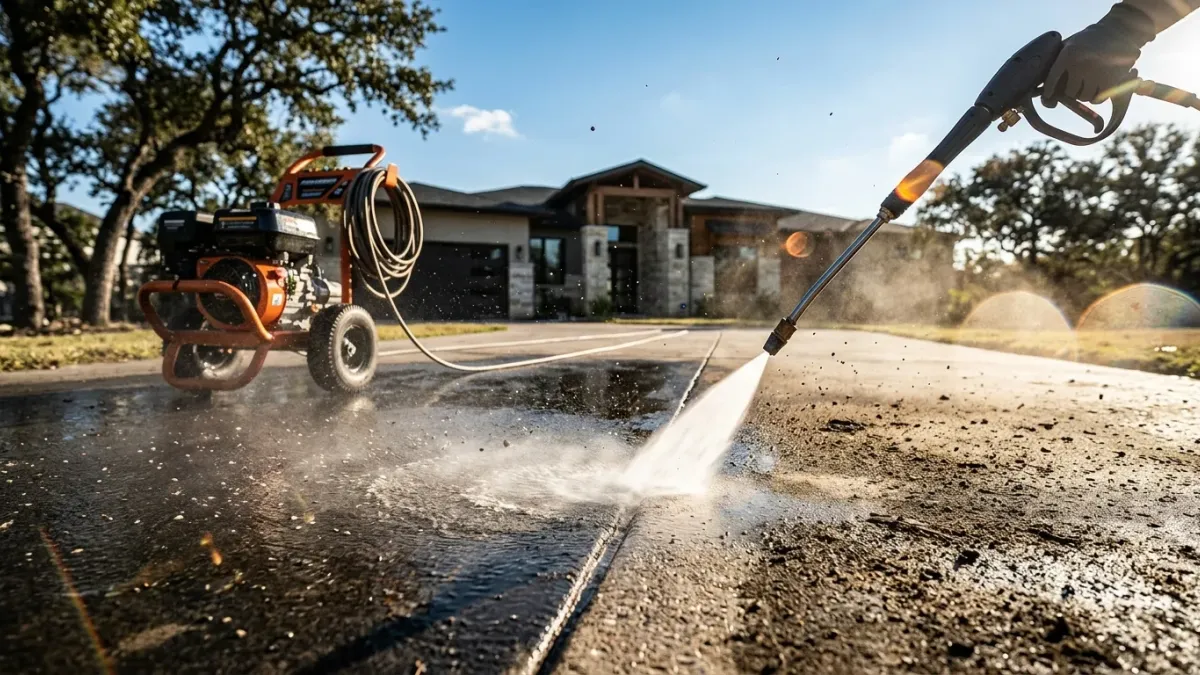
For tougher jobs and larger areas, a gas power washer is often the superior choice. These machines offer significantly more power and mobility since they don't rely on an electrical outlet. However, they are heavier, louder, require fuel and oil changes, and produce exhaust fumes, so proper ventilation is key.
- Pros: Much more powerful, greater mobility, ideal for large or heavily soiled areas.
- Cons: Heavier, louder, requires more maintenance (fuel, oil), produces fumes, generally more expensive.
- Typical Specs: 2000-4000+ PSI and 2.0-4.0 GPM.
- Ideal for: Deep cleaning large driveways, concrete patios, brick, vinyl siding, removing stubborn paint, and preparing surfaces for staining. The Simpson MegaShot 3200 PSI 2.5 GPM is a robust example for serious tasks.
PSI and GPM Explained Simply
When comparing models, you'll encounter PSI and GPM frequently. PSI (Pounds per Square Inch) measures the force of the water spray. Higher PSI means more cleaning power to blast away tough grime. GPM (Gallons Per Minute), on the other hand, indicates the volume of water the machine delivers. A higher GPM allows you to rinse away dirt and debris faster, making your cleaning more efficient. For effective house cleaning, you need a good balance of both, but GPM often dictates how quickly you can complete a job.
Essential Safety Protocols: Before You Even Start
This is not just another chore; it's an operation that demands respect for your safety and the longevity of your property. Honestly, I've seen too many avoidable accidents from people rushing or being complacent. So, let's get to the really critical point: safety first.
Personal Protective Equipment (PPE)
The high-pressure stream from a power washer can cause serious injury if it comes into contact with skin or eyes. Always wear appropriate PPE: sturdy, closed-toe shoes (steel-toed boots are even better), safety glasses or goggles to protect against splash-back and debris, and gloves for a better grip and hand protection. If you're using a gas model, hearing protection is also highly recommended due to the noise levels.
Pre-Inspection and Setup
Before you even think about turning on the machine, do a thorough check. Ensure all hoses are securely connected and free of kinks or damage. Clear the work area of any obstacles, loose debris, delicate plants, pets, and especially children. Be mindful of electrical outlets, lighting fixtures, and vents that could be damaged by the water. And please, always test the spray on an inconspicuous area first. For example, imagine this situation: you're eager to clean your siding, skip the test, and immediately hit a delicate spot with too much pressure, causing irreversible damage. A simple test could have prevented that entirely.
Understanding Nozzles and Their Dangers
Nozzles are the secret to effective power washing, but they're also where most beginner mistakes happen. They're color-coded for a reason, indicating the spray angle and intensity. Never change nozzles while the power washer is running or while your finger is on the trigger.
- Red (0-degree): A pinpoint stream, incredibly powerful and dangerous. Use with extreme caution, only for very tough, small spots like removing tar from concrete. Can easily damage most surfaces and skin.
- Yellow (15-degree): A narrow, powerful spray for stripping paint, cleaning stubborn stains on concrete, or preparing surfaces. Still very forceful.
- Green (25-degree): A general-purpose cleaning nozzle, good for most medium-duty tasks on decks, patios, and driveways.
- White (40-degree): A wide, gentle spray, ideal for delicate surfaces like vinyl siding, windows, and vehicles. This is your go-to for most general house cleaning tasks.
- Black (Soap/Low-Pressure): This nozzle applies detergent at low pressure. It’s never meant for cleaning, only for applying soap.
But what would you do in a situation where you accidentally grab the wrong nozzle? Always stop, turn off the machine, and then switch. Using a narrow nozzle on a delicate surface can etch wood, strip paint, or even break windows. Always start with a wider angle and move closer or switch to a narrower nozzle if needed, increasing pressure gradually.
Mastering Power Washing Techniques for Your Home
Now that you’re equipped with knowledge about your machine and safety, let’s talk about how to actually get those surfaces sparkling. Proper technique is just as important as the right equipment for effective deep cleaning and avoiding damage.
The Right Way to Clean Common Surfaces
- Decks & Patios: For wood decks, use a 25- or 40-degree nozzle, keeping the wand about 12-18 inches from the surface. Work with the grain of the wood, using long, overlapping strokes to avoid streaking. For concrete patios, you can use a 25-degree nozzle or, for faster work, invest in a surface cleaner attachment. These attachments distribute pressure evenly, preventing zebra stripes.
- Siding (Vinyl, Aluminum, Stucco): Always use a 40-degree (white) nozzle or a dedicated siding cleaning attachment. Start from the bottom and work your way up when applying detergent, then rinse from top to bottom. This prevents streaking. Maintain a distance of at least 18-24 inches from the siding. Be extremely careful around windows, doors, and vents to prevent water from entering the home.
- Driveways & Walkways: Concrete and asphalt can typically handle more pressure. A 25-degree (green) nozzle works well, but a surface cleaner attachment is highly recommended for large areas. It makes the job much faster and provides a more uniform clean, crucial for effective home maintenance of these high-traffic areas.
- Cars/Vehicles: Use the black soap nozzle to apply car wash detergent, then switch to the 40-degree (white) nozzle for rinsing. Keep the nozzle a safe distance (2-3 feet) from the vehicle's paint. Never use high-pressure nozzles (red, yellow, green) directly on car paint, as it can easily strip clear coats and paint.
Detergents and Cleaning Solutions
While water alone can do a lot, detergents significantly enhance cleaning power, especially for stubborn stains like mold, mildew, oil, or grease. Most power washers come with a detergent tank or a siphoning tube. Always use detergents specifically designed for power washers, as household cleaners can damage the pump. Many eco-friendly cleaners are available today that are biodegradable and safe for plants and pets.
Apply detergent with the black (soap) nozzle on a dry surface, allowing it to dwell for 5-10 minutes (check product instructions) but not dry out. Then, switch to your appropriate cleaning nozzle and rinse thoroughly. Rinsing is key to preventing residue and streaks, contributing to truly effective cleaning tips for your home.
Post-Cleaning & Maintenance: Prolonging Your Investment
Your job isn't quite done when the last spot of grime is gone. Proper shutdown and storage are crucial for extending the life of your power washer and ensuring it's ready for its next deep cleaning task.
Proper Shutdown Procedure
First, turn off the power washer engine or motor. Then, point the gun in a safe direction and squeeze the trigger to release any remaining pressure in the system. Disconnect the water supply hose and, finally, detach the high-pressure hose and wand. This simple routine prevents unexpected pressure bursts and reduces wear on components.
Storage and Winterization
Always drain all water from the pump and hoses before storing your unit, especially in colder climates where freezing water can cause irreparable damage. For gas models, consider adding a pump saver or antifreeze solution before winter storage, as recommended by the manufacturer. Store your power washer in a dry, protected area, away from extreme temperatures and moisture. Following these cleaning tips for maintenance will save you headaches and money.
When to Call the Professionals
While power washing is a fantastic DIY skill, there are times when it’s best to call in the experts. If your home has delicate or historic materials, extensive mold or mildew growth in hard-to-reach areas, or if you're uncomfortable working at heights, professional cleaning services are a smart investment. They have specialized equipment, advanced cleaning solutions, and the expertise to handle complex situations safely and effectively, ensuring your home maintenance is in the best hands.
Conclusion
Armed with this guide, you now possess the foundational knowledge to confidently choose and safely operate a power washer for your home maintenance needs. From understanding the nuances of electric vs. gas models to mastering safety protocols and effective cleaning techniques, you're ready to tackle that grime. Remember, practice makes perfect, and always prioritize safety. Take the plunge, unleash the power, and enjoy the satisfaction of a truly revitalized home exterior. Happy cleaning, and may your surfaces shine!