Maintaining strong suction and keeping airborne dust at bay requires choosing the right dust bag for your Numatic Henry vacuum cleaner. While Henry vacuums are widely praised for their high-torque industrial-grade motors and long-lasting build quality, using low-quality or incompatible dust bags can compromise airflow, strain the motor, and leak fine particulate matter back into your living space. Whether you manage weekly house cleaning in a small apartment or handle deep cleaning routines in larger family homes, selecting optimal replacement bags directly affects filtration efficiency, dust containment, and equipment longevity.
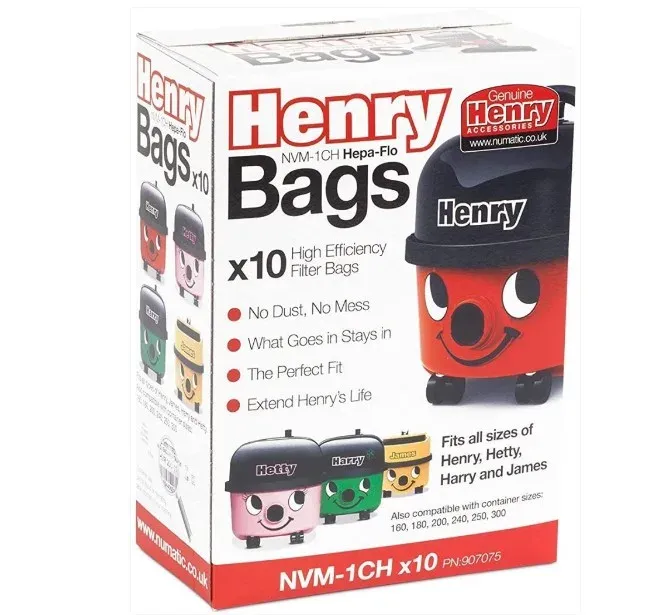
Quick answer: Genuine Numatic HepaFlo NVM-1CH bags are the top choice for overall suction, motor protection, and dust containment, offering 30% higher filtration than paper alternatives. Made from 3-layer synthetic fleece with a self-sealing dust tab, they hold 6 to 9 liters of debris while keeping micro-allergens trapped inside.
Understanding Henry Vacuum Bag Compatibility and Sizes
Numatic manufactures several models under the popular Henry banner, ranging from compact domestic units to commercial-grade canister vacuums. Choosing the right bag starts with matching the bag collar design and volume capacity to your specific model. The most widely used genuine replacement bag across the standard lineup is the Numatic HepaFlo NVM-1CH, which fits standard 6-liter and 9-liter canister configurations seamlessly.
Smaller models, such as the compact Henry HVR160 and Hetty HET160, feature a 6-liter capacity tub, while classic models like the Henry HVR200, Henry Extra HVX200, and commercial PPR240 series accommodate 9-liter bags. Fortunately, the collar size and mounting bracket remain uniform across most domestic Henry, Hetty, Harry, and James units, allowing the NVM-1CH bag to expand safely inside both 6L and 9L drum sizes without tears or restricted airflow.
Using improper bag sizes or generic collars that do not snap securely onto the internal hose intake can cause dust bypass. When debris leaks around an ill-fitting collar, abrasive grit enters the motor chamber, dulling fan blades and accelerating motor wear. Always verify that the bag collar clicks securely against the inner rim before latching the main vacuum hood.
Top Vacuum Bag Types Compared
Dust bags for Henry vacuums fall into three primary categories: original triple-layer synthetic HepaFlo bags, budget single or double-ply paper bags, and reusable fabric options. Each material handles dust retention and airflow differently, impacting daily home maintenance and deep cleaning results.
1. Genuine Numatic HepaFlo Synthetic Bags (NVM-1CH)
Genuine HepaFlo bags are constructed from three dense layers of spunbond synthetic fleece material. Unlike traditional paper bags that clog as dust builds up, synthetic fleece maintains open air channels across its multi-layer structure. This design delivers consistent airflow even when the bag reaches 80% capacity. An integrated rubber-sealed collar prevents leakages, and the built-in sliding shut-off tab seals dust inside the bag when removing it for disposal.
2. Aftermarket Paper Bags
Paper replacement bags offer a low initial purchase price, making them attractive for high-volume cleaning. However, paper fibres possess larger microscopic pore openings than synthetic fleece. Fine plaster dust, pet dander, and silica particles can puncture paper fibers or cause premature clogging. As dust coats the inner paper wall, airflow drops rapidly, reducing the effective suction power measured at the floor tool (often dropping air wattage by 20% to 35% before the bag is even half full).
3. Reusable Washable Fabric Bags
Reusable cloth bags cater to eco-conscious homeowners looking to reduce landfill waste. Typically made from heavy woven polyester, these bags feature a plastic slider clip at the bottom for manual emptying. While environmentally friendly, cloth bags require frequent washing to clear trapped micro-dust from the fabric weave. Emptying a dry cloth bag into a household rubbish bin can also release captured allergens back into indoor air, making them less suitable for allergy sufferers.
Cleaner's tip: When tackling heavy deep cleaning projects involving fine dust like dry-wall powder or baking soda carpet treatments, avoid using paper or reusable fabric bags. Fine dust instantly clogs paper pores and penetrates cloth weaves, straining the vacuum motor. Always stick with 3-layer HepaFlo synthetic bags for micro-particulates to keep suction consistent and prevent motor overheating.
Performance, Capacity, and Specifications Comparison
Selecting the best bag involves weighing filtration efficiency, motor protection, dust capacity, and overall value. The table below summarizes key specifications across the main vacuum bag types compatible with 6L to 9L Henry vacuum models:
| Bag Type | Material Construction | Filtration Grade | Dust Capacity | Airflow Retention | Dust-Free Disposal |
|---|---|---|---|---|---|
| Genuine HepaFlo (NVM-1CH) | 3-Layer Polypropylene Fleece | HEPA Class (traps 99.5% @ 0.3 µm) | 6L to 9L | Excellent (90–95%) | Yes (Self-sealing tab) |
| Generic Synthetic | 2 or 3-Layer Non-woven Microfiber | Standard to High (90–95%) | 6L to 9L | Good (80–85%) | Varies (Cardboard tab) |
| Standard Paper Bags | 1 or 2-Ply Filter Paper | Basic (70–80%) | 6L to 8L | Fair (Drops quickly) | No (Open collar tab) |
| Reusable Cloth Bags | Woven Polyester Fabric | Basic (65–75%) | 6L | Moderate (Requires washing) | No (Manual slide clip) |
How Dust Bags Impact Henry Vacuum Maintenance and Air Quality
A vacuum bag functions as the primary filtration stage inside a Henry canister cleaner. Air laden with debris enters through the hose, enters the bag cavity, and passes through the bag walls into the drum chamber before reaching the secondary premotor TriTex fabric filter and exhausting through the motor head. Using high-efficiency bags drastically reduces the workload on secondary filters and preserves motor performance.
When high-filtration synthetic bags are used, micro-dust stays trapped within the bag interior. This prevents fine dust from coating the secondary TriTex main filter, preserving air velocity and maintaining suction force (measured in water lift or kilopascals). A clean internal filter environment allows the motor to run cooler, extending the service life of electrical brushes, bearings, and thermal cutout switches.
To keep your home environment safe and hygienic during deep cleaning routines, follow these essential maintenance guidelines:
- Check bag volume monthly: Replace the dust bag when it reaches roughly three-quarters full. Overfilling restricts airflow, increases motor noise, and can cause the bag collar to unseat.
- Inspect secondary filters: Wipe down the large circular TriTex primary filter under the motor head every few bag changes. If fine dust is visible on top of the filter disc, check your bag installation for gaps or collar tears.
- Use proper sanitation practices: Avoid vacuuming liquid spills or damp debris with standard dry bags. Moisture weakens paper and synthetic fibers, promoting mold growth inside the dust container and causing persistent bad odors.
- Maintain hose and rod seal integrity: Ensure click-lock connections on extension rods and floor heads are free from hair wrap and obstruction to prevent backpressure against the bag wall.
Choosing the Best Bag for Your Cleaning Needs
For standard residential house cleaning, original Numatic HepaFlo NVM-1CH synthetic bags remain the standard. Their combination of triple-layer allergen containment, self-sealing hygienic removal tabs, and high holding capacity makes them ideal for daily dust removal, pet hair cleanup, and carpet maintenance. If you prioritize allergen control, motor longevity, and mess-free disposal, investing in authentic synthetic fleece bags ensures your Henry vacuum performs reliably for years to come.
Frequently Asked Questions
How often should I change the vacuum bag in my Henry vacuum?
In an average household, a single 6L to 9L Henry bag lasts between 2 and 3 months under regular weekly cleaning. However, if you have multiple pets, heavy carpeted areas, or undertake deep cleaning projects, inspect the bag monthly and replace it once it feels dense and reaches 75% capacity to avoid airflow loss.
Can I use generic brand bags in my Numatic Henry cleaner?
Yes, quality multi-layer synthetic generic bags work with Henry vacuums provided the collar fits tightly around the air intake port. However, cheap single-ply paper generics may compromise filtration, clog faster, or tear, which could void manufacturer warranties if fine dust damages the motor.
What is the difference between NVM-1CH and other Numatic bag numbers?
The NVM-1CH code designates the standard self-sealing 3-layer HepaFlo bag designed for 160, 180, 200, 240, and 250 series dry vacuums (including Henry, Hetty, Harry, and James). Other part numbers generally refer to larger commercial drum capacities (like NVM-2BH or NVM-3AH for 15-to-30-liter industrial units) or older paper variants.
Why does my vacuum lose suction even when the bag isn't full?
Suction loss with a partially empty bag usually occurs when ultra-fine dust (such as flour, plaster powder, or carpet deodorizing powder) coats the inner lining of a paper bag, blocking air pores. Alternatively, check for blockages in the floor nozzle, flexible hose, or a clogged TriTex secondary filter disc under the motor head.