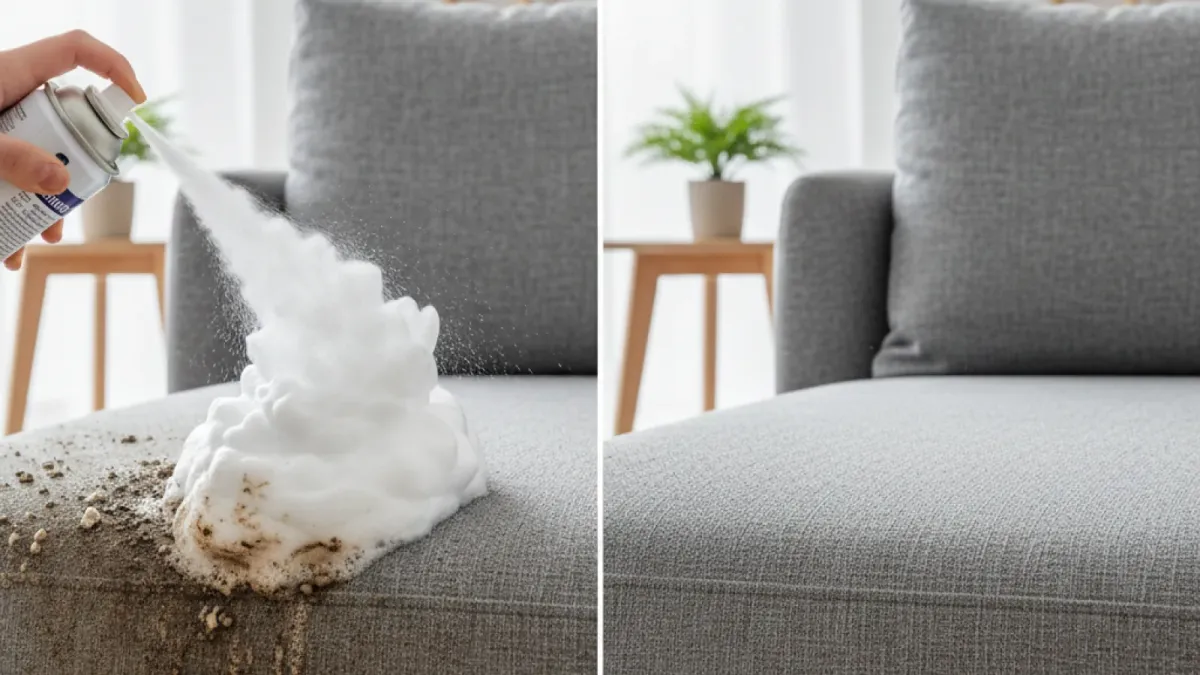
Quick answer: A foam upholstery cleaner uses expanding micro-bubbles to lift surface dirt and oil without soaking into seat cushion foam, making it the safest option for fast-drying spot treatment. For best results, vacuum the fabric first, apply the foam evenly, agitate gently with a medium-bristled horsehair brush, let it sit for 3 to 5 minutes, and wipe it away with a high-GSM microfiber cloth.
Why Foam Upholstery Cleaner Outperforms Liquid Sprays
When you spray a standard liquid carpet or fabric cleaner onto an upholstered couch, gravity pulls the moisture directly into the polyurethane foam core beneath the fabric. This trapped water can take over 24 hours to dry completely, increasing the risk of mold formation and water-ring staining. In contrast, specialized dry foam cleaners maintain a thick consistency that stays right on top of the weave. The active surfactants loosen grease, sweat, and food particles, lifting them outward so they can be easily wiped away or vacuumed up once fully dry. Furthermore, proper house cleaning routines require paying close attention to fabric safety ratings and chemical balance. Upholstery fabrics range from natural cotton and wool to synthetic nylon, polyester, and microfiber blends. Most professional foam cleaners are formulated near a neutral pH of 7.0 to 8.5. This controlled alkalinity effectively breaks down acidic organic stains (like coffee, pet oils, and food spills) without breaking down delicate dyes or causing structural weakenings in synthetic backings. Understanding how foam cleaner interacts with moisture control is essential for long-term furniture maintenance. The table below outlines the practical differences between conventional liquid cleaners and foam-based formulas when performing regular deep cleaning tasks around the home.| Cleaning Method | Drying Time | Saturation Risk | Best Application | pH Level Range |
|---|---|---|---|---|
| Aerosol/Pump Foam Cleaner | 15 – 45 minutes | Very Low | Spot cleaning, delicate weaves, car interiors | 7.0 – 8.5 (Neutral) |
| Traditional Liquid Spray | 4 – 12 hours | High | Heavy-duty stain pre-treatment | 6.5 – 9.5 (Mildly Alkaline) |
| Hot Water Extraction (Steam) | 6 – 24 hours | High (if unextracted) | Full sofa sanitization, deep soil removal | 8.0 – 10.0 (Alkaline) |
How to Select the Best Foam Upholstery Cleaner
Selecting the right product requires matching the cleaner's formula to your specific fabric type and soil level. Standard household spray cans produce a dense foam that works brilliantly on everyday wear, such as armrest discoloration or shoe scuffs along base cushions. For high-traffic living rooms, heavy-duty aerosol formulations with built-in fabric protectors—such as Vanish Foam Upholstery Cleaner or Resolve Upholstery Cleaner—help repel future liquid spills by leaving behind an invisible fluoropolymer barrier.Cleaner's tip: Never scrub a fresh foam application violently back and forth with a stiff synthetic brush. Friction breaks down delicate fabric fibers, causing unsightly pilling on polyester and chenille. Instead, spray the foam, wait 3 minutes, and use a 350+ GSM microfiber towel to massage the area in gentle, single-direction circular motions. Always work from the outer edges of the stain inward to prevent halo rings.
Step-by-Step Guide for Deep Cleaning Upholstery
Achieving professional-grade results at home comes down to correct technique and proper tool selection. Using a high-powered vacuum cleaner equipped with a HEPA filter and a dedicated upholstery tool (delivering at least 150 air watts of suction power) ensures loose dust, pet hair, and dander are completely removed before any foam touches the fabric. Applying foam over dusty fabric turns that dust into mud, muddying the fibers deeper into the grain. Follow this practical sequence to safely clean your sofas, office chairs, or car seats:- Dry vacuuming: Vacuum the entire item thoroughly, paying special attention to seams, folds, and under cushions to remove grit that causes abrasive wear.
- Spot Testing: Apply a dime-sized dollop of foam cleaner onto a hidden area (such as the backside skirt or under a cushion tab). Wait 5 minutes and dab with a white cloth to verify colorfastness.
- Foam Application: Hold the aerosol spray can roughly 6 to 8 inches away from the target surface. Spray an even layer of foam over the stained panel, working in manageable 2x2 foot sections.
- Agitation & Dwell Time: Allow the foam to dwell for 3 to 5 minutes so the surfactants can solubilize oils. Lightly agitate the foam using a soft horsehair brush or a damp microfiber sponge.
- Extraction & Drying: Press a clean, dry microfiber towel firmly into the wet foam to draw out the suspended dirt particles. Finish by passing a dry upholstery vacuum nozzle over the surface to pull out remaining moisture, then allow 30 minutes of natural airflow to dry.
When to Call Professional Cleaning Services
While DIY foam cleaner cans excel at spot maintenance, localized spills, and routine seasonal touch-ups, large-scale restoration requires industrial equipment. If your upholstery is marked with code "S" (Solvent-only clean) or code "X" (Vacuum only), applying standard water-based foam cleaners can permanently damage silk, rayon, or antique velvet weaves. In cases of extreme pet saturation, smoke damage, or wide-scale moisture contamination, hiring professional cleaning services is the safest path forward. Commercial technicians utilize dual-motor hot water extractors delivering over 200 PSI of solution pressure alongside 200°F steam, paired with high-volume vacuum systems pulling up to 130 inches of water lift. They can also apply dry foam encapsulation systems using motorized rotary brush heads to refresh commercial spaces without long downtime.Frequently Asked Questions
Can I use foam upholstery cleaner on leather or suede sofa cushions?
No, standard foam fabric cleaners are formulated for woven textiles and may strip the protective topcoat from finished leather or cause water-spotting and stiffness on nubuck and natural suede. Always use dedicated pH-neutral leather foams or solvent-based dry cleaners specifically labeled for suede care.
How long should I let dry foam upholstery cleaner sit before wiping it off?
Most aerosol foam cleaners require a dwell time of 3 to 5 minutes. This allows the foaming agents enough time to breakdown oily residues and lift dirt particles to the surface without allowing the moisture to sink deeper into the internal cushion foam.
What do fabric cleaning codes (W, S, WS, X) mean when applying foam cleaners?
Code "W" means water-based cleaners and foams are safe. Code "S" requires water-free dry solvents only (avoid water-based aerosol foams). Code "WS" permits either water-based foam or mild solvent cleaners. Code "X" means the fabric must only be cleaned via dry vacuuming; applying any foam will cause fabric shrinkage or bleeding.
Recommended Cleaning Action Plan
To refresh your furniture today, begin by checking the fabric care tag attached underneath your seat cushions to confirm it accepts water-based cleaning (Code W or WS). Thoroughly vacuum all surfaces with your vacuum's crevice tool, purchase a quality aerosol foam cleaner along with a package of 350 GSM microfiber towels, and execute spot treatments using light, circular blotting motions for a clean, fast-drying finish.