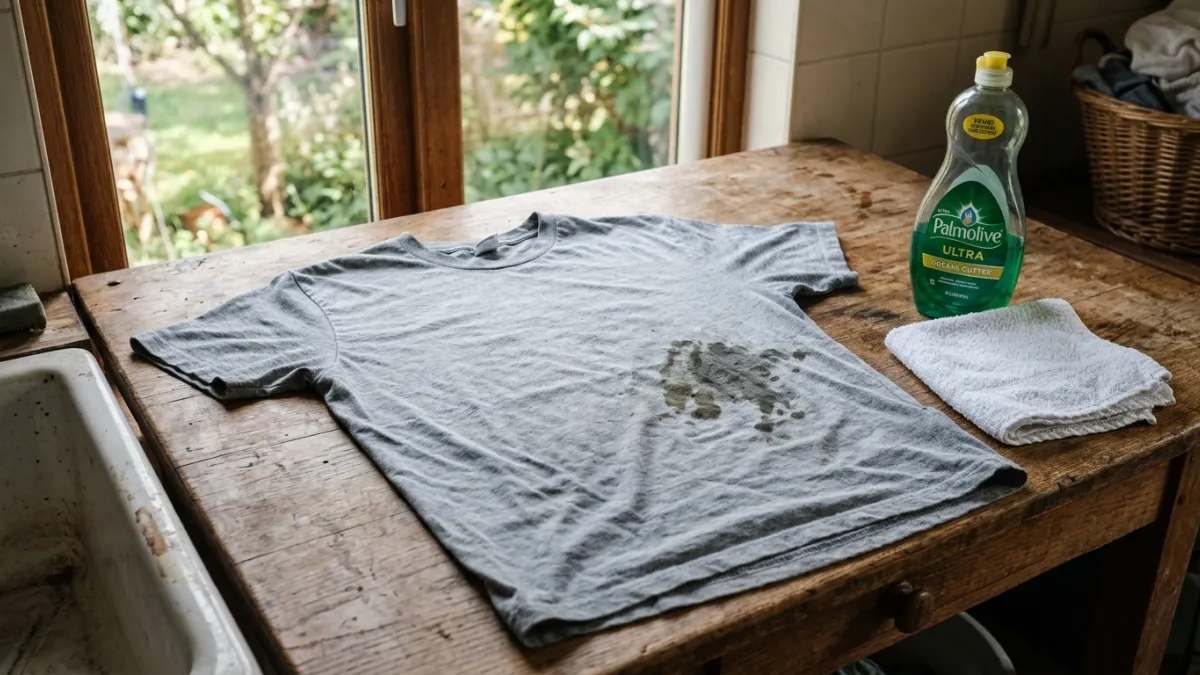
Quick answer: Act fast by blotting excess oil with a clean paper towel, covering the spot with baking soda to absorb surface lipids for 15 minutes, and then working concentrated liquid dish soap (like Dawn) into the fibers using your fingers or a soft brush. Let the surfactant break down the grease for 10 to 15 minutes before rinsing with hot water and running the item through a standard wash cycle with an enzyme-based detergent.
Understanding the Chemistry of Oil and Grease Stains
To successfully clean butter, automotive lubricant, cooking oil, or body oils from clothing, it helps to understand why traditional laundering often fails. Lipids lack polar molecules, which prevents them from bonding with water during standard rinse cycles. When you toss an oil-stained garment straight into the wash, water rolls off the stain while the surrounding clean fibers absorb moisture. Without an active degreasing agent, the lipid molecules remain locked between the warp and weft yarns of your clothing.
Heat plays a dual role in grease stain removal. Cold water hardens animal fats and thick oils, making them significantly harder to dislodge from synthetic or natural fibers. Hot water opens up the fabric weave and melts solid lipids back into liquid form, allowing laundry additives and surfactants to surround and suspend the oil particles. However, applying high dryer heat before the oil is completely lifted will permanently bake the lipid chain into the fabric, turning an easily fixable spot into an irreversible blotch.
Different fabrics absorb lipids at varying rates depending on their chemical composition and weave density. Natural fibers like cotton, linen, and silk are highly porous and soak up fluid rapidly, yet they respond very well to gentle surfactant pre-treatments. Synthetic textiles like polyester, nylon, and spandex are petroleum-based products themselves, meaning they hold a strong chemical affinity for oil and grease. Synthetic garments require prompt attention and slightly higher concentrated surfactant applications to break that synthetic-lipid bond effectively.
Essential Household Supplies and Pre-Treatment Preparation
You do not need toxic industrial chemicals to remove grease and oil stains from everyday garments. In fact, some of the most effective solutions are already in your kitchen pantry and laundry room. Assembling the right combination of absorbent powders, lipid-stripping surfactants, and physical scrubbing tools ensures you can tackle everything from fresh olive oil drips to set-in bicycle chain grease.
Concentrated liquid dish detergents act as the primary workhorse for grease extraction. Formulas containing strong anionic surfactants—such as Dawn Ultra featuring a concentrated pH of around 8.5 to 9.0—are specifically engineered to strip heavy lipids from hard surfaces and transfer that power seamlessly to washables. Absorbent powders such as cornstarch, baking soda, or unflavored baby powder draw standing liquids out of thick knits. For stubborn or aged spots, laundry boosters like OxiClean or liquid stain removers containing protease and lipase enzymes break down complex organic matrices.
| Cleaning Solution / Tool | Primary Active Mechanism | Best Suited Fabric Types |
|---|---|---|
| Liquid Dish Soap (e.g., Dawn) | Anionic Surfactant (pH 8.5–9.0) | Cotton, Polyester, Blends, Denim |
| Baking Soda / Cornstarch | Capillary Absorption Powder | Delicate Silk, Wool, Heavy Knits |
| Enzyme Laundry Pre-spotter | Lipase & Protease Catalysts | Workwear, Synthetic Activewear |
| Isopropyl Alcohol (70% rubbing) | Non-Polar Solvent Breakdown | Sturdy Synthetics, Heavy Cotton |
Before treating any garment, take a moment to read the care label inside the collar or side seam. Check the maximum allowable water temperature and any warnings regarding bleach or vigorous mechanical agitation. Always perform a quick spot test with your chosen surfactant on an inconspicuous area, such as an inside hem, to verify that the fabric dye remains colorfast and stable under treatment.
Step-by-Step Method for Fresh Grease Stains
Fresh grease spots present the best opportunity for complete removal because the lipids have not yet oxidized or bound tightly to the textile base. Following a systematic sequence prevents the stain from spreading wider into clean sections of the garment while accelerating lipid absorption.
- Blot the Excess Oil: Press a dry, white paper towel or clean microfiber cloth directly onto the fresh spot. Do not rub or swipe back and forth, as this pushes the lipid deeper into the adjacent yarns. Keep pressing with fresh sections of the paper towel until no further oil transfers over.
- Apply an Absorbent Layer: Dust a generous layer of baking soda, cornstarch, or talcum powder directly over the spot. Allow the powder to sit undisturbed for 10 to 15 minutes. As it draws out the surface grease, you will notice the powder clumping or changing color. Gently brush the saturated powder away into the trash.
- Pre-Treat with Concentrated Surfactant: Squirt several drops of liquid dish soap directly onto the remaining spot. Work the soap into the fabric using your fingertips or a soft-bristled toothbrush. Use light circular motions for 60 seconds to ensure the dish soap penetrates to the core of the fibers.
- Allow Dwell Time: Let the dish soap sit on the garment for 15 minutes. This dwell time gives the surfactant molecules sufficient opportunity to surround individual grease droplets, isolating them from the fabric.
- Rinse with Warm Water: Flush the treated area from the back side of the fabric using warm to hot running tap water (around 105°F to 120°F, provided the fabric care label permits it). Rinsing from the back pushes the isolated grease molecules out the way they came in rather than forcing them deeper through the fabric structure.
- Laundering: Wash the item in your machine using the warmest water cycle recommended by the clothing manufacturer, along with your standard enzyme detergent.
Cleaner's tip: Never throw a grease-stained garment into a warm dryer unit until you are 100% certain the oil mark is completely gone. Air-dry the clothing item on a drying rack first. Inspect the dry fabric under direct bright light; if a faint halo remains, repeat the dish soap treatment before exposing the garment to high dryer temperatures, which permanently heat-set lipids.
Tackling Dried, Old, or Set-In Grease Stains
Old grease spots present a unique challenge because the lipids have dried, oxidized, and bonded firmly to the surrounding fiber matrices. Standard washing alone will not loosen these hardened spots. Restoring these garments requires re-reactivating the dried lipid using a compatible solvent before applying standard surfactant extraction steps.
To reactivate a set-in stain, place a clean piece of cardboard or a thick folded towel inside the garment directly beneath the affected area. This barrier keeps the oil from transferring to the back panel of the shirt or pants during treatment. Apply a few drops of water-free WD-40 or a small amount of liquid glycerine onto the dried spot using a cotton swab. The light petroleum Distillates in WD-40 soften hard, oxidized oil, making it responsive to degreasing surfactants once again.
After letting the solvent sit for 5 minutes to soften the old mark, dust baking soda over the area and scrub gently with a toothbrush until the liquid solvent and softened grease form small crumbly balls. Sweep the debris away, then heavily coat the area with concentrated dish soap or a dedicated laundry pre-treater. Wash the garment in warm water, rinse thoroughly, and inspect under natural lighting before hanging it to air-dry completely.
Fabric-Specific Care for Delicates, Wool, and Synthetics
Not every garment can withstand hot water flushing or aggressive mechanical scrubbing with a bristle brush. Delicate textiles like silk, fine wool, cashmere, and dry-clean-only blends demand modified cleaning techniques to prevent fabric felting, fiber breakage, or permanent water rings.
For fine silk or wool, avoid heavy liquid detergents and high heat. Lay the garment flat on a clean surface and coat the grease spot generously with dry cornstarch or French chalk. Press the powder gently into the spot with the palm of your hand and leave it in place overnight (at least 8 to 12 hours). The powder pulls the liquid grease out via capillary action without disturbing delicate protein fibers. The following morning, gently brush the powder away with a soft velvet brush or blow it away using cool air from a hairdryer.
When dealing with polyester and nylon activewear, remember that synthetic yarns attract oil very quickly. Use a laundry pre-spotter formulated with active lipase enzymes alongside an alkaline detergent booster. Avoid using fabric softeners during the rinse cycle on greasy athletic wear; softeners coat synthetic fibers with a waxy silicone layer that locks lingering oil smells and grease spots permanently into the weave.
Clear Recommendation
If you are dealing with a fresh grease splatter on everyday cottons, polyester blends, or heavy denim, your best initial move is to skip complex chemical solvents entirely: blot the liquid immediately, coat the area with cornstarch or baking soda for 15 minutes, work concentrated Dawn Ultra dish soap into the weave with a soft toothbrush, and finish with a warm-water machine wash using a quality enzyme detergent. For delicate fabrics like silk or wool, stick strictly to dry absorption using cornstarch left overnight, avoiding harsh scrubbing or high-temperature water flushes to keep your clothes looking pristine.
Frequently Asked Questions
Can I use hand soap instead of dish soap to remove grease from clothes?
Hand soaps often contain moisturizing agents, oils, and lotion additives designed to hydrate human skin. Applying hand soap to an oil stain can actually introduce secondary fatty ingredients into the fabric. Stick to concentrated dish soap designed specifically for stripping kitchen grease, or use a clear liquid laundry detergent.
Does white vinegar remove set-in grease stains?
White distilled vinegar is acidic (around pH 2.5) and excels at dissolving hard mineral deposits and neutralizing alkaline odorous compounds. However, vinegar does not break down or emulsify non-polar lipids effectively on its own. While a vinegar rinse during the wash cycle can help strip detergent residue, it should be used alongside an anionic surfactant or dish soap rather than as a standalone grease remover.
What should I do if a grease stain remains after washing?
Do not place the garment into a heated clothes dryer. Keep the fabric damp or allow it to air-dry completely to inspect the boundaries of the stain under bright light. Re-treat the spot by dabbing a small amount of rubbing alcohol or liquid laundry pre-treater directly on the residual mark, wait 15 minutes, scrub gently, and re-wash the item in warm water.
Is WD-40 safe to use on delicate clothing items?
WD-40 is effective for breaking down dried motor oil or hardened industrial grease on heavy fabrics like cotton denim or heavy canvas, but it should never be used on delicate fabrics such as silk, rayon, satin, or wool. The petroleum distillates in lubricant sprays can leave secondary rings or weaken delicate synthetic and natural fibers.
Sources
- American Cleaning Institute - Laundry Care and Stain Removal Guides
- US Environmental Protection Agency - Greener Cleaners and Surfactant Safety
- Wikipedia - Surfactant Principles in Lipid Emulsification
Looking for the Right Supplies?
Check out our verified Top Cleaning Products & Tools on Amazon.
As an Amazon Associate, we earn from qualifying purchases.