






Why Your Pool Filter is the Unsung Hero of Crystal Clear Water
As a cleaning expert and home maintenance specialist, I often see homeowners overlook the true workhorse of their swimming pool: the filter. Think of your pool filter as the kidneys of your pool, diligently removing dirt, debris, oils, and microscopic impurities. A clean, well-maintained filter isn’t just about sparkling water; it’s crucial for the overall health of your pool system, saving you money on chemicals and energy, and significantly extending the life of your filtration equipment. This comprehensive guide will walk you through the essential steps for pool filter cleaning and maintenance, ensuring your backyard oasis stays pristine.
Table Of Content
- Why Your Pool Filter is the Unsung Hero of Crystal Clear Water
- Understanding Your Pool Filter Type
- The Importance of Regular Filter Cleaning and Home Maintenance
- Step-by-Step Pool Filter Cleaning Techniques
- 1. Cleaning a Cartridge Filter
- 2. Cleaning a Diatomaceous Earth (DE) Filter
- Backwashing (Routine Cleaning)
- Annual Deep Cleaning (Breakdown)
- 3. Cleaning a Sand Filter
- Beyond Cleaning: Essential Filter Maintenance Tips
- When to Call for Professional Cleaning Services
- Extend Your Filter’s Life, Enjoy Your Pool More
Understanding Your Pool Filter Type
Before we dive into the nitty-gritty of cleaning, it’s vital to know which type of filter your pool uses, as cleaning methods vary significantly. There are three main types:
- Cartridge Filters: These use pleated fabric cartridges to trap particles. They are popular for their ease of maintenance and excellent filtration.
- Diatomaceous Earth (DE) Filters: Known for superior filtration, DE filters use a powder (diatomaceous earth) coated onto fabric grids. They can filter out extremely small particles.
- Sand Filters: The oldest and often most robust type, sand filters use specialized filter sand to trap impurities. Water flows through the sand bed, leaving debris behind.
The Importance of Regular Filter Cleaning and Home Maintenance
Regular deep cleaning of your pool filter is a cornerstone of effective home maintenance. Neglecting it leads to:
- Cloudy Water: A clogged filter can’t remove contaminants, leading to murky pool water.
- Increased Chemical Use: Dirty water requires more sanitizers to keep it clean.
- Higher Energy Bills: A dirty filter restricts water flow, forcing your pump to work harder.
- Reduced Equipment Lifespan: Overworking your pump and straining the filter itself leads to premature wear and tear.
Step-by-Step Pool Filter Cleaning Techniques
1. Cleaning a Cartridge Filter
Cartridge filters are generally the easiest to clean. Aim to clean them every 4-6 weeks, or when the pressure gauge reads 8-10 PSI above its clean starting pressure.
- Turn Off the Pump: Always start by turning off your pool pump and any automatic cleaners to ensure safety.
- Open the Air Relief Valve: This releases pressure from the system.
- Remove the Cartridges: Open the filter tank, carefully remove the cartridges, and stack them upright.
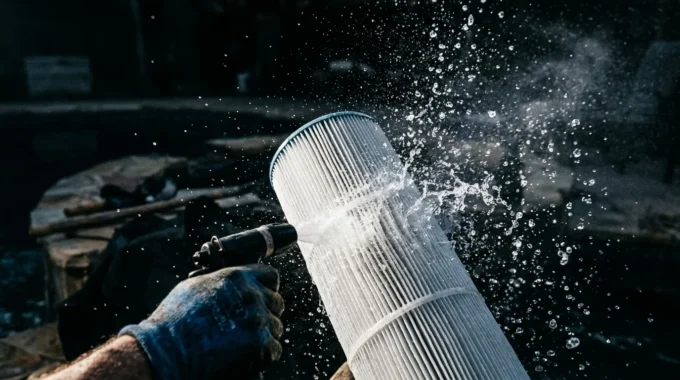
- Rinse Thoroughly: Use a garden hose with a spray nozzle (a filter-cleaning wand attachment works wonders) to spray down each pleat. Work from top to bottom, rotating the cartridge.
- Chemical Deep Cleaning (Every 3-6 Months): For a truly thorough clean, soak the cartridges in a specialized filter cleaning solution overnight. These solutions dissolve oils, minerals, and grime that rinsing alone can’t remove. There are also eco-friendly cleaners available that are highly effective. Follow product instructions carefully.
- Rinse and Reinstall: Rinse the cartridges thoroughly after soaking, then place them back into the filter tank. Secure the tank lid and close the air relief valve.
- Restart Pump: Turn your pump back on and note the new, lower pressure reading.
2. Cleaning a Diatomaceous Earth (DE) Filter
DE filters require “backwashing” regularly (when pressure rises 8-10 PSI above clean) and a full breakdown and chemical clean annually or semi-annually.
Backwashing (Routine Cleaning):
- Turn Off Pump: Ensure safety first.
- Set Valve to Backwash: Rotate your multiport valve to the “Backwash” position.
- Turn On Pump: Run the pump until the water in the sight glass runs clear (usually 1-3 minutes).
- Turn Off Pump, Set to Rinse: Set the valve to “Rinse” and run the pump for 30-60 seconds to settle the DE grids.
- Turn Off Pump, Set to Filter: Return the valve to “Filter.”
- Add New DE Powder: Mix the recommended amount of DE powder (check your filter manual) with water in a bucket to form a slurry. Pour this slurry slowly into the skimmer. The pump will draw it into the filter, coating the grids.
Annual Deep Cleaning (Breakdown):
This is a more intensive process, similar to cartridge cleaning, where the DE grids are removed, hosed off, and soaked in a chemical cleaner to remove stubborn oils and calcium deposits. This ensures optimal filtration performance.
3. Cleaning a Sand Filter
Sand filters are primarily cleaned by backwashing, typically when the pressure gauge is 8-10 PSI above its clean reading.
- Turn Off Pump: Safety first!
- Set Valve to Backwash: Rotate your multiport valve to the “Backwash” position.
- Turn On Pump: Run the pump until the water in the sight glass runs clear (usually 2-5 minutes).
- Turn Off Pump, Set to Rinse: Set the valve to “Rinse” and run the pump for 30-60 seconds to settle the sand bed.
- Turn Off Pump, Set to Filter: Return the valve to “Filter.”
- Restart Pump: Turn your pump back on.
While backwashing cleans the sand, the sand itself needs replacement every 5-7 years (or sooner if you notice consistently cloudy water despite proper cleaning) as the grains wear down and lose their sharp edges, reducing filtration efficiency. This is a significant part of proper home maintenance for sand filters.
Beyond Cleaning: Essential Filter Maintenance Tips
- Monitor Pressure Gauge: This is your filter’s report card. A rising pressure indicates it’s time to clean.
- Inspect Components: When cleaning, check O-rings, gaskets, and grids for cracks or wear. Replace them as needed to prevent leaks and maintain efficiency.
- Maintain Water Chemistry: Balanced pool chemistry (pH, alkalinity, calcium hardness) prevents scale buildup and prolongs filter life.
- Run Filter Adequately: Run your filter 8-12 hours a day, or longer during heavy use or hot weather, to ensure proper circulation and filtration.
- Winterization/Opening: Follow proper procedures for shutting down and opening your pool, which includes filter preparation.
When to Call for Professional Cleaning Services
While most cleaning tips for pool filters are DIY-friendly, there are times when professional cleaning services are invaluable. If you’re consistently battling cloudy water, experiencing persistent high pressure despite cleaning, or dealing with complex issues like sand channeling or broken DE grids, a professional can diagnose and resolve problems efficiently. They can also perform deep chemical cleans that might be too involved for the average homeowner.
Extend Your Filter’s Life, Enjoy Your Pool More
A well-maintained pool filter is the cornerstone of a healthy, enjoyable swimming pool. By understanding your filter type and following these deep cleaning and home maintenance guidelines, you’ll ensure sparkling clean water, reduce operational costs, and significantly extend the life of your pool’s most vital piece of equipment. Happy swimming!