






Unlock Crystal Clear Water: Your Guide to Pool Filter Cleaning & Maintenance
As a seasoned home maintenance specialist, I know that a pristine swimming pool isn’t just about sparkling water; it’s about the unsung hero behind the scenes: your pool filter. Just like any crucial system in your home, regular care and attention to your filtration system are vital. Neglecting your pool filter can lead to cloudy water, inefficient circulation, and ultimately, costly repairs or premature replacement. Think of it as a crucial part of your overall home maintenance routine, ensuring your aquatic oasis remains a joy, not a chore.
Table Of Content
- Unlock Crystal Clear Water: Your Guide to Pool Filter Cleaning & Maintenance
- Safety First: Before You Begin Any Filter Cleaning
- Understanding Your Filter Type & Its Cleaning Needs
- 1. Cleaning Your Cartridge Filter
- Steps for Cartridge Filter Cleaning
- 2. Maintaining Your Sand Filter
- Steps for Sand Filter Backwashing
- 3. Cleaning Your Diatomaceous Earth (DE) Filter
- Steps for DE Filter Backwashing & Recharging
- Deep Cleaning DE Grids (Every 6-12 Months)
- Beyond Cleaning: Essential Pool Filter Maintenance Tips
- When to Call for Professional Cleaning Services
This comprehensive guide will walk you through the essential steps for cleaning and maintaining the three main types of pool filters, helping you extend their lifespan and ensure your pool water stays wonderfully clear. We’ll cover everything from routine upkeep to deeper cleaning methods, providing actionable cleaning tips you can use right away.
Safety First: Before You Begin Any Filter Cleaning
Before you ever lay a hand on your pool filter system, always prioritize safety. These are powerful pieces of equipment, and proper precautions are non-negotiable:
- Turn Off the Pump: Always, without exception, turn off your pool pump at the breaker before performing any maintenance.
- Relieve Pressure: Open the air relief valve on top of your filter to release any built-up pressure. You’ll hear a hiss as the air escapes.
- Consult Your Manual: Every filter system is slightly different. Refer to your owner’s manual for specific instructions and diagrams relevant to your model.
Understanding Your Filter Type & Its Cleaning Needs
There are three primary types of pool filters, each with its own unique cleaning process:
- Cartridge Filters: These use pleated fabric cartridges to trap debris. They are known for their ease of cleaning and excellent filtration.
- Sand Filters: Utilizing a bed of specialized sand, these filters trap particles as water passes through. They require backwashing to clean.
- Diatomaceous Earth (DE) Filters: These offer the finest filtration, using a fine powder (DE) coating on fabric grids to catch even microscopic particles.
1. Cleaning Your Cartridge Filter
Cartridge filters are popular for their simplicity and effectiveness. Regular cleaning is crucial, typically every 2-4 weeks, or when your pressure gauge reads 8-10 PSI (pounds per square inch) above its normal operating level.
Steps for Cartridge Filter Cleaning:
- Shut Down & Depressurize: Turn off your pump and open the air relief valve.
- Open the Filter Housing: Unclamp or unscrew the filter tank lid according to your model’s instructions.
- Remove Cartridges: Carefully lift out the filter cartridges. They can be heavy when wet and full of debris.
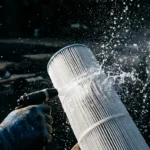
- Hose Them Down: Using a high-pressure nozzle on your garden hose (like a “jet” setting), spray between each pleat, working from top to bottom. This dislodges most of the trapped dirt and debris. Avoid using a pressure washer, as it can damage the delicate filter fabric.
- Chemical Soak (for Deep Cleaning): Every 3-6 months, or if you notice your cartridges are still dirty after hosing, give them a chemical soak. Use a specialized filter cleaning solution (e.g., a degreaser/acid wash from brands like Leisure Time or Natural Chemistry) mixed with water in a large bucket. Soak cartridges overnight, then rinse thoroughly. This removes oils, minerals, and stubborn grime that hosing alone can’t tackle – a true deep cleaning for your filter.
- Inspect & Reinstall: Check cartridges for tears, rips, or damaged pleats. If damaged, they need replacement. Once clean, place them back into the housing, ensuring they are seated correctly.
- Seal & Restart: Close and secure the filter housing, ensuring the O-ring is clean and lubricated. Close the air relief valve, then turn your pump back on.
2. Maintaining Your Sand Filter
Sand filters are robust and require less frequent hands-on cleaning than cartridge filters. Their primary maintenance is “backwashing,” which reverses water flow to flush out trapped debris. You should backwash when the pressure gauge rises 8-10 PSI above its clean operating pressure.
Steps for Sand Filter Backwashing:
- Shut Down Pump: Turn off your pool pump.
- Set Valve to Backwash: Move the multi-port valve handle to the “Backwash” position.
- Turn On Pump: Run the pump for 2-3 minutes, or until the water in the sight glass (usually on the multi-port valve) runs clear.
- Shut Down Pump Again: Turn off the pump.
- Set Valve to Rinse: Move the handle to the “Rinse” position.
- Turn On Pump: Run the pump for 30-60 seconds to re-settle the sand.
- Shut Down Pump: Turn off the pump.
- Set Valve to Filter: Return the handle to the “Filter” position.
- Restart Pump: Turn your pump back on.
Annual Deep Clean: Once a year, consider using a specialized sand filter cleaner (e.g., from brands like Jacks Magic or Natural Chemistry). These products help break down oils and minerals that accumulate in the sand bed, improving filtration efficiency. Sand itself typically needs replacement every 3-5 years, depending on usage.
3. Cleaning Your Diatomaceous Earth (DE) Filter
DE filters provide the highest level of filtration, capturing even microscopic particles. They require backwashing and “recharging” with new DE powder, typically when the pressure rises 8-10 PSI or 2-3 times per swimming season.
Steps for DE Filter Backwashing & Recharging:
- Shut Down & Backwash: Turn off the pump, set the multi-port valve to “Backwash,” and turn the pump on until the sight glass runs clear (usually 1-2 minutes).
- Rinse Cycle: Turn off the pump, set the valve to “Rinse,” and run the pump for 30-60 seconds. Repeat backwash/rinse 2-3 times until the water is completely clear.
- Shut Down & Reopen Air Relief: Turn off the pump and open the air relief valve.
- Add New DE Powder: With the pump running and the filter valve set to “Filter,” slowly pour the recommended amount of new DE powder (check your manual for the exact quantity, usually 1 lb for every 10 sq ft of filter area) into your pool’s skimmer. The pump will draw the DE into the filter grids.
Deep Cleaning DE Grids (Every 6-12 Months):
Periodically (typically once or twice a year), you’ll need to open your DE filter and manually clean the grids. This is a more involved deep cleaning process:
- Disassemble: Follow safety precautions to shut down the pump and open the filter tank. Carefully remove the DE grid assembly.
- Hose & Soak: Hose down the grids thoroughly to remove all old DE powder and accumulated debris. For stubborn oil and mineral buildup, soak the grids in a specialized DE filter cleaning solution (acid wash) according to product instructions.
- Inspect: Check grids for tears, holes, or bent frames. Damaged grids must be replaced.
- Reassemble: Carefully reassemble the grids, ensuring they are properly aligned, and close the filter tank.
- Recharge: Add new DE powder as described above.
Beyond Cleaning: Essential Pool Filter Maintenance Tips
Regular cleaning is just one part of the equation. To truly extend your filter’s life and maintain crystal-clear water, consider these additional home maintenance practices:
- Monitor Pressure Gauge: Consistently check your filter’s pressure gauge. A rising pressure indicates it’s time to clean.
- Maintain Water Chemistry: Proper pH, alkalinity, and sanitizer levels reduce the burden on your filter by preventing algae and scale buildup.
- Inspect Regularly: Routinely check hoses, clamps, O-rings, and valves for leaks or wear. Replace worn parts promptly.
- Winterization: If you close your pool for winter, ensure your filter is properly cleaned, drained, and stored according to manufacturer instructions to prevent freezing damage.
When to Call for Professional Cleaning Services
While DIY filter cleaning is manageable for most homeowners, there are times when calling a professional is wise. If you’re encountering persistent cloudy water, suspect a leak you can’t find, or your filter simply isn’t performing as it should after cleaning, a professional can diagnose and repair more complex issues. Sometimes, the filter media (sand, cartridges, or DE grids) may need complete replacement, which a professional can handle efficiently.
By following these detailed pool maintenance guidelines, you’ll not only keep your pool water pristine but also significantly extend the life of your valuable filtration system. Happy swimming!