






The joy of pet ownership often comes with an undeniable truth: pet hair is a constant companion. It clings to carpets, drifts across hardwood floors, and weaves itself into upholstery, presenting a persistent challenge for even the most diligent house cleaning enthusiast. For many homeowners, the quest for a truly fur-free home feels like an endless battle. But what if I told you the right vacuum cleaner could turn the tide dramatically? Based on my extensive experience in home maintenance and professional cleaning services, selecting the correct vacuum is not just about power; it’s about matching the tool to your specific needs.
Table Of Content
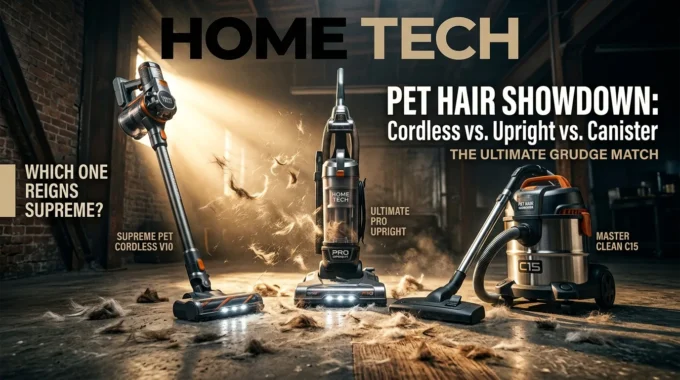
Today, we’re diving deep into the three primary vacuum types that dominate the market: cordless, upright, and canister. Each offers distinct advantages and disadvantages when pitted against the formidable foe that is pet hair. We’ll explore their strengths, expose their weaknesses, and ultimately help you determine which model is the champion for your household.
The Cordless Vacuum: Nimble, Quick, But Powerful Enough?
Cordless vacuums have revolutionized quick cleanups, offering unparalleled convenience and freedom of movement. Their lightweight design and battery operation make them incredibly appealing for daily maintenance, especially for homes with multiple levels or a mix of flooring types. Imagine this situation: your furry friend just tracked a trail of shedding across your entryway minutes before guests arrive. A cordless vacuum allows you to grab it, zip through the area, and have it looking pristine in seconds, without the hassle of unwinding cords.
However, when it comes to tackling serious pet hair accumulation, the capabilities of cordless models can vary significantly. High-end cordless vacuums, such as those from Dyson (like the V15 Detect) or Shark (like the Stratos Cordless), often feature powerful digital motors and specialized pet hair attachments designed to prevent tangling. These models can genuinely impress on both hard floors and low-pile carpets. Yet, their primary limitations often revolve around battery life and dustbin capacity. A typical run time of 30-60 minutes on a full charge, often less on max power settings, might be sufficient for quick tidies but could fall short for deep cleaning an entire large home.
Pros:
- Exceptional portability and maneuverability.
- Ideal for quick spot cleaning and daily upkeep.
- Many convert into handheld vacuums for upholstery and car interiors.
- Excellent for homes with stairs or multiple levels.
Cons:
- Limited battery life, especially on higher power settings.
- Smaller dustbin capacity requires frequent emptying.
- Suction power can be less consistent than corded alternatives.
- Higher upfront cost for premium models.
For homes with one or two pets and primarily hard floors or low-pile rugs, a high-quality cordless vacuum can be an excellent primary cleaner. But for intense pet hair situations or larger carpeted areas, it often works best as a supplementary tool for home maintenance.
The Upright Vacuum: The Traditional Workhorse for Deep Cleans
The upright vacuum has long been the quintessential cleaning machine, particularly revered in homes with extensive carpeting. When you think of a vacuum built for serious suction and thorough cleaning, an upright often comes to mind. These machines are designed to drive deep into carpet fibers, dislodging embedded dirt and, crucially, stubborn pet hair. Models like the Bissell Pet Hair Eraser Turbo or various Shark Navigator Lift-Away Professional models often feature powerful brush rolls specifically engineered to pick up pet hair without tangling, along with advanced filtration systems like HEPA filters that capture pet dander and allergens.
The primary strength of an upright vacuum lies in its consistent, powerful suction and often larger dustbin capacity, allowing for longer cleaning sessions without interruption. This makes them ideal for deep cleaning large, carpeted rooms. However, their bulk and weight can make them less agile. Navigating around furniture, under low-lying tables, or up a flight of stairs can be a workout, and honestly, can be quite frustrating. While many uprights now offer “lift-away” canister features to improve versatility, they still don’t match the nimbleness of a dedicated canister or cordless model for intricate tasks.
Pros:
- Superior suction power, especially on carpets.
- Large dustbin capacity for extended cleaning.
- Wide cleaning path covers more ground quickly.
- Excellent filtration systems for allergens and pet dander.
Cons:
- Heavier and bulkier, making maneuverability challenging.
- Less effective under low furniture or in tight spaces.
- Can be difficult to use on stairs without specific attachments or lift-away features.
- Can be noisy compared to other types.
If your home is predominantly carpeted and pet hair is deeply embedded, an upright vacuum is often your best bet for thorough, consistent cleaning. It’s truly built for the long haul of maintaining a fur-free carpet.
The Canister Vacuum: Versatility and Precision for Mixed Surfaces
Canister vacuums offer a unique blend of powerful suction and remarkable maneuverability, making them incredibly versatile for homes with a mix of flooring types, extensive hard surfaces, or delicate areas. The separate canister and hose design means you’re only pushing a lightweight wand across your floors, allowing you to easily reach under furniture, into tight corners, and above-floor surfaces without lugging the entire unit. In my opinion, for comprehensive cleaning tips across various materials, canister vacuums often shine.
When it comes to pet hair, canister vacuums equipped with a motorized powerhead (often called a turbo brush or electric power nozzle) can perform exceptionally well on carpets, rivaling the deep-cleaning capability of many uprights. For hard floors, the soft brush attachments are gentle yet effective at picking up fine pet hair without scratching. Brands like Miele (e.g., C3 Cat & Dog) are renowned for their robust build quality, quiet operation, and specialized pet tools designed specifically to tackle fur, dander, and odors, alongside multi-stage filtration systems that keep your air cleaner.
Pros:
- Exceptional maneuverability and reach, especially under furniture.
- Quiet operation compared to uprights.
- Versatile with a wide array of attachments for all surfaces (hardwood, rugs, upholstery).
- Powerful suction that can be gentle on delicate floors.
Cons:
- Can be cumbersome to store due to separate components.
- Requires two-handed operation (pulling canister, pushing wand).
- Hose can sometimes tangle or snag on furniture.
- Often a higher price point for premium, pet-specific models.
For those with a varied home environment – hardwood floors, area rugs, upholstery, and stairs – a high-quality canister vacuum with a strong powerhead is an incredibly effective and adaptable solution for pet hair management.
The Ultimate Showdown: Which Vacuum Wins the Pet Hair Battle?
So far we’ve covered the individual strengths and weaknesses of each vacuum type. Now, let’s get to the really critical point: which one truly wins when pet hair is the primary adversary? Honestly, there isn’t a single “best” vacuum for everyone, but rather a best fit for your specific home and pet situation. Let me add something here: success often comes from understanding your unique challenges.
Consider these factors:
- Dominant Flooring Type:
- Mostly Carpets (especially high-pile): An upright vacuum with a powerful brush roll is typically your best bet for deep extraction of embedded pet hair. Their consistent suction and wide cleaning path excel here.
- Mostly Hard Floors: A canister vacuum with a dedicated hard floor tool or a good quality cordless vacuum with soft roller attachments will perform admirably, preventing scratches while effectively gathering fur.
- Mixed Flooring: A versatile canister vacuum with interchangeable powerheads and floor tools offers the best overall performance. A premium cordless vacuum can also handle this, though battery life might be a concern for larger homes.
- Pet Hair Type & Volume:
- Long, Tangly Hair: Look for vacuums with “tangle-free” brush rolls or those designed to handle long hair, often found in higher-end uprights and some cordless models.
- Fine Dander/Allergens: Any vacuum with a sealed system and a true HEPA filter is crucial. Many premium uprights and canister vacuums excel here, capturing 99.97% of particles down to 0.3 microns.
- Home Layout & Size:
- Large Homes with Open Spaces: Uprights or high-capacity canisters are efficient.
- Multi-Level Homes with Stairs: Cordless or canister vacuums offer superior ease of use.
- Homes with Lots of Furniture/Tight Spaces: Canister or cordless models excel in maneuverability.
- Maintenance & Convenience:
- Quick Cleanups: Cordless vacuums are unmatched for daily spot cleaning.
- Thorough Weekly Cleanings: Uprights or canisters provide the power and capacity needed.
Based on my experience, for the ultimate pet hair removal across various surfaces, a high-quality canister vacuum with a motorized powerhead and excellent filtration (like a HEPA filter) often provides the most comprehensive solution. It combines strong suction, versatility, and maneuverability. However, if your home is predominantly carpeted, an advanced upright will likely serve you best. For daily convenience and quick cleanups, a robust cordless model is an invaluable addition, potentially even as a secondary vacuum alongside a more powerful corded machine for weekly deep cleaning sessions.
Ultimately, winning the pet hair battle isn’t about one vacuum reigning supreme for all, but about understanding your specific challenges and choosing the tool that best addresses them. Evaluate your home, your pet, and your cleaning habits. Invest in a vacuum that not only promises to tackle pet hair but delivers consistent, effective results, ensuring your home remains a clean, welcoming haven for both two-legged and four-legged inhabitants. A well-maintained home starts with the right tools, and when it comes to pet hair, the right vacuum is paramount.