When a dog leaves a fresh urine spot on the sofa or a lingering scent on a hardwood floor, the problem goes far beyond an unsightly stain. Urine contains proteins, uric acid crystals, and ammonia that seep into fibres and pores, creating a hidden reservoir of smell that can trigger repeat marking. Conventional sprays may mask the odor, but they don’t destroy the source. Enzymatic cleaners, designed to break down the very molecules that cause the smell, are the only truly effective solution for a clean, pet‑friendly home.
Quick answer: An enzymatic cleaner works by using natural enzymes to digest urine proteins and uric acid, eliminating the odor at its source. Choose a product that matches the surface you’re treating—carpets, sealed wood, or outdoor concrete—for the best results.
Why Enzymatic Cleaners Outperform Traditional Sprays
How enzymes neutralise urine
Enzymes are biological catalysts that accelerate the breakdown of complex molecules. In a pet‑urine cleaner, protease enzymes target the protein chains, while urease attacks uric acid crystals. Within minutes to a few hours, the urine is reduced to harmless water and carbon dioxide, leaving no scent for a dog’s sensitive nose to detect. This chemical action is fundamentally different from simply covering the smell with fragrance.
Safety and surface compatibility
Because the active ingredients are biologically derived, enzymatic formulas are typically non‑toxic, pH‑neutral (around 7), and safe around children and pets when used as directed. They can be applied to a wide range of substrates—carpet loops, microfiber upholstery, sealed hardwood, laminate, and even concrete—without stripping finishes or discoloring fabrics. The key is to follow the manufacturer’s recommended dwell time, usually 10–15 minutes, to allow the enzymes to work fully.
Choosing the Right Enzymatic Cleaner for Your Home
Key factors to consider
Not every “odor remover” contains enzymes. Look for labels that explicitly state “bio‑enzymatic” or list protease, amylase, and lipase among the active ingredients. The product’s pH should sit near neutral; highly acidic or alkaline solutions can damage delicate finishes, especially on wood. Dilution ratios matter too—most concentrates require a 1:5 mix with water, delivering the optimal enzyme concentration without waste.
Top UK products side‑by‑side
| Brand & Model | Target Surface | Enzyme Blend | pH | Recommended Dilution | Price (≈£) |
|---|---|---|---|---|---|
| Simple Solution Extreme pet stain & Odor Remover | Carpet & Upholstery | Protease + Urease | 7.2 | 1 : 5 | 12 |
| Nature’s Miracle Advanced Stain & Odor Eliminator | All Surfaces | Protease + Amylase + Lipase | 7.0 | Undiluted (spray) | 15 |
| Urine Off Dog & Puppy Formula | Wood & Tile | Urease + Oxidase | 6.8 | 1 : 4 | 13 |
| EcoZone Enzymatic Cleaner | Eco‑friendly/All‑round | Protease + Cellulase | 7.1 | 1 : 6 | 11 |
| Simple Solution Outdoor Odour Eliminator | Grass, Concrete, Decking | Protease + Urease | 7.0 | Undiluted (hose‑end) | 14 |
Product Best For Price Range Key Features Simple Solution Extreme Carpets & upholstery £10–£15 Triple-strength enzymes Nature’s Miracle Advanced Multi-surface £12–£18 Trusted global brand Urine Off Dog Formula Veterinary use £15–£20 Breaks down uric acid crystals EcoZone Enzymatic Cleaner Eco-friendly buyers £8–£12 Plant-based enzymes
Internal resource links
For a deeper dive into selecting the best vacuum for pet hair, see our best vacuum for pet hair guide. If you’re building a full‑house deep‑clean routine, the deep cleaning checklist offers a step‑by‑step plan.
Application Techniques for Different Surfaces
Carpets and upholstery
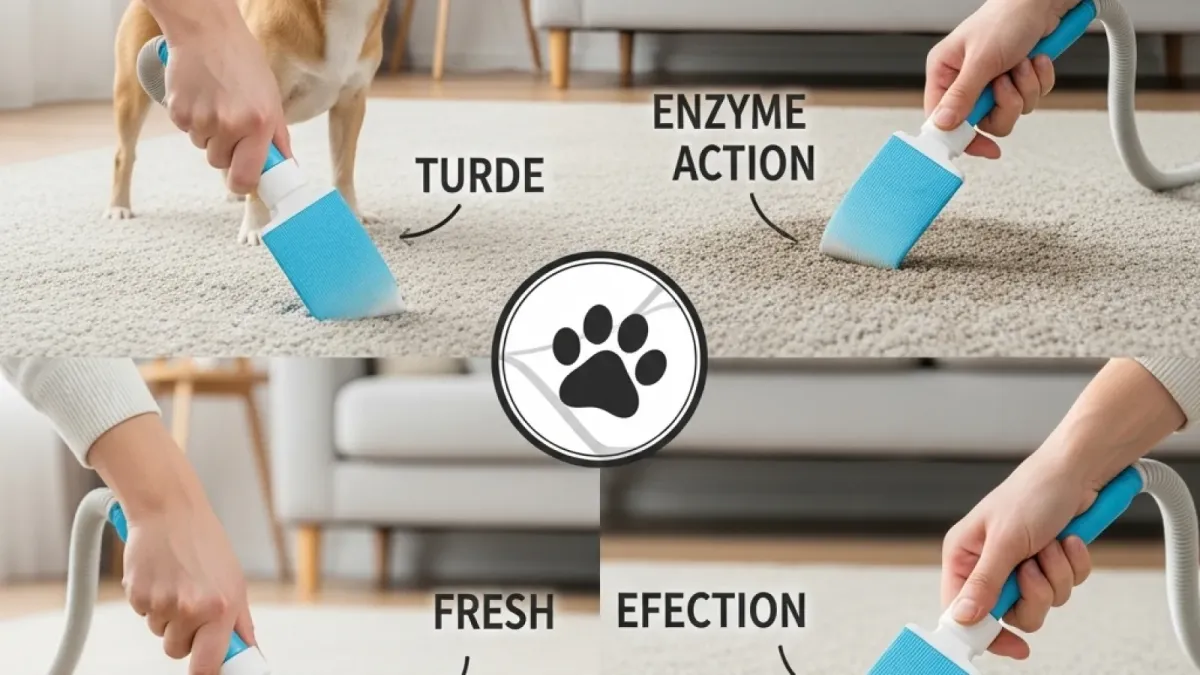
Begin by blotting the fresh spot with a clean, dry microfiber towel—press, don’t rub, to avoid pushing urine deeper. Spray the enzymatic solution generously, ensuring the fibers are saturated. Let it sit for the full dwell time (10–15 minutes), then extract excess liquid with a wet‑vac or a carpet‑cleaning machine set to a low‑speed 120 AW suction and a HEPA‑rated filter to capture airborne particles.
Wood floors
Hard‑sealed wood tolerates enzymatic cleaners well, but unsealed or waxed surfaces need extra caution. Apply the cleaner with a soft microfiber mop (300 GSM weight) using a 1 : 4 dilution. Work in the direction of the grain, allowing the solution to penetrate for at least 10 minutes before wiping with a clean, damp mop and drying with a microfiber cloth. Test on a hidden spot first to confirm there’s no discoloration.
Outdoor areas
For lawns or patios, a hose‑end spray like Simple Solution Outdoor Odour Eliminator mixes directly with water at a 1 : 10 ratio. Apply evenly, let sit for 5 minutes, then rinse with a garden hose. Avoid using acidic cleaners on limestone or marble pavers, as they can etch the surface.
Cleaner's tip: Many homeowners skip the dwell time, assuming the spray “does the work” instantly. Skipping those crucial minutes lets the enzymes finish digesting urine crystals, leading to persistent odour and repeat marking.
DIY vs. Commercial Enzyme Cleaners
Homemade neutraliser (non‑enzymatic)
- 2 cups warm water
- ½ cup white vinegar
- 2 tablespoons baking soda (add slowly to avoid fizz)
- Optional: a few drops of lemon essential oil for scent
This mixture can neutralise fresh urine but lacks live enzymes, so it’s best for immediate spills on tile or sealed surfaces. It won’t break down deep‑set uric acid crystals, which is why the scent often returns.
When to reach for a commercial enzyme product
If the stain is older than 24 hours, has penetrated carpet backing, or sits on a porous wood finish, a commercial enzymatic cleaner is essential. Products such as Nature’s Miracle or Simple Solution contain stabilized, freeze‑dried enzymes that become active when rehydrated, guaranteeing a biochemical breakdown that DIY blends cannot match.
Maintenance & Prevention Strategies
Regular vacuuming and floor care
Pair enzymatic cleaning with a high‑performance vacuum. A Dyson V11 Torque Drive, delivering up to 185 AW suction and equipped with a sealed HEPA filter, captures fine pet dander and prevents re‑contamination of cleaned areas. For hard floors, a Shark VACMOP Pro with a 300 GSM microfiber pad provides gentle scrubbing without scratching.
Behavioural and protective measures
Place waterproof training mats in high‑traffic zones, and keep a portable spray bottle of enzymatic cleaner near doors for quick response. Regularly washing pet bedding in hot water (≥60 °C) eliminates residual urine crystals. Finally, schedule a weekly “spot‑check” with a UV‑detecting flashlight; urine fluoresces under UV, revealing hidden spots before they become odour problems.
Recommendation: If you own carpeted living areas and a small to medium‑sized dog, start with Simple Solution Extreme for spot cleaning and keep a bottle of EcoZone Enzymatic Cleaner on hand for deeper, periodic treatments. For sealed hardwood, Bubba’s Super Strength Enzyme Cleaner offers the deepest penetration without harming the finish. Outdoor accidents are best tackled with Simple Solution Outdoor Odour Eliminator, applied via hose‑end for uniform coverage.
Frequently Asked Questions
Do enzymatic cleaners work on dried urine?
Yes. The enzymes remain active even after the liquid has evaporated, as long as the product is re‑hydrated on the stain. A longer dwell time (up to 30 minutes) may be needed for fully set‑in spots.
Can I use an enzymatic cleaner on laminate flooring?
Laminate is water‑resistant but not waterproof. Apply a light mist, avoid soaking, and wipe dry promptly. Test on a concealed area first to ensure no swelling.
Are enzymatic cleaners safe to use around children?
When used according to label directions—typically diluted, applied, and rinsed—they are non‑toxic. Always store out of reach and keep the area ventilated during the dwell period.
How often should I treat my home with an enzymatic cleaner?
For homes with multiple pets, a preventative spray on high‑risk zones once a week keeps scent levels low enough to discourage marking. Spot‑treat accidents immediately for best results.
Is it necessary to rinse after using an enzymatic cleaner?
Rinsing is optional on carpets and upholstery; the enzymes continue working as the product dries. On sealed wood or tile, a light rinse with water and a dry mop helps remove any residual solution.
Sources
- Nature’s Miracle product information
- EPA guidelines on cleaning products
- CDC cleaning and disinfection recommendations
- Dyson V11 specifications
| Rank | Product | Best For | Price Range |
|---|---|---|---|
| 1 | Simple Solution Extreme | Carpets & upholstery | £10–£15 |
| 2 | Nature’s Miracle Advanced | Multi-surface | £12–£18 |
| 3 | Urine Off Dog Formula | Veterinary use | £15–£20 |
| 4 | Bubba’s Super Strength | Wood floors | £15–£20 |
| 5 | EcoZone Enzymatic Cleaner | Eco-friendly buyers | £8–£12 |
| 6 | Simple Solution Outdoor | Gardens & patios | £12–£16 |
| 7 | Rug Doctor Pet Formula | Carpet machines | £15–£20 |
| 8 | Vax pet stain remover | UK carpet cleaners | £10–£15 |
| 9 | Dr. Beckmann Pet Spray | Budget buyers | £5–£8 |
| 10 | Tesco Pet Odor Spray | Everyday use | £3–£5 |