
Understanding the Enemy: The Stubborn Science of Kitchen Grease
There are few sights more disheartening in a clean kitchen than the sticky, grimy build-up of grease on your stovetop and range hood. It’s a common adversary in every home, an inevitable byproduct of cooking, yet its stubborn nature often leaves homeowners feeling defeated. But what exactly makes kitchen grease such a formidable opponent in the battle for cleanliness?
At its core, kitchen grease is a complex mixture of vaporized cooking oils, food particles, and airborne dust that settles and adheres to surfaces. Over time, heat from cooking causes these oils to polymerize, transforming them into a sticky, resinous film that bonds tenaciously to metal, glass, and plastic. This isn't just an aesthetic issue; accumulated grease can pose a fire hazard, harbor bacteria, and significantly reduce the efficiency and lifespan of your kitchen appliances. Understanding this transformation is the first step in formulating an effective strategy for its removal.
The good news is that with the right approach—combining potent degreasers and intelligent scrubbing techniques—even the most deeply ingrained grease doesn't stand a chance. Here at Clean & Cleaner, we believe that a clean kitchen is the heart of a happy home, and we're here to equip you with the knowledge to maintain yours with confidence and ease.

Choosing Your Weapon: Selecting the Right Degreaser for the Job
Selecting the correct degreaser is paramount to effectively tackling kitchen grease. Just as you wouldn't use a butter knife to cut steak, you shouldn't approach heavy grease build-up with a mild all-purpose cleaner. The market offers a range of options, each with specific strengths. Let's explore the best choices to ensure your house cleaning efforts are highly effective.
Heavy-Duty Chemical Degreasers: When You Need Serious Power
For baked-on, stubborn grease, a heavy-duty chemical degreaser is often your best ally. These products contain powerful surfactants and alkaline agents (like sodium hydroxide or potassium hydroxide) that work to break down the grease at a molecular level, allowing it to be easily wiped away. Many also include solvents that dissolve oil and fat. Popular and highly effective examples include Krud Kutter Original Concentrated Cleaner/Degreaser, Zep Heavy-Duty Citrus Degreaser, and even specialized oven cleaners like Easy-Off Fume Free oven cleaner, which can be adapted for stovetops (always patch test first and ensure proper ventilation).
When using these robust formulas, remember that power comes with responsibility. Always wear cleaning tips-recommended personal protective equipment (PPE), including rubber gloves and eye protection, and ensure the area is well-ventilated. Never mix different cleaning products, especially those containing ammonia or bleach, as this can create dangerous fumes. These degreasers are ideal for periodic deep cleaning tasks where grease has accumulated over time.
Eco-Friendly & Natural Alternatives: Gentle Yet Effective Options
For those who prefer a less chemical-intensive approach or are dealing with lighter grease accumulation, several eco-friendly and natural options can be surprisingly effective. Products incorporating citrus solvents (d-Limonene) are excellent natural degreasers, offering a pleasant scent alongside their cleaning power. Brands like Method and Seventh Generation offer plant-based degreasers that perform well for regular maintenance.
For a truly DIY approach, a paste made from baking soda and a little water can work wonders. Baking soda is a mild abrasive and its alkaline properties help lift grease. White vinegar, another kitchen staple, can cut through light grease and grime, especially when warmed. While these natural solutions might require a bit more dwell time or elbow grease than their chemical counterparts, they are fantastic for routine home maintenance and for anyone concerned about harsh fumes or environmental impact. I believe incorporating these options provides flexibility for varied cleaning needs.
Mastering the Scrub: Techniques for Spotless Stovetops & Hoods
Once you've chosen your degreaser, the next critical step is applying the right scrubbing techniques. The goal isn't just to remove the grease, but to do so efficiently and without damaging your valuable kitchen surfaces. Let's get into the specifics for both your stovetop and range hood.
Stovetop Cleaning Mastery: From Grates to Glass
Before you begin, always ensure your stovetop is cool and disconnected from power (if electric). Remove all removable parts: grates, burner caps, and drip pans. For gas stovetop grates and caps, immerse them in a sink filled with hot water and a generous amount of your chosen degreaser (or a strong dish soap like Dawn Platinum). Let them soak for at least 15-30 minutes, or even longer for heavy build-up. For a concrete mini-scenario, imagine this situation: you've just hosted a big dinner, and a pasta sauce overflowed, baking onto your grates. Soaking them overnight in a degreaser solution will save you hours of scrubbing.
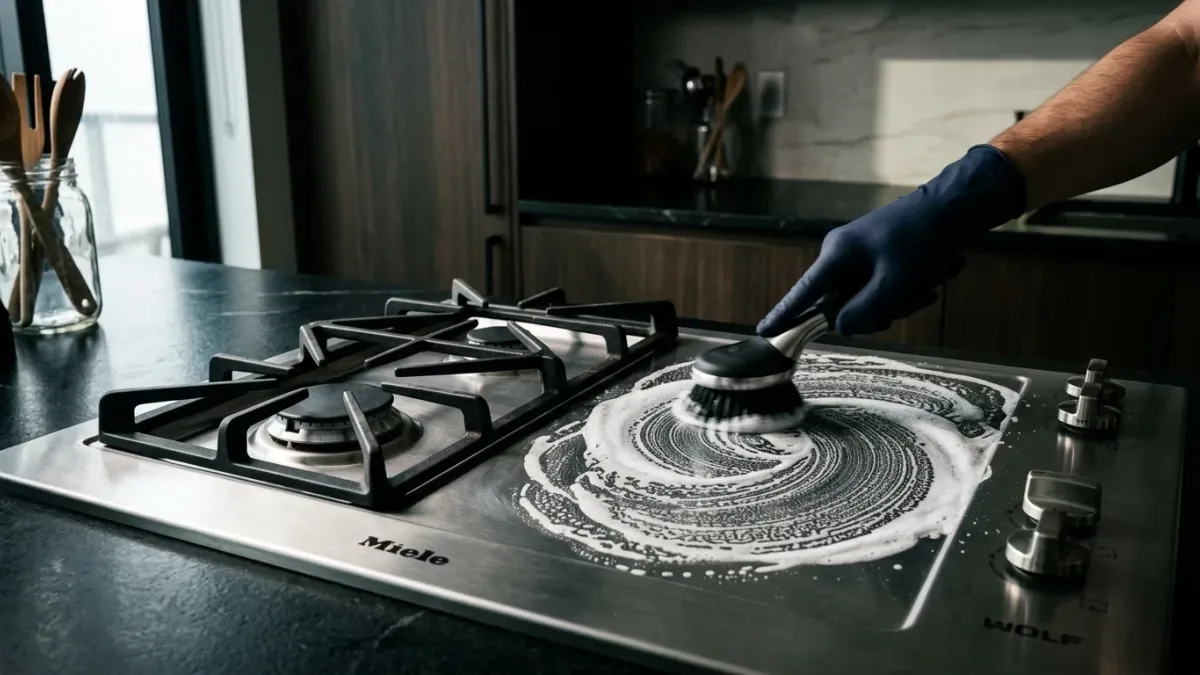
While the parts soak, spray your stovetop surface liberally with the degreaser. For glass-top stoves, avoid abrasive scrubbers. Instead, use a non-scratch pad (like a Scotch-Brite Non-Scratch Scour Pad) or a microfiber cloth. For burnt-on residues, a single-edge razor blade held at a shallow angle can carefully scrape off hardened gunk on glass-ceramic surfaces, but extreme caution is advised to prevent scratching. For stainless steel, always wipe and scrub in the direction of the grain to prevent visible scratches. Use an old toothbrush for tight crevices around burners and control knobs. After scrubbing, wipe down thoroughly with a clean, damp cloth, then dry with another clean cloth to prevent streaks. Finally, scrub the soaked grates and caps with a brush, rinse, and dry completely before reassembling.
Hood and Filter Deep Cleaning: Ensuring Optimal Airflow
The range hood is often overlooked but collects an astonishing amount of grease. Start by wiping down the exterior of the hood with your degreaser and a microfiber cloth. For stainless steel hoods, use a specific stainless steel cleaner and polish after degreasing to restore its shine, wiping with the grain. Let me add something here: consistent wiping can drastically reduce the need for intense deep cleaning.
The most critical component to clean are the filters. Most range hoods use metal mesh filters, designed to trap grease before it enters the fan mechanism. Remove these filters and inspect them. For charcoal filters, these are typically disposable and should be replaced according to the manufacturer's recommendations. For mesh filters, submerge them in a sink or large basin filled with very hot water and a strong degreaser. Let them soak for at least 30 minutes. You'll often see the water turn cloudy with dissolved grease. After soaking, scrub them with a stiff brush (a dish brush works well) to dislodge any remaining residue. Some mesh filters are even dishwasher-safe – check your owner's manual for confirmation. Rinse them thoroughly and allow them to air dry completely before reinstalling. This ensures your hood functions efficiently, helping with overall home maintenance.
Safety First & Proactive Maintenance for Lasting Cleanliness
As a cleaning expert, I cannot stress enough the importance of safety when dealing with powerful cleaning agents and stubborn grease. Beyond immediate cleaning, adopting a proactive maintenance routine is key to keeping your kitchen spotless and safe long-term. Honestly, preventing heavy build-up is always easier than tackling it.
Essential Safety Practices: Protecting Yourself and Your Home
Always read and follow the instructions on your degreaser's label. This includes recommended dwell times, ventilation requirements, and warnings. As mentioned, wear protective gloves to prevent skin irritation and eye protection to guard against splashes. Ensure the area you're cleaning is well-ventilated; open windows and turn on your kitchen exhaust fan. Never, under any circumstances, mix cleaning chemicals, especially bleach and ammonia-based products, as this can produce toxic fumes. Finally, store all cleaning products safely out of reach of children and pets. Proper disposal of cleaning solutions and rags is also part of responsible house cleaning.
Proactive Home Maintenance: Keeping Grease at Bay
The best way to conquer kitchen greasiness is to prevent it from becoming a problem in the first place. This means integrating regular cleaning into your routine. Wipe down your stovetop after every use – a quick swipe with a damp cloth can remove fresh splatters before they have a chance to harden. A weekly wipe-down of your range hood exterior can keep light grease from accumulating. For your stovetop and hood filters, aim for a more thorough deep cleaning every 1-3 months, depending on your cooking frequency. This consistent effort is a cornerstone of effective home maintenance.
But what if you don't have the time for these regular deep dives? To be fair, life gets busy. For those instances, or for an annual overhaul, considering professional cleaning services can be an excellent investment. They have access to commercial-grade degreasers and equipment, ensuring a thorough and efficient job that restores your kitchen's shine. Remember, a little prevention goes a long way in keeping your kitchen not just clean, but also hygienic and safe.
Mastering kitchen greasiness is entirely within your reach. By understanding the nature of grease, selecting the appropriate degreaser, and employing effective scrubbing techniques, you can transform your stovetop and range hood from grimy to gleaming. Embrace these cleaning tips, prioritize safety, and commit to a consistent maintenance routine. Your kitchen, the bustling heart of your home, deserves to be a clean, safe, and welcoming space. Go forth, armed with this knowledge, and conquer that grease!