






As a seasoned cleaning expert and home maintenance specialist, I know that a sparkling clean pool isn’t just about skimming leaves; it’s about mastering the invisible world of water chemistry. For any homeowner, renter, or DIY enthusiast with a pool, understanding how to balance pH and chlorine is fundamental to ensuring a safe, healthy, and enjoyable swimming experience. Let’s dive into the basics of pool water chemistry, making it easy for you to maintain your aquatic oasis with confidence.
Table Of Content
- Why Pool Water Chemistry Matters (Beyond Just Looking Clean!)
- The Two Pillars: pH and Chlorine Explained
- Understanding pH: The Acidity/Alkalinity Balance
- Understanding Chlorine: Your Pool’s Sanitizer
- Your Essential Tool: The Pool Water Test Kit
- The Balancing Act: Step-by-Step Guidance
- Beyond the Basics: Other Key Parameters
- Consistent Care for a Pristine Pool
- When to Call the Professional Cleaning Services
Why Pool Water Chemistry Matters (Beyond Just Looking Clean!)
Imagine diving into a pool that looks clear but makes your eyes sting or leaves your skin feeling itchy. Or worse, a pool that develops stubborn algae despite your best skimming efforts. These are all signs of unbalanced pool chemistry. Proper balancing is crucial for several reasons:
- Swimmer Comfort: Correct pH levels prevent eye and skin irritation.
- Sanitization Effectiveness: Chlorine works best within a specific pH range to kill bacteria and algae.
- Pool Longevity: Unbalanced water can corrode equipment, damage plaster, or etch liners.
- Cost Savings: Efficient chemistry means less need for excessive chemicals and costly repairs.
The Two Pillars: pH and Chlorine Explained
Understanding pH: The Acidity/Alkalinity Balance
Think of pH as the measure of how acidic or basic (alkaline) your pool water is. The pH scale ranges from 0 to 14, with 7 being neutral. For pools, we aim for a slightly alkaline range because it’s most comfortable for swimmers and optimal for chlorine’s effectiveness.
- Ideal pH Range: 7.4 to 7.6. This range is similar to human tears, minimizing irritation.
- What Happens if pH is Too High (Above 7.8):
- Chlorine becomes less effective, leading to algae and cloudy water.
- Calcium can scale and deposit on pool surfaces and equipment.
- Swimmers might experience dry skin and cloudy eyes.
- What Happens if pH is Too Low (Below 7.2):
- Water becomes corrosive, potentially damaging pool equipment and surfaces.
- Chlorine dissipates too quickly, requiring more frequent additions.
- Swimmers may experience stinging eyes and itchy skin.
- How to Adjust pH:
- To Increase pH (if too low): Use a pH Increaser, typically soda ash (sodium carbonate).
- To Decrease pH (if too high): Use a pH Decreaser, such as muriatic acid or sodium bisulfate.
Always follow product label instructions carefully, adding small amounts, allowing circulation, and retesting before adding more.
Understanding Chlorine: Your Pool’s Sanitizer
Chlorine is the hero of hygiene in your pool, responsible for killing bacteria, viruses, and algae, keeping your water safe and clear. When we talk about chlorine, we’re usually referring to “free available chlorine” (FAC), which is the active form doing the sanitizing work.
- Ideal Free Available Chlorine (FAC) Range: 1 to 3 parts per million (ppm).
- What Happens if Chlorine is Too Low:
- Bacteria and algae will grow rapidly, leading to cloudy water, slime, and potential health risks.
- Your pool won’t be properly sanitized.
- What Happens if Chlorine is Too High:
- Strong chemical odor (often mistaken for low chlorine, but it’s usually “combined chlorine” – chlorine that has reacted with contaminants).
- Eye and skin irritation, and potentially bleaching swimsuits.
- Can damage pool equipment over time.
- Types of Chlorine:
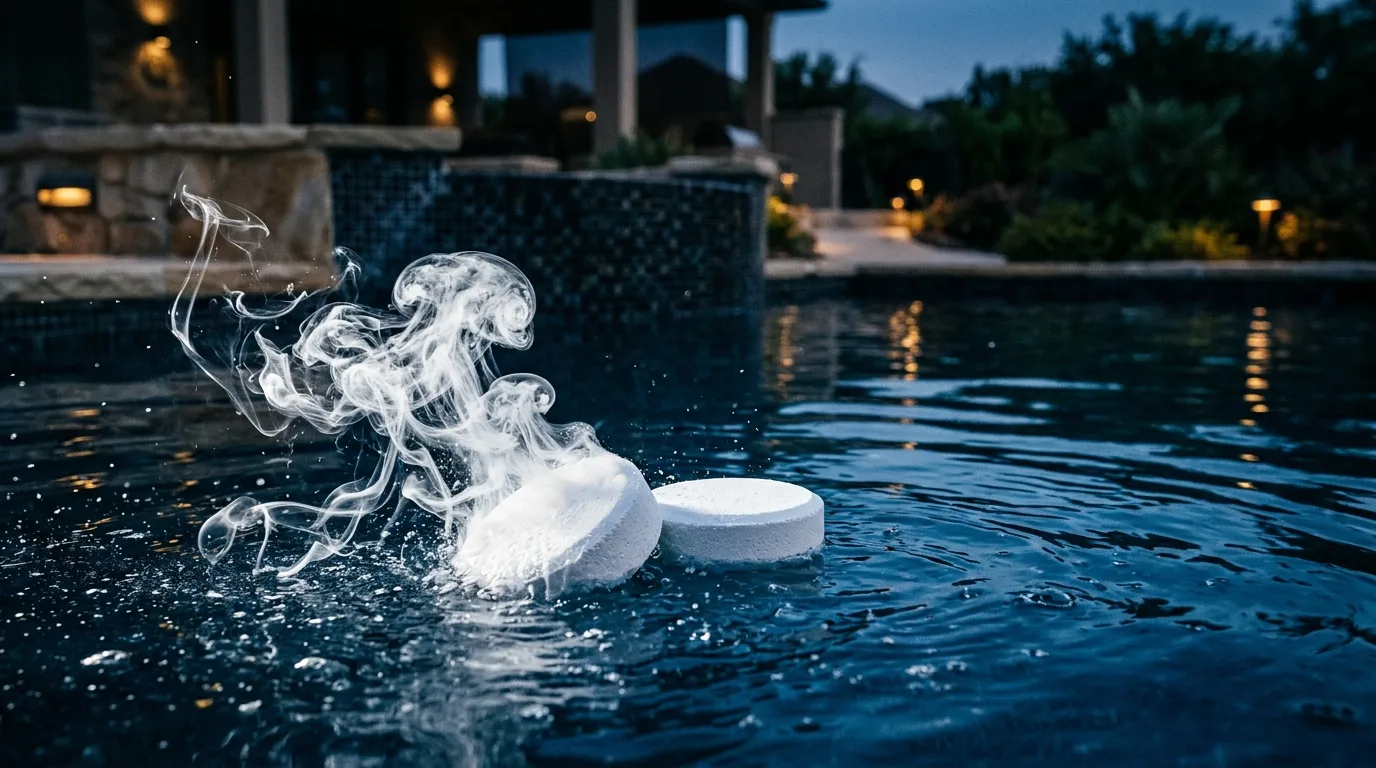
- Stabilized Chlorine (e.g., Trichlor, Dichlor): Contains cyanuric acid (CYA) to protect chlorine from UV degradation, making it last longer. Often comes in tablets (like 3-inch pucks) or granular form.
- Unstabilized Chlorine (e.g., Calcium Hypochlorite “Cal Hypo”, Sodium Hypochlorite “Liquid Chlorine”): Works quickly but is quickly consumed by sunlight. Great for shocking.
- How to Add/Adjust Chlorine:
- Use chlorine tablets in a floater or automatic feeder for daily maintenance.
- Add granular chlorine by dissolving it in a bucket of water first, then pouring it into the pool, never directly.
- Use liquid chlorine or Cal Hypo for shocking your pool, which is a deep cleaning process to kill off contaminants and algae.
Remember that Cyanuric Acid (CYA) also needs to be in an ideal range (30-50 ppm) to protect your chlorine without making it sluggish. Test this regularly too!
Your Essential Tool: The Pool Water Test Kit
You can’t balance what you don’t measure! A reliable test kit is your most important tool for pool maintenance. For beginners, I recommend a good quality liquid reagent kit for accuracy, though test strips can be a quick daily check.
- Testing Frequency:
- Daily or Every Other Day: For chlorine and pH, especially during heavy use or hot weather.
- Weekly: For Total Alkalinity (TA) and Cyanuric Acid (CYA).
- Monthly: For Calcium Hardness (CH).
- How to Test (General Steps):
- Collect a water sample from elbow-deep in the pool, away from skimmers or returns.
- Follow your kit’s instructions for adding reagents or dipping strips.
- Compare the resulting colors to the chart provided with your kit to determine levels.
The Balancing Act: Step-by-Step Guidance
When your test results show imbalance, here’s the general order of operations:
- Adjust Total Alkalinity (TA) First: If your TA is off, it will make pH harder to control. Aim for 80-120 ppm. Use sodium bicarbonate (baking soda) to increase TA.
- Adjust pH Second: Once TA is in range, adjust pH to 7.4-7.6.
- Adjust Chlorine Third: Finally, add chlorine to bring it into the 1-3 ppm range.
Important Safety Tips:
- Always read product labels: They contain crucial instructions and warnings.
- Never mix chemicals: This can create dangerous reactions. Add each chemical separately, allowing time for it to circulate.
- Add chemicals slowly: Distribute them around the pool or pre-dissolve granular products.
- Wear protective gear: Gloves and eye protection are a must.
- Test, Add, Circulate, Retest: Don’t guess! Always retest after adding chemicals.
Beyond the Basics: Other Key Parameters
While pH and chlorine are the most critical for daily management, keep an eye on these for comprehensive home maintenance:
- Total Alkalinity (TA): Acts as a buffer for pH, preventing drastic swings. Ideal: 80-120 ppm.
- Calcium Hardness (CH): Prevents corrosion or scaling. Ideal: 200-400 ppm.
- Cyanuric Acid (CYA): Protects chlorine from UV rays. Ideal: 30-50 ppm.
Consistent Care for a Pristine Pool
Balancing chemicals is just one part of pool care. Regular physical house cleaning, like skimming debris, vacuuming, brushing walls, and ensuring your filter is clean and running sufficiently, all contribute to maintaining healthy water. Your filter system plays a vital role in circulating and cleaning the water, helping your chemicals do their job effectively.
When to Call the Professional Cleaning Services
Sometimes, despite your best efforts, you might encounter stubborn algae blooms, persistent cloudiness, or issues you can’t quite pinpoint. Don’t hesitate to reach out to a professional pool technician or cleaning service. They have advanced tools and expertise for complex problems and can even assist with deep cleaning or seasonal opening/closing.
Mastering pool water chemistry is an ongoing process, but with consistent testing and careful chemical additions, you’ll be able to keep your pool sparkling clean, safe, and ready for enjoyment all season long. Happy swimming!