How to Manually Clean Your Swimming Pool: A Comprehensive Step-by-Step Guide
Even with a robust filtration system, your swimming pool needs regular manual deep cleaning to stay sparkling clean, safe, and inviting. manual pool cleaning is a vital part of home maintenance that keeps your water pristine and extends the life of your pool equipment. Here at Clean & Cleaner, we believe a little elbow grease goes a long way. This guide will walk you through the process, ensuring you know exactly how to achieve that crystal-clear look.
Why Manual Cleaning is Essential
While your pool's filter system works tirelessly to remove microscopic particles, it can't handle everything. Leaves, bugs, dirt, and even algae spores often settle on the bottom or cling to the walls. Manual pool cleaning tackles these visible contaminants directly, preventing them from breaking down and impacting your water chemistry or overwhelming your filter. It's an indispensable part of good pool hygiene.
Gather Your Essential Cleaning Tools
Before you dive in, make sure you have the right arsenal of cleaning tools:
- Telescopic Pole: An extendable pole that all your attachments will connect to.
- Skimmer Net/Leaf Rake: A shallow net for surface debris, or a deeper bag-style rake for heavier items on the bottom.
- Pool Brush: A sturdy brush with bristles appropriate for your pool surface (nylon for vinyl/fiberglass, wire/stainless steel for concrete/gunite).
- Manual Pool Vacuum Head: Choose one with wheels for concrete/gunite or brushes for vinyl liners.
- Vacuum Hose: A long, flexible hose that connects your vacuum head to the skimmer or dedicated vacuum port.
- Garden Hose: For priming the vacuum hose.
- Water Testing Kit: Strips or a liquid kit to check chemical levels.
- Safety Goggles and Gloves: Especially when handling chemicals.
Pre-Cleaning Checks: A Quick Scan
Before you start the physical house cleaning of your pool, do a quick check:
- Check Water Level: Ensure the water level is halfway up your skimmer opening. If it's too low, your pump might draw air.
- Check Filter Pressure: Note your filter's starting pressure. You'll need to backwash (for sand/DE filters) or clean (for cartridge filters) if the pressure rises significantly after cleaning.
- Balance Chemicals (Optional but Recommended): If your water is cloudy or green, test and balance your chemicals (pH, alkalinity, chlorine) before brushing and vacuuming. This helps loosen contaminants and makes your cleaning more effective. For particularly stubborn algae, a shock treatment might be needed the day before.
Step-by-Step Manual Pool Cleaning
- Skim the Surface (The First Sweep)
Attach your skimmer net or leaf rake to the telescopic pole. Walk around the perimeter of your pool, sweeping the net across the surface to collect leaves, bugs, and other floating debris. Pay extra attention to corners and areas where debris might collect due to wind patterns. Empty your net frequently into a trash bin. - Brush the Walls and Floor (Loosen Up Dirt)
Swap your net for the pool brush on the telescopic pole. Start from the shallow end and work your way to the deep end. Brush the walls, steps, and any built-in benches thoroughly. Use firm, overlapping strokes to dislodge algae, dirt, and calcium deposits. Brush towards the main drain to help direct loosened debris towards the filtration system or where you'll vacuum. This is a crucial step for preventing algae growth and ensuring a comprehensive deep cleaning. - Manually Vacuum the Pool (Suck Up the Sediment)
- Prepare the Vacuum: Attach the vacuum head to your telescopic pole and then connect the vacuum hose to the head. Submerge the vacuum head and hose into the pool. To prime the hose (remove air), hold the open end of the hose over a return jet until water flows out, or place it against a return jet, or slowly feed water into it with a garden hose until it's completely filled with water and no more bubbles emerge.
- Connect to Suction: With the pool pump running, quickly plug the primed hose end into your skimmer's vacuum plate (or directly into a dedicated vacuum port if your pool has one). Ensure no air enters the hose during this step.
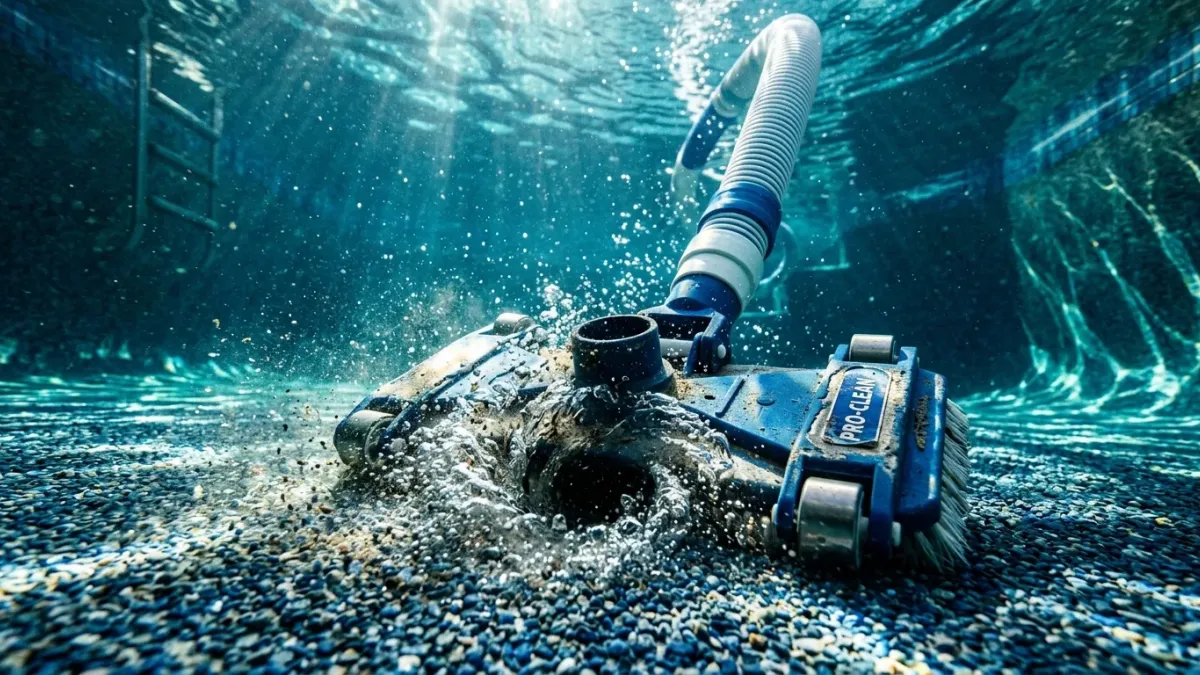
- vacuuming Technique: Move the vacuum head slowly and steadily across the pool floor in overlapping passes, much like mowing a lawn. Avoid lifting the vacuum head off the bottom too quickly, as this can stir up debris. If the water becomes too cloudy, stop and let the debris settle for an hour or two before continuing.
- Watch the Filter Pressure: If you notice a significant increase in your filter's pressure gauge during vacuuming, it means your filter is getting clogged. You may need to stop and backwash your filter (for sand or DE filters) or rinse your cartridge filter before continuing. For heavy debris loads, you might consider vacuuming to waste (if your filter allows), which bypasses the filter and sends the dirty water directly out of the pool, preventing filter clogging but lowering your water level.
- Empty Skimmer and Pump Baskets (Maintain Flow)
After vacuuming, turn off your pool pump. Remove and empty the skimmer basket(s) and the pump's hair and lint basket. Rinse them thoroughly and replace them. This ensures optimal water flow and filtration efficiency. - Backwash or Clean Your Filter (Post-Cleaning Care)
If your filter pressure increased during vacuuming, now is the time to backwash your sand or DE filter, or remove and clean your cartridge filter according to your manufacturer's instructions. This is a critical step in overall pool maintenance. - Recheck Water Chemistry (The Final Touch)
After cleaning, retest your pool water. Brushing and vacuuming can sometimes affect chemical levels, and you may need to add chemicals to rebalance your pH, alkalinity, and chlorine levels. A balanced pool is a healthy pool.
Safety Practices for Pool Cleaning
- Chemical Handling: Always wear gloves and eye protection when handling pool chemicals. Store them safely and according to instructions.
- Electrical Safety: Be cautious around electrical equipment. Ensure your hands are dry before touching switches, and never operate electrical devices near standing water.
- Slippery Surfaces: Pool decks can be slippery when wet. Wear appropriate footwear to prevent falls.
- Sun Protection: If cleaning during sunny hours, apply sunscreen and wear a hat.
Maintenance Frequency: How Often to Clean
The frequency of manual cleaning depends on several factors:
- Skimming: Daily, especially if you have trees nearby.
- Brushing: At least once a week, more often if you notice algae growth.
- Vacuuming: Once a week for most pools. If your pool gets heavy use or a lot of debris, vacuum twice a week.
- Baskets: Check and empty skimmer baskets daily, pump basket weekly.
Consistent cleaning tips like these will keep your pool in top condition. While professional cleaning services can be a great option for seasonal openings, closings, or specialized treatments, mastering manual cleaning empowers you to maintain a beautiful, healthy pool year-round.