Quick answer: To properly clean a hot tub filter, rinse the cartridge weekly with warm water, spray it monthly with a specialized alkaline degreaser to remove body oils, and soak it overnight every 3–4 months in an acidic filter cleaner solution (pH 2.0–3.0) to strip away calcium scale and mineral buildup. Always air-dry the filter completely before re-installing it into the filter canister.
Understanding Hot Tub Filter Types and Deterioration
Modern residential hot tubs rely heavily on spun-bond polyester pleated filter cartridges, typically rated between 30 to 50 microns. Brands like Unicel, Pleatco, and Filbur utilize woven fabric pleated around a rigid PVC core to maximize surface area within a compact housing. As water passes through the pleats, hair, skin flakes, cosmetic lotions, and environmental debris become trapped inside the micro-fibers. Over time, these organic materials combine with calcium carbonate to form a dense, hydrophobic shell across the filter media.
Failing to address this accumulation drastically reduces flow rate, measured in gallons per minute (GPM), which can trigger heater high-limit errors and automatic system shutoffs. While basic surface dirt can be flushed away with tap water, trapped organic lipids require targeted chemical breakdown. Understanding how different cleaning formulas interact with synthetic polyester fibers is essential for effective deep cleaning routines and long-term spa system health.
When physical inspection reveals crushed core support tubes, shredded pleat bands, or frayed polyester fabric, chemical cleaning will no longer restore baseline performance. At this point, total filter replacement is necessary to protect the heater element and booster pumps from cavitation damages.
The Three-Stage Spa Filter Cleaning System
Professional technicians utilize a multi-tiered approach to spa cartridge maintenance. Rather than waiting for water clarity to fail, a structured rotational schedule keeps the filtration media working at peak efficiency throughout the year.
1. The Weekly Rinse Schedule
Every seven to ten days, remove the filter cartridge from the basket and perform a thorough fresh-water wash down. Utilize a focused spray nozzle attached to a standard garden hose, holding the stream at a 45-degree downward angle to push trapped sediment out from between the pleats. Avoid using high-pressure pressure washers exceeding 50 PSI, as concentrated water jets can easily slice through polyester fabric, ruining the filter's micron rating.
2. The Monthly Spray & Degrease Treatment
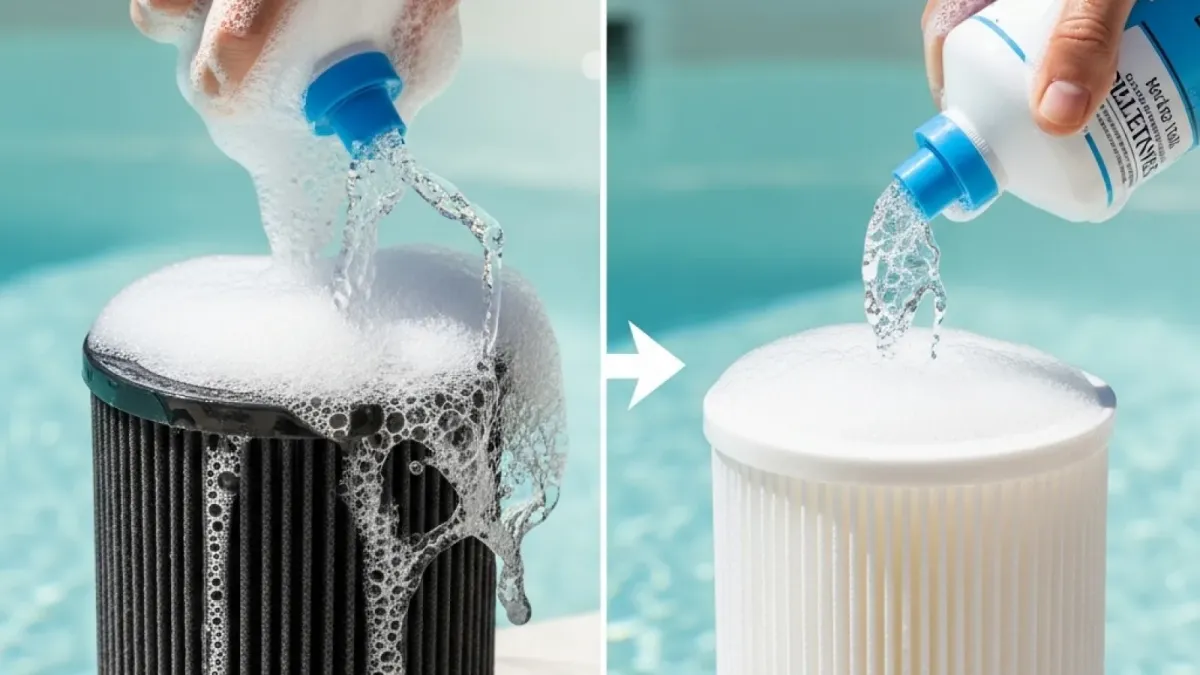
Once a month, apply a dedicated commercial hot tub filter spray cleaner formulated with surface-active agents (surfactants). These spray-on degreasers target bath oils, sunscreen, and lotion residue that fresh water alone cannot dissolve. After saturating the pleats, let the chemical dwell for 10 to 15 minutes to break down organic bonds before rinsing thoroughly. Incorporating these cleaning tips prevents oily scum lines from migrating into the main plumbing lines.
3. The Quarterly Deep Chemical Soak
Every three to four months—or whenever you perform a complete spa water drain and refill—the cartridge requires a 24-hour deep soak in an acidic, deep-cleaning chemical compound. Acidic cleaners dissolve stubborn calcium scale, iron deposits, and deeply embedded oils. Dilute a liquid filter cleaner concentrate at a ratio of 1 part cleaner to 5 parts water (or per manufacturer guidance) inside a heavy-duty 5-gallon bucket.
Cleaner's tip: Never put a wet, freshly chemically-cleaned filter back into your hot tub right away. Always let the cartridge air dry completely in the sun for at least 24 hours after rinsing. As the polyester fabric dries, the micro-fibers snap back into their original spatial orientation, which significantly increases trapping efficiency and extends the overall life of the filter element.
Comparing Filter Cleaning Methods and Products
Choosing the correct equipment and chemical compounds depends on your usage frequency, local water hardness, and available maintenance time. The table below outlines common cleaning methods, recommended chemical profiles, and practical performance ratings.
| Cleaning Method | Chemical Base / Active Ingredient | Optimal Contact Time | Primary Target Debris | Efficiency Rating |
|---|---|---|---|---|
| Commercial Alkaline Spray | Sodium Metasilicate / Surfactants (pH 11.0–12.0) | 10–15 minutes | Body oils, lotions, scum lines | Moderate to High |
| Acidic Soak Concentrate | Phosphoric / Sulfamic Acid (pH 1.5–2.5) | 12–24 hours | Calcium scale, mineral deposits | Maximum (Deep Clean) |
| DIY Vinegar Solution | 5% Diluted Acetic Acid (pH 3.0–3.5) | 24 hours | Light mineral buildup | Low to Moderate |
| Filter Flusher Hose Tool | Mains Water Pressure (0 Chemicals) | 5–10 minutes | Loose grit, hair, leaf debris | Low (Physical only) |
While DIY solutions like white vinegar are popular among homeowners seeking eco-friendly cleaners, they lack the strong surfactant packages found in professional formulations like SpaGuard Filter Cleaner or Leisure Time Filter Clean. Vinegar works decently on light mineral spots, but it cannot dissolve heavy bath oils embedded deep within tightly packed polyester pleats.
Using improper household products can lead to severe issues. Dish soaps, laundry detergents, and household bleach (sodium hypochlorite) should never be applied to hot tub filters. Detergent residues cause massive foaming when reintroduced to aerated water, while chlorine bleach degrades polyester fibers and breaks down the rubber end-caps, leading to premature structural failure.
Step-by-Step Guide to Performing a Deep Filter Soak
To safely deep-clean your spa cartridge without damaging surrounding surfaces or equipment, follow this systematic procedure:
- Power Down the Spa: Shut off main breaker switches at the GFCI panel to prevent the pump from turning on and drawing unfiltered water or debris into the plumbing circuit.
- Remove and Inspect: Unscrew the filter retainer ring, lift out the cartridge, and check the end-caps for structural cracks or separated core bands.
- Pre-Rinse: Use a garden hose fitted with a multi-pattern spray nozzle to wash off surface grit, dirt, and loose hair from top to bottom.
- Prepare the Bath: Fill a plastic bucket with 4 gallons of clean water and add the recommended dosage of specialized hot tub filter cleaner solution (typically 8 to 16 ounces of concentrate).
- Submerge and Soak: Place the filter vertically into the container, ensuring all pleats are fully submerged. Allow the filter to soak for a minimum of 12 hours, ideally 24 hours.
- Rinse and Dry: Remove the filter and flush it meticulously with clean water until no chemical foam remains. Place the cartridge in a warm, dry area for 24 hours to air dry completely before reinstallation.
For hot tub owners who rely on home maintenance routines to keep operational costs low, keeping a secondary backup filter on hand allows you to swap filters instantly, ensuring zero downtime while the primary element undergoes its long chemical soak and drying process.
Frequently Asked Questions
Can I wash my hot tub filter in a dishwasher?
No, you should never wash a hot tub filter in a dishwasher. Dishwasher detergents contain aggressive abrasives and rinse aids that ruin polyester filter fabric, while the high heat during dry cycles can warp the core and rubber end-caps.
How often should I buy a brand-new hot tub filter?
With proper weekly rinsing and quarterly chemical soaking, high-quality polyester filters typically last 12 to 24 months. If the pleats remain discolored after soaking, or if water flow stays restricted, replace the cartridge immediately.
Can I use TSP (Trisodium Phosphate) to clean spa filters?
Trisodium Phosphate is an effective degreaser, but it must be used with extreme caution. A solution of 1 cup TSP per 5 gallons of water can cut through stubborn oils, but it does not remove mineral scale and must be rinsed thoroughly to prevent water chemistry imbalance.
Recommendation for Optimal Spa Water Quality
If you are managing a heavily used home hot tub, your best strategy is to purchase a secondary backup filter and adopt a two-cartridge rotation system. Perform a quick weekly rinse with a hose attachment, use a spray cleaner monthly for oil removal, and rotate the active filter into a overnight deep chemical soak using an EPA-registered professional filter solution every quarter. This dual-filter routine guarantees non-stop spa availability, protects your pump heating elements, and ensures crystal-clear water year-round.
Sources
- U.S. Environmental Protection Agency (EPA) Water Guidelines
- CDC Healthy Swimming & Spa Maintenance Guidance
- Pool & Hot Tub Alliance (PHTA) Residential Spa Standards