Green Pool Recovery: Your Step-by-Step Guide to Clear Algae and Restore Water
Waking up to a green swimming pool can feel like a nightmare. What was once a sparkling oasis is now a murky, algae-filled pond. But don’t despair! As your trusted home maintenance specialist, I’m here to tell you that green pool recovery is a completely achievable DIY project. With the right cleaning tips, tools, and a bit of patience, you can bring your pool back to its inviting, crystal-clear glory. This guide will walk you through every step of algae removal and water restoration, ensuring you know exactly how to tackle this common pool problem.
Table Of Content
- Green Pool Recovery: Your Step-by-Step Guide to Clear Algae and Restore Water
- Why Did My Pool Turn Green? Understanding the Cause
- Step-by-Step Green Pool Recovery Plan
- Step 1: Assess the Situation and Prepare
- Step 2: Balance Your Water Chemistry (pH First!)
- Step 3: Administer a Super Shock Treatment
- Step 4: Run Your Filter Continuously
- Step 5: Vacuum to Waste (If Needed)
- Step 6: Retest and Rebalance & Consider Algaecide
- Ongoing Pool Maintenance for a Sparkling Pool
Why Did My Pool Turn Green? Understanding the Cause
A green pool is almost always due to algae growth. Algae thrives in conditions where there’s:
- Low or No Sanitizer (Chlorine): Chlorine is your pool’s primary defense against algae and bacteria. If levels drop, algae can quickly take over.
- Poor Filtration: A dirty or malfunctioning filter can’t remove microscopic algae spores.
- Unbalanced Water Chemistry: Incorrect pH or alkalinity can make chlorine less effective.
- Lack of Circulation: Not running your pump enough allows stagnant water to become a breeding ground.
Step-by-Step Green Pool Recovery Plan
Step 1: Assess the Situation and Prepare
Before you add any chemicals, you need to understand your starting point. This initial pool cleaning and assessment is crucial.
- Manually Remove Debris: Use a leaf net or skimmer to remove large leaves, bugs, and any visible debris from the surface and bottom of the pool. Empty your skimmer and pump baskets. This prevents your filter from getting clogged immediately.
- Test Your Water: Use a reliable test kit (strips or liquid) to check your water’s pH, alkalinity, calcium hardness, and, most importantly, your current chlorine level. A green pool will likely show zero or very low chlorine. Technical Term: pH refers to the acidity or basicity of your water. Alkalinity acts as a buffer for pH. Both need to be within ideal ranges (pH: 7.4-7.6, Alkalinity: 80-120 ppm) for chlorine to work effectively.
- Brush the Pool Surfaces: Using a sturdy pool brush, scrub all walls, steps, and the floor of your pool. This breaks up algae colonies, allowing chemicals to penetrate better.
Step 2: Balance Your Water Chemistry (pH First!)
Before adding a large amount of pool chemicals, ensure your pH is in the optimal range (7.4-7.6). If the pH is too high, chlorine becomes less effective. If it’s too low, it can cause corrosion and irritate swimmers.
- Use a pH Increaser (soda ash) or pH Reducer (muriatic acid or dry acid) as indicated by your test results. Follow product instructions carefully.
- Allow the chemicals to circulate for a few hours, then retest before moving on.
Step 3: Administer a Super Shock Treatment
This is the primary algae killer step. Pool shock is a concentrated dose of chlorine designed to rapidly increase sanitizer levels and destroy contaminants.
- Choose Your Shock: Calcium hypochlorite (cal-hypo) and sodium hypochlorite (liquid chlorine) are common. Cal-hypo is usually granular and needs to be pre-dissolved in a bucket of water before adding to the pool. Liquid chlorine can be added directly.
- Calculate Dosage: For a green pool, you’ll need a “super shock” dose, typically 3-5 times the normal amount. Consult your pool volume and shock product instructions. For light green, aim for 3 lbs per 10,000 gallons; for dark green, up to 5 lbs per 10,000 gallons. Safety First: Always wear gloves and eye protection. Add shock at dusk to prevent the sun’s UV rays from quickly burning off the chlorine.
- Apply Evenly: Slowly pour the pre-dissolved granular shock or liquid chlorine around the perimeter of the pool, avoiding direct contact with vinyl liners if using cal-hypo.
Step 4: Run Your Filter Continuously
Your filter is critical for removing dead algae. Run your pool pump continuously for at least 24-48 hours after shocking.
- Monitor Pressure: Keep an eye on your filter’s pressure gauge. As dead algae clogs the filter, pressure will rise.
- Backwash/Clean Regularly: Sand filters need to be backwashed when pressure rises 8-10 psi above normal. Cartridge filters need to be removed and hosed clean. DE filters require backwashing and recharging with new DE powder. You may need to do this multiple times.
Step 5: Vacuum to Waste (If Needed)
After shocking and filtering, your pool water should start turning cloudy blue or gray as the algae dies. Much of it will settle to the bottom. If you have significant debris on the bottom, vacuum it to waste.
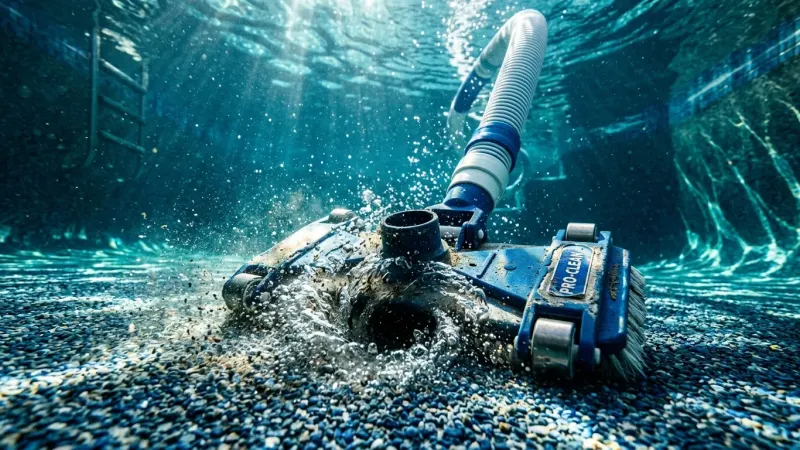
- Vacuuming to waste means bypassing your filter and sending the dirty water directly out of the pool, preventing your filter from getting overwhelmed. This will lower your pool’s water level, so be prepared to refill.
- This step is best done with a manual pool vacuum and a multi-port valve set to “waste.”
Step 6: Retest and Rebalance & Consider Algaecide
Once the water is visibly clearer, retest your pH, alkalinity, and chlorine levels. Adjust as needed.
- Maintain Chlorine: Keep chlorine levels higher than normal (2-4 ppm) for a few days to ensure all algae are dead.
- Algaecide (Optional): While shock is the primary killer, a quality algaecide can help prevent future growth, especially during hot weather. Follow product instructions.
Ongoing Pool Maintenance for a Sparkling Pool
Green pool recovery is a great learning experience, but consistent home maintenance is key to preventing future outbreaks. Regular deep cleaning practices include:
- Daily Skimming & Basket Emptying: Remove debris before it decays.
- Weekly Brushing: Even if the pool looks clean, brush walls and floors.
- Weekly Water Testing & Balancing: Stay on top of your chemistry.
- Regular Filter Cleaning/Backwashing: Ensure optimal filtration.
- Consistent Pump Operation: Aim for 8-12 hours daily, depending on pool size and usage.
Remember, a green pool is a temporary setback. By following these practical steps, you’ll not only clear the algae but also gain valuable knowledge for future pool maintenance. If you ever find yourself overwhelmed or dealing with persistent issues, don’t hesitate to consider professional cleaning services for expert assistance.