






Hardwood floors add undeniable elegance and warmth to any home, but keeping them pristine and protected requires the right approach. With a myriad of cleaning tools available, from traditional mops to cutting-edge steam cleaners and specialized vacuums, homeowners often find themselves at a crossroads. Which method truly delivers the best results without risking damage? As your trusted cleaning expert at Clean & Cleaner, I’m here to settle the debate and arm you with the knowledge to maintain your beautiful hardwood for years to come.
Table Of Content
- The Classic Choice: Mops for Hardwood Floors
- Pros of Mopping Hardwood
- Cons of Mopping Hardwood
- Best Practices & Specifics for Mopping Hardwood
- The Modern Marvel: Steam Cleaners for Hardwood
- Pros of Steam Cleaning Hardwood
- Cons of Steam Cleaning Hardwood
- Safety & Usage Tips for Steam Cleaning Hardwood
- The Daily Essential: Vacuums for Hardwood
- Pros of Vacuuming Hardwood
- Cons of Vacuuming Hardwood
- Choosing the Right Vacuum for Hardwood
- The Verdict: A Synergistic Approach for Best Results
- Integrating the Tools for Optimal Hardwood Care
- When to Call the Pros
We’re not just talking about surface-level shine; we’re diving into effective dirt removal, sanitization, and long-term floor health. This detailed comparison will dissect the strengths and weaknesses of mops, steam cleaners, and vacuums specifically for hardwood surfaces. By the end, you’ll know exactly which tool to reach for and when, ensuring your floors always look their absolute best.
The Classic Choice: Mops for Hardwood Floors
For generations, the mop has been the go-to tool for floor cleaning. While its simplicity is appealing, not all mops are created equal for delicate hardwood. The key with hardwood is moisture control: too much water can cause warping, dulling, or even permanent damage to the finish.
Pros of Mopping Hardwood
- Versatility: Mops can tackle a wide range of messes, from spills to general grime.
- Cost-Effective: Mops themselves are generally inexpensive, and cleaning solutions can be budget-friendly, including eco-friendly cleaners like diluted white vinegar or specialized hardwood floor cleaners.
- Control: You have direct control over the amount of cleaning solution and moisture applied, which is crucial for hardwood.
- Quiet Operation: Unlike motorized tools, mopping is a quiet task, ideal for cleaning at any time without disturbing others.
Cons of Mopping Hardwood
- Risk of Over-Wetting: This is the biggest drawback. Traditional string mops absorb and retain too much water, posing a significant risk to hardwood. Even sponge mops can leave too much moisture.
- Streaking: Improperly wrung mops or incorrect cleaning solutions can leave unsightly streaks, especially on glossy finishes.
- Effort-Intensive: Mopping can be physically demanding, requiring scrubbing and repeated rinsing.
- Limited Deep Cleaning: While effective for surface dirt, mops often can’t penetrate ground-in grime or sanitize as thoroughly as other methods.
Best Practices & Specifics for Mopping Hardwood
When it comes to hardwood, your choice of mop and cleaning solution is paramount. Forget traditional cotton string mops; they’re simply too wet. Instead, opt for a microfiber flat mop or a spray mop. Microfiber pads are highly absorbent yet release moisture efficiently, allowing for a damp, not wet, clean. Spray mops, like the Bona Hardwood Floor Spray Mop or similar models, are excellent because they dispense a controlled mist of cleaner directly onto the floor, eliminating the need for a bucket.
For cleaning solutions, always use a pH-neutral, hardwood-specific cleaner. Brands like Bona, Method, or Murphy Oil Soap (diluted correctly) are formulated to clean without stripping finishes. Honestly, based on my experience, avoiding harsh chemicals, ammonia, or abrasive cleaners is critical. For example, imagine this situation: you’ve just installed beautiful new engineered hardwood. Using a harsh multi-surface cleaner could dull its sheen and even damage the protective layer, voiding your warranty. A quick, damp pass with a microfiber mop and a proper hardwood cleaner is usually sufficient for weekly maintenance.
The Modern Marvel: Steam Cleaners for Hardwood
Steam cleaners promise a chemical-free, sanitizing clean using only water vapor. This sounds like a dream for many homeowners, but for hardwood, there’s a significant caveat: moisture and heat. Is it a miracle worker or a potential floor destroyer?
Pros of Steam Cleaning Hardwood
- Sanitization: The high temperature of steam effectively kills germs, bacteria, and dust mites without chemicals, making it excellent for allergy sufferers or homes with pets.
- Chemical-Free: Using only water makes steam cleaning an eco-friendly option, eliminating chemical residues.
- Effective for Grime: Steam can loosen stubborn dirt and grime, making it easier to lift away.
- Quick Drying: Modern steam mops are designed to produce low-moisture steam, which dries relatively quickly.
Cons of Steam Cleaning Hardwood
- Risk of Damage: This is the most debated point. Excessive heat or moisture can penetrate gaps in the finish, causing swelling, warping, or dulling, especially on older, unsealed, or waxed hardwood.
- Not for All Hardwood: Steam cleaners are generally NOT recommended for unsealed, waxed, or antique hardwood floors. They are best suited for modern, properly sealed and finished hardwood or engineered wood floors. Always check your floor manufacturer’s recommendations.
- Expensive Initial Investment: Steam cleaners are typically more expensive than mops.
- Learning Curve: Proper technique (keeping the cleaner moving, not lingering in one spot) is crucial to prevent damage.
Safety & Usage Tips for Steam Cleaning Hardwood
If you choose to use a steam cleaner on your hardwood, proceed with extreme caution and always verify your floor manufacturer’s warranty first. Many manufacturers explicitly warn against steam cleaning. If your manufacturer approves, look for a low-moisture steam mop specifically designed for sealed hardwood, such as the Bissell PowerFresh Slim or certain Shark Steam Mop models. These models typically have adjustable steam settings.
Always do a patch test in an inconspicuous area first. Keep the steam mop moving continuously; never leave it stationary on the floor. Use a clean microfiber pad, and ensure it’s not overly saturated. While steam offers fantastic sanitizing power, it’s a tool for occasional deep cleaning, perhaps once a month or every few weeks, rather than weekly maintenance. But what would you do if your floor manufacturer explicitly states no steam cleaning? In that situation, you must respect their guidance to protect your investment.
The Daily Essential: Vacuums for Hardwood
Before any wet cleaning, removing loose dirt and debris is absolutely non-negotiable. This is where the vacuum cleaner shines. Neglecting this step means you’re simply pushing dirt around with your mop or steam cleaner, potentially scratching your floors.
Pros of Vacuuming Hardwood
- Efficient Dirt Removal: Vacuums quickly and effectively pick up dust, pet hair, crumbs, and other dry debris that can scratch floors.
- Time-Saving: Much faster than sweeping, especially for larger areas.
- Prevents Scratches: Removing abrasive particles before wet cleaning is crucial for preventing micro-scratches over time.
- Allergen Reduction: Good vacuums with HEPA filters trap allergens, improving indoor air quality.
Cons of Vacuuming Hardwood
- Wrong Attachments Can Damage: Using a vacuum with a harsh beater bar (rotating brush) can severely scratch hardwood.
- Noise: Vacuums can be noisy, especially powerful upright models.
- Doesn’t Wet Clean: While essential for dry debris, vacuums don’t clean sticky messes or sanitize.
- Initial Cost: Quality hardwood-safe vacuums can be an investment.
Choosing the Right Vacuum for Hardwood
The cardinal rule for vacuuming hardwood floors is simple: NEVER use a vacuum with an active, spinning beater bar directly on the wood. A beater bar, designed to agitate carpets, will scratch and dull your hardwood finish. Look for vacuums with a “bare floor” setting that either turns off the brush roll or lifts it completely.
My top recommendations for hardwood include canister vacuums with dedicated bare floor attachments (often a soft bristled brush head). These offer powerful suction and gentle cleaning. Stick vacuums, particularly those with soft roller heads (like the Dyson V-series with its Fluffy Optic head or Shark Rocket models), are fantastic for daily clean-ups due to their lightweight design and maneuverability. Robotic vacuums, such as the iRobot Roomba j7+ or Roborock S7, are excellent for maintaining daily cleanliness and preventing dust and grit buildup, though they won’t tackle spills.
The Verdict: A Synergistic Approach for Best Results
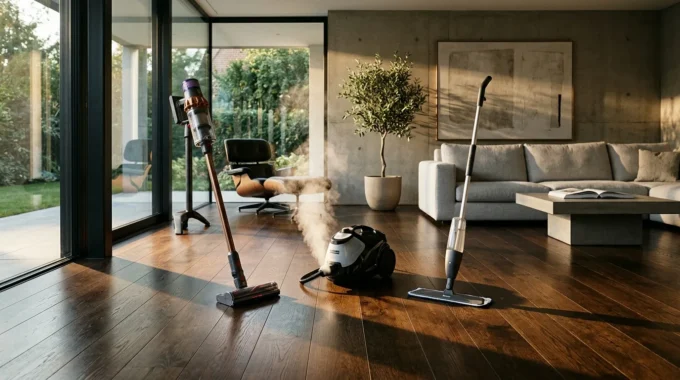
So far we’ve covered the individual strengths and weaknesses of mops, steam cleaners, and vacuums. Now let’s get to the really critical point: which one wins the “best results” showdown? The truth is, it’s not a competition. The best approach for hardwood floor cleaning is a synergistic one, utilizing each tool for its specific purpose.
Integrating the Tools for Optimal Hardwood Care
For truly pristine and well-maintained hardwood floors, I believe a multi-pronged strategy is key:
- Daily/Every Other Day: Vacuuming or Sweeping. This is your first line of defense. Use a soft-bristle broom, a microfiber dust mop, or a hardwood-safe vacuum (with the brush roll off or a bare floor attachment) to remove loose dirt, dust, and pet hair. This prevents grit from grinding into your finish. Robotic vacuums are fantastic for this routine maintenance.
- Weekly/Bi-Weekly: Damp Mopping. After vacuuming, use a well-wrung microfiber flat mop with a pH-neutral hardwood cleaner. A spray mop is ideal for controlled moisture. This removes surface grime, fingerprints, and light spills without over-wetting the floor.
- Monthly/Quarterly: Deep Cleaning (Optional Steam). If your floor manufacturer approves and your hardwood is properly sealed, you can use a low-moisture steam mop for a deeper, sanitizing clean. Remember the patch test and keep moving! For those without steam approval, a more thorough damp mopping with specific attention to high-traffic areas will suffice.
- As Needed: Spot Cleaning. Quickly address spills with a soft cloth and a dab of hardwood cleaner to prevent stains or water damage.
When to Call the Pros
Even with the best home maintenance routines, hardwood floors occasionally benefit from professional attention. If your floors are heavily soiled, showing significant wear, or need a complete refinishing, consider contacting professional cleaning services. They have specialized equipment and expertise to restore your floors without damage. Sometimes, the peace of mind and superior results from a professional deep clean are well worth the investment, especially when preparing for an event or after years of heavy use.
Ultimately, keeping your hardwood floors beautiful and durable comes down to understanding the right tool for the job and respecting the material. By combining the power of a gentle vacuum, the controlled clean of a microfiber mop, and the occasional, cautious use of a steam cleaner, you can ensure your hardwood floors remain a stunning feature of your home for decades to come. Don’t just clean; care for your floors the right way.