Block paving looks fantastic when it’s fresh. Those neat lines, the crisp edges, the way it makes a driveway or patio feel finished. But anyone who’s lived with it knows the truth: it doesn’t stay perfect for long. Moss creeps in, weeds push through, and grime builds up until the whole thing looks tired. That’s where a block paving cleaner comes in.
I’ve spent more weekends than I’d like to admit scrubbing paving stones, experimenting with different cleaners, and even hiring machines. Some methods worked brilliantly, others felt like wasted effort. This guide is a mix of those experiences, plus what’s commonly available in the UK Market.
Why Block Paving Needs Regular Cleaning
Block paving is porous. Dirt, algae, and oil seep into the surface, and weeds love the gaps between blocks. Left alone, it quickly loses that sharp, clean look.
I once ignored my driveway for a year. By the end, it looked more like a patch of moss than paving. Cleaning it wasn’t just about appearance—it was about safety too. Wet moss is slippery, and oil stains can make surfaces hazardous.
Best Block Paving Cleaner
So, what’s the best block paving cleaner? That depends on your situation.
- For moss and algae: Biodegradable cleaners that target organic growth are effective.
- For oil stains: Stronger degreasers work better.
- For general grime: Multi-purpose patio cleaners usually do the job.
I’ve found that no single product is perfect. Sometimes you need a combination—one for weeds, another for stains. The “best” cleaner is the one that matches your problem.
Block Paving Cleaner Machine
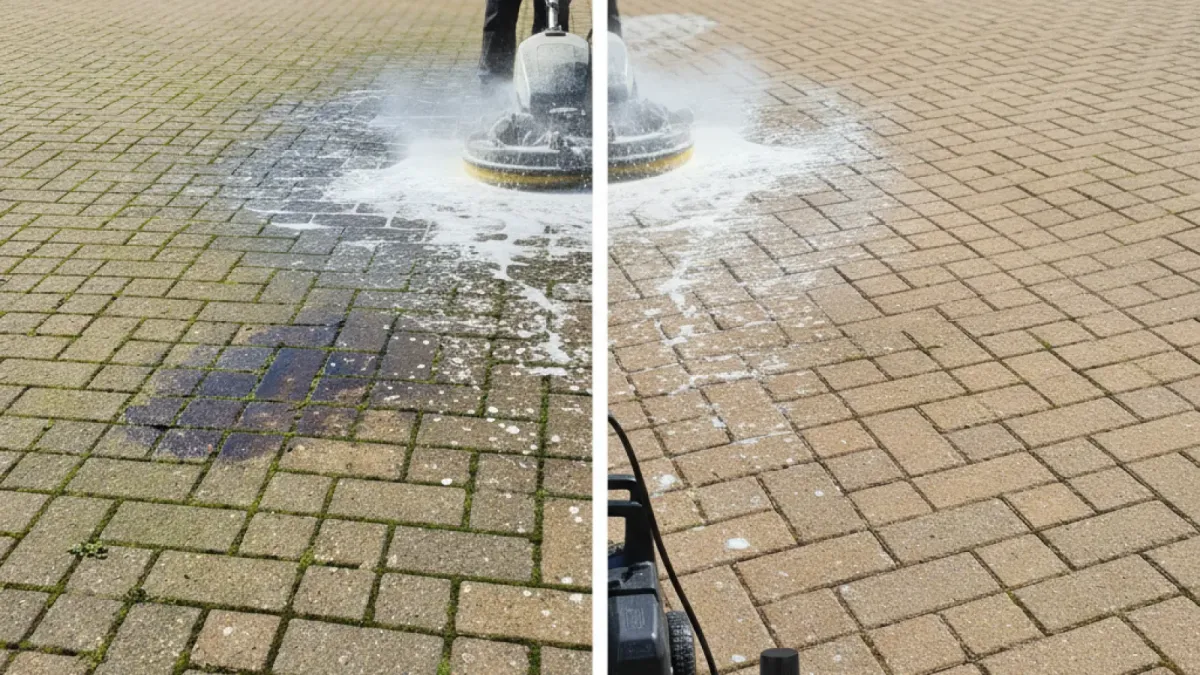
Scrubbing by hand works, but it’s exhausting. That’s why many people turn to a block paving cleaner machine. These machines use high-pressure water or rotating brushes to blast away dirt.
I hired one once, and the difference was night and day. The paving looked almost new. The downside? Machines are heavy, noisy, and not cheap to rent. If you’ve got a large driveway, they’re worth it. For small patios, a brush and cleaner might be enough.
Block Paving Cleaner UK
In the UK, there’s no shortage of options. The block paving cleaner UK Market includes everything from supermarket sprays to professional-grade solutions.
Brands like Karcher, Screwfix, and Wickes stock cleaners and machines. I’ve noticed that UK buyers often prefer products that are eco-friendly, especially for gardens where pets or children play.
Block Paving Cleaner Screwfix
Speaking of Screwfix, the block paving cleaner Screwfix range is popular. Screwfix tends to stock practical, affordable options. Their pressure washers and patio cleaning solutions are reliable, though not always the most powerful.
I once picked up a Screwfix cleaner for moss. It worked, but it needed repeat applications. That’s the trade-off—you save money, but you spend more time.
Block Paving Cleaner Brush
Sometimes, the simplest tools are the best. A block paving cleaner brush with stiff bristles can scrape moss and dirt out of the gaps.
I keep one in my shed. It’s not glamorous, but it works. Pairing a brush with a liquid cleaner makes the process more effective. The brush loosens debris, the cleaner kills off the roots.
Block Paving Cleaner Tool
Beyond brushes, there are other block paving cleaner tools. Gap scrapers, wire brushes, even handheld steam cleaners. Each has its place.
I’ve used a gap scraper to pull weeds out between blocks. It’s fiddly, but satisfying. Tools don’t replace cleaners, but they make the job easier.
My Routine
Here’s how I usually tackle block paving:
- Sweep first: Clear loose debris.
- Apply cleaner: Spray or pour depending on the product.
- Scrub with a brush: Work it into the gaps.
- Rinse with water: Hose or pressure washer.
- Re-sand joints: Add kiln-dried sand to keep blocks stable.
It’s not quick, but it keeps the paving looking decent.
Mistakes I’ve Made
- Using bleach: Damaged the paving and killed nearby plants.
- Ignoring weeds: They came back stronger.
- Overusing pressure washers: Dislodged the jointing sand.
These mistakes taught me to be more careful.
Comparing Options
Between brushes, machines, and liquid cleaners, the differences are clear:
- Brushes: Cheap, effective for small areas.
- Machines: Powerful, best for large driveways.
- Liquids: Target specific problems like moss or oil.
I tend to mix methods. Brush for weeds, cleaner for stains, machine for big jobs.
Tips for Choosing the Best Cleaner
- Check if it’s safe for pets and plants.
- Match the cleaner to the problem (oil, moss, general dirt).
- Consider the size of the area—machines for big spaces, brushes for small ones.
- Don’t forget to re-sand joints after cleaning.
Final Thoughts
A block paving cleaner isn’t just about appearance. It’s about safety, longevity, and pride in your home. Whether you’re using a block paving cleaner machine, picking up a block paving cleaner brush, or browsing the block paving cleaner Screwfix range, the key is consistency.
The best block paving cleaner isn’t necessarily the strongest—it’s the one you’ll actually use regularly.
For me, a mix of tools and cleaners works best. Machines for deep cleans, brushes for maintenance, and liquids for specific problems. It’s not perfect, but it keeps the paving looking fresh enough that I don’t cringe when guests arrive.