






Maintaining a sparkling clean swimming pool is key to enjoying your backyard oasis. While regular skimming and brushing are essential, a dedicated pool cleaner can handle the daily chore of debris removal, making your life much easier. But with so many options available, how do you choose the right one? Here at Clean & Cleaner, we’re diving deep into the three main types of automatic pool cleaners: suction, pressure, and robotic. We’ll help you understand how each works, their pros and cons, and which might be the perfect fit for your pool’s needs and your home maintenance routine.
Table Of Content
- Understanding Pool Cleaner Types: Your Guide to a Cleaner Pool
- 1. Suction Pool Cleaners: The Economical Choice
- How They Work
- Pros
- Cons
- Maintenance Tips
- 2. Pressure Pool Cleaners: The Powerful Workhorse
- How They Work
- Pros
- Cons
- Maintenance Tips
- 3. Robotic Pool Cleaners: The Smart & Independent Solution
- How They Work
- Pros
- Cons
- Maintenance Tips
- Choosing the Right Pool Cleaner for Your Home
Understanding Pool Cleaner Types: Your Guide to a Cleaner Pool
Each type of automatic pool cleaner operates differently, utilizing various power sources and cleaning mechanisms. Knowing these differences is crucial for making an informed decision that aligns with your budget, pool type, and cleaning expectations.
1. Suction Pool Cleaners: The Economical Choice
Suction pool cleaners are often the most budget-friendly option and are a popular choice for many homeowners. They work by connecting directly to your pool’s existing filtration system, typically through the skimmer or a dedicated vacuum line.
How They Work:
- They use the suction created by your pool’s main pump to vacuum debris from the pool floor and walls.
- Water and debris are pulled through the cleaner’s hose, into your pool’s filtration system (pump, filter, and often a skimmer basket), where the debris is trapped.
- They move randomly or in a pre-programmed pattern across the pool surface.
Pros:
- Affordable: Generally the least expensive upfront cost.
- Simple Installation: Easy to connect, requiring no additional plumbing or electrical work.
- Low Maintenance: Few moving parts mean less to break down.
- Good for Light Debris: Effective for leaves, dirt, and small particles.
Cons:
- Relies on Pool Pump: Can put extra strain on your pool pump and filter, potentially increasing wear and tear and energy consumption.
- Reduced Filtration Efficiency: Debris goes directly into your main filter, requiring more frequent backwashing or cartridge cleaning.
- Can Get Stuck: Prone to getting hung up on steps, drains, or other pool features.
- Slower Cleaning: Often takes longer to clean the entire pool compared to other types.
Maintenance Tips:
Regularly check hoses for cracks, clear the skimmer basket, and ensure your pool pump and filter are clean for optimal performance. This is a vital part of your overall home maintenance for the pool system.
2. Pressure Pool Cleaners: The Powerful Workhorse
Pressure pool cleaners are a step up in power and efficiency, designed to handle tougher cleaning tasks. Unlike suction cleaners, they use water pressure to propel themselves and collect debris.
How They Work:
- They connect to your pool’s return line, where filtered water is sent back into the pool.
- Many require a dedicated booster pump (separate from your main pool pump) to generate the necessary water pressure, though some newer models can run off the main pump.
- Water jets propel the cleaner, and a sweep hose often dislodges debris, directing it into a self-contained filter bag on the cleaner itself.
Pros:
- Powerful Cleaning: Excellent at picking up larger debris like acorns, pebbles, and heavy leaves.
- Independent Debris Bag: Debris is collected in its own bag, keeping your main pool filter cleaner and reducing backwashing frequency.
- Faster Cleaning: Generally more efficient at covering the pool surface.
- Less Strain on Main Filter: Since debris is collected separately, your pool’s primary filtration system works less hard.
Cons:
- Higher Cost: More expensive than suction cleaners, especially if a booster pump is required (which adds to both initial cost and energy consumption).
- Noise: Booster pumps can be noisy.
- Installation: May require professional installation if a dedicated pressure line or booster pump is needed.
Maintenance Tips:
Regularly empty the debris bag, check the sweep hose for wear, and ensure the booster pump (if applicable) is functioning correctly. This contributes significantly to your pool’s deep cleaning routine.
3. Robotic Pool Cleaners: The Smart & Independent Solution
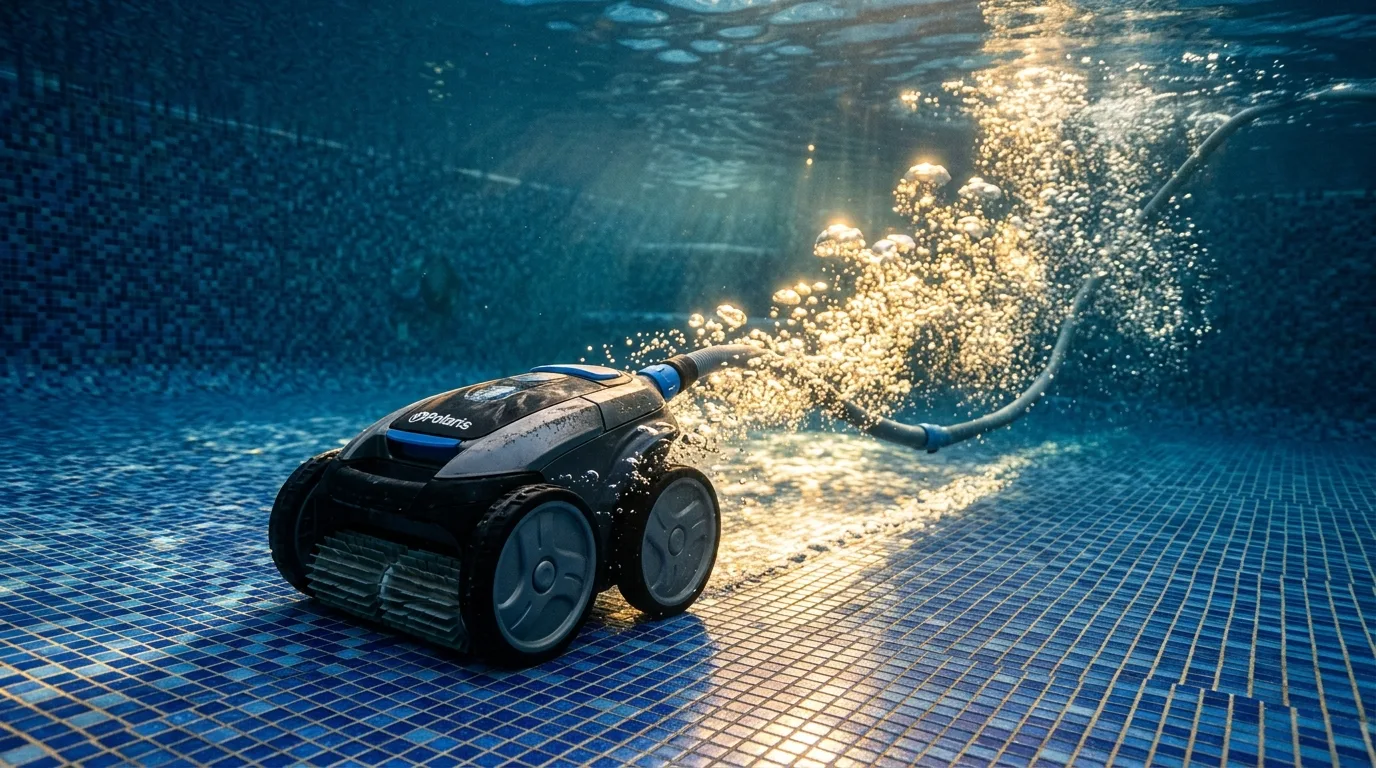
Robotic pool cleaners are the most advanced and increasingly popular option, offering unparalleled convenience and efficiency. They are completely independent of your pool’s filtration system.
How They Work:
- They operate on their own power source, plugging into a standard electrical outlet (with a low-voltage transformer).
- Equipped with internal motors and advanced navigation systems, they move strategically across the pool floor, walls, and even scrub the waterline.
- They have their own self-contained filtration system (filter cartridges or bags) that collects debris independently.
Pros:
- Highly Efficient: Intelligent scanning and mapping capabilities ensure thorough cleaning coverage.
- Energy Efficient: Operates independently, saving wear and tear on your pool pump and reducing its run time, which can lower electricity bills.
- Superior Filtration: Many models filter water down to very fine particles, improving overall water clarity.
- Cleans Walls & Waterline: Most models climb walls and scrub the waterline, tackling algae and grime.
- Easy to Use: Just plug it in, drop it in the pool, and let it go.
Cons:
- Highest Upfront Cost: Generally the most expensive option.
- Filter Cleaning: Requires regular emptying and cleaning of its internal filter basket or cartridges.
- Not for All Debris: Some models struggle with very large, heavy debris (though many high-end models excel here).
Maintenance Tips:
Clean the filter basket or cartridges after each use, ensure the power cord is untangled, and store the robot in a dry, shaded area when not in use. This simple cleaning tip extends the life of your investment.
Choosing the Right Pool Cleaner for Your Home
When selecting your ideal pool cleaner, consider these factors:
- Budget: Suction cleaners are entry-level, pressure cleaners are mid-range, and robotic cleaners are a premium investment.
- Pool Size & Debris Type: For large pools with heavy debris, a robotic or pressure cleaner is usually better. For smaller pools with light debris, a suction cleaner might suffice.
- Energy Efficiency: Robotic cleaners are the most energy-efficient as they don’t rely on your main pump.
- Level of Automation: Robotic cleaners offer the most hands-off experience.
- Pool Surface: Ensure the cleaner is compatible with your pool’s finish (vinyl, tile, gunite, fiberglass).
No matter which type you choose, remember that consistent pool maintenance is crucial. A good pool cleaner significantly reduces the manual effort involved in house cleaning your pool, allowing you more time to enjoy it. For truly challenging situations or if you prefer a completely hands-off approach, don’t hesitate to consider professional cleaning services. They have the expertise and equipment for a comprehensive deep cleaning.
At Clean & Cleaner, we believe that understanding your tools is the first step to achieving a pristine home. With the right pool cleaner, you’re well on your way to a consistently clean and inviting swimming environment!