






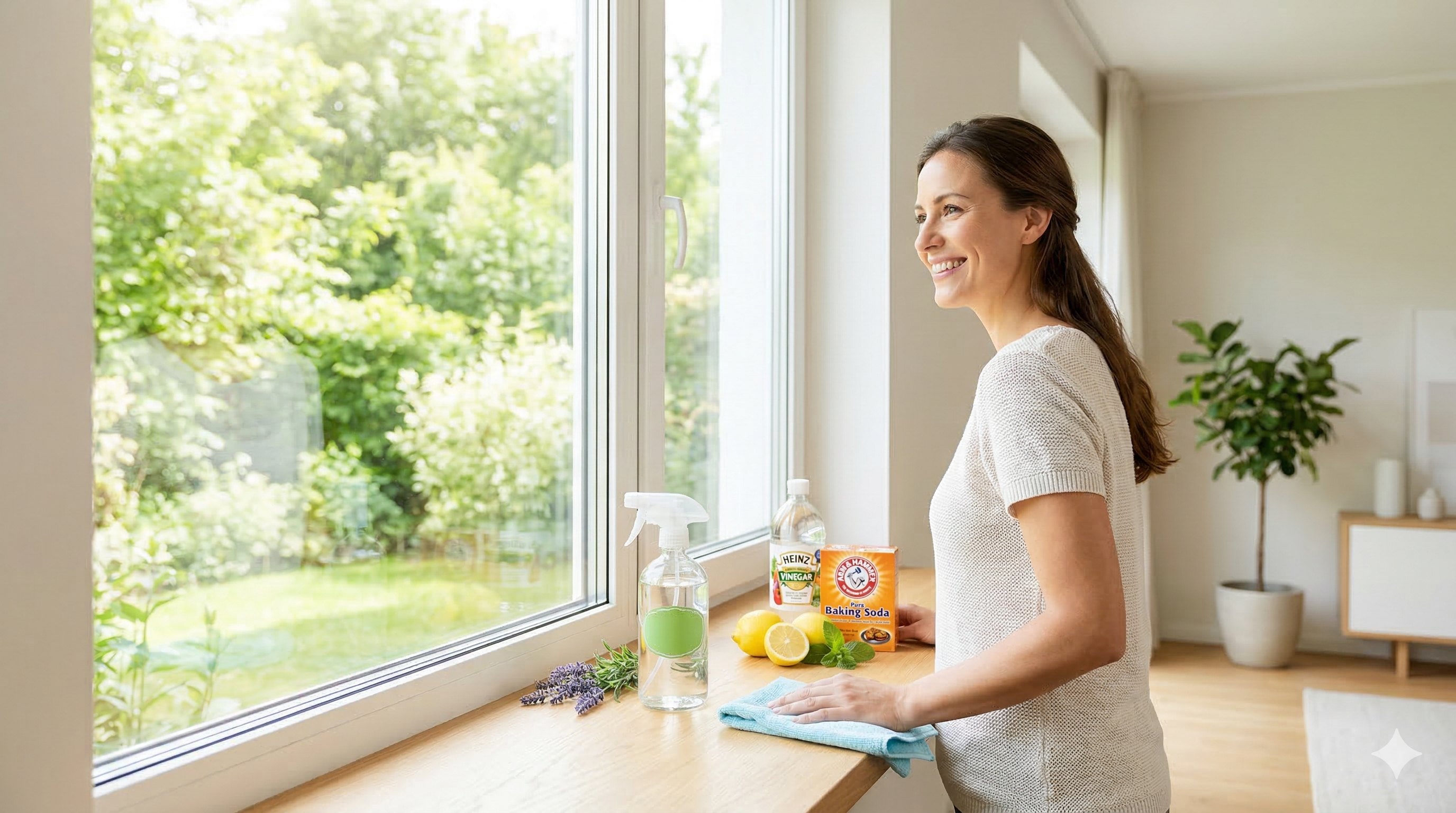
DIY Eco-Friendly Window Cleaners: Recipes for a Green Shine
There’s nothing quite like the sparkle of freshly cleaned windows, letting natural light flood into your home. But often, achieving that pristine, streak-free shine can feel like a battle, especially when store-bought cleaners come with a host of chemicals and strong odors. As an experienced home maintenance specialist, I’m here to tell you that you don’t need harsh chemicals for sparkling windows. In fact, some of the most effective solutions are already in your pantry!
Table Of Content
- DIY Eco-Friendly Window Cleaners: Recipes for a Green Shine
- Why Go Green for Your Windows?
- Essential Tools for a Perfect Window Clean
- DIY Eco-Friendly Window Cleaner Recipes
- Pro Cleaning Tips for a Streak-Free Finish
- Safety First When Cleaning
- When to Consider Professional Cleaning Services
- Enjoy Your Green Shine!
Embracing eco-friendly cleaners for your house cleaning isn’t just better for the environment; it’s safer for your family, pets, and even your wallet. These DIY recipes are simple, cost-effective, and surprisingly powerful. Let’s dive into how you can achieve a professional-level shine with ingredients you can trust.
Why Go Green for Your Windows?
- Healthier Home Environment: Avoid inhaling volatile organic compounds (VOCs) and other irritants found in many commercial products.
- Eco-Conscious Choice: Reduce plastic waste and prevent harmful chemicals from entering waterways.
- Cost-Effective: Common household ingredients are significantly cheaper than specialized cleaning products.
- Just as Effective: When applied correctly, these DIY solutions deliver exceptional, streak-free results.
Essential Tools for a Perfect Window Clean
Before we mix our magic potions, let’s gather the right equipment. The cleaner is only half the battle; proper tools ensure a perfect finish.
- Spray Bottle: A clean, empty spray bottle for your DIY solution.
- Microfiber Cloths: Several lint-free microfiber cloths are essential for wiping and polishing. They are super absorbent and grab dirt effectively.
- Squeegee (Optional, but Recommended): A professional-grade squeegee (like an Ettore or Unger) with a sharp rubber blade can significantly speed up the process and minimize streaks, especially for larger windows. Pro tip: A 10-14 inch squeegee is a good versatile size for most home windows.
- Two Buckets: One for your cleaning solution, one for clean water to rinse your squeegee/cloths.
- Old Towels/Drop Cloths: To protect your sills and floors from drips.
DIY Eco-Friendly Window Cleaner Recipes
1. The Classic Vinegar & Water Blend (Great for Light Grime)This is the simplest and most widely used eco-friendly window cleaner recipe. White vinegar’s acetic acid is a natural degreaser and dirt cutter, leaving glass sparkling.
- Ingredients:
- 1/2 cup distilled white vinegar
- 1/2 cup warm distilled water (distilled water helps prevent mineral spots)
- Optional: A few drops of essential oil (lemon or tea tree) to mask the vinegar smell.
- Instructions:
- Combine vinegar and water in a clean spray bottle.
- Shake gently to mix.
- Spray generously onto the window surface.
- Wipe clean with a microfiber cloth or use a squeegee (see tips below).
2. Cornstarch Power (The Streak-Free Secret Weapon)For an extra boost against streaks and light film, cornstarch is surprisingly effective. It acts as a mild abrasive, helping to lift dirt, and then buffs away clean.
- Ingredients:
- 1/2 cup distilled white vinegar
- 1/2 cup warm distilled water
- 1-2 teaspoons cornstarch
- Instructions:
- In a spray bottle, combine vinegar and water.
- Add the cornstarch. Shake vigorously until the cornstarch is fully dissolved. You may need to shake periodically during use as it can settle.
- Spray onto windows and clean as usual. The cornstarch helps eliminate stubborn film and leaves a brilliant shine.
3. Rubbing Alcohol Boost (For Tougher Grime and Faster Drying)Isopropyl alcohol (rubbing alcohol) evaporates quickly, which is excellent for minimizing streaks, and it’s a powerful solvent for cutting through grease and stubborn residue. This is a great solution for deep cleaning windows that haven’t seen attention in a while.
Ingredients:
- 1/4 cup isopropyl (rubbing) alcohol (70% or 90%)
- 1/4 cup distilled white vinegar
- 1/2 cup warm distilled water
- Optional: 1-2 drops of dish soap (a non-moisturizing kind) for extra cutting power on very dirty windows.
- Instructions:
- Combine all ingredients in a spray bottle. Shake well.
- Spray on windows. Important: Ensure good ventilation when using rubbing alcohol. While less harsh than ammonia, it’s still best to work in a well-aired space.
- Clean with a microfiber cloth or squeegee.
Pro Cleaning Tips for a Streak-Free Finish
- Pre-Clean First: If your windows are very dirty with loose dust, pollen, or cobwebs, give them a quick brush or rinse with plain water first. This prevents turning dirt into muddy streaks.
- Choose the Right Day: Avoid cleaning windows in direct sunlight or on very hot days. The cleaner will dry too quickly, leaving streaks. Overcast days are ideal.
- Liberal Spray: Don’t be shy with the spray. Ensure the entire glass surface is adequately moistened.
- Squeegee Technique (If Using):
- Start at the top corner of the window.
- Pull the squeegee in a straight, overlapping stroke (about an inch of overlap).
- After each stroke, wipe the squeegee blade clean with a dry microfiber cloth before the next pass. This is crucial for streak prevention.
- Angle the squeegee slightly to direct water flow.
- Finish by wiping any drips from the edges and sill with a clean, dry cloth.
- Microfiber Cloth Technique: If you’re not using a squeegee, fold your microfiber cloth into quarters. Clean with one side, then flip to a clean, dry side for polishing. Change cloths frequently as they get damp or dirty.
- Vertical vs. Horizontal: For the most part, it doesn’t matter, but try to be consistent. Some pros clean horizontally on one side of the glass and vertically on the other to easily identify which side a streak is on.
Safety First When Cleaning
- Ventilation: Always ensure good airflow, especially when using rubbing alcohol or any strong-smelling ingredients.
- Test in an Inconspicuous Area: While these solutions are generally safe for glass, always do a patch test on painted frames, tinted windows, or delicate surfaces if you’re unsure.
- Store Safely: Label your DIY cleaners clearly and store them out of reach of children and pets.
- Avoid Electrical Components: Be careful not to spray solutions directly into electrical outlets or components near windows.
When to Consider Professional Cleaning Services
- 1/2 cup distilled white vinegar
- 1/2 cup warm distilled water (distilled water helps prevent mineral spots)
- Optional: A few drops of essential oil (lemon or tea tree) to mask the vinegar smell.
- Combine vinegar and water in a clean spray bottle.
- Shake gently to mix.
- Spray generously onto the window surface.
- Wipe clean with a microfiber cloth or use a squeegee (see tips below).
- Ingredients:
- 1/2 cup distilled white vinegar
- 1/2 cup warm distilled water
- 1-2 teaspoons cornstarch
- Instructions:
- In a spray bottle, combine vinegar and water.
- Add the cornstarch. Shake vigorously until the cornstarch is fully dissolved. You may need to shake periodically during use as it can settle.
- Spray onto windows and clean as usual. The cornstarch helps eliminate stubborn film and leaves a brilliant shine.
3. Rubbing Alcohol Boost (For Tougher Grime and Faster Drying)Isopropyl alcohol (rubbing alcohol) evaporates quickly, which is excellent for minimizing streaks, and it’s a powerful solvent for cutting through grease and stubborn residue. This is a great solution for deep cleaning windows that haven’t seen attention in a while.
Ingredients:
- 1/4 cup isopropyl (rubbing) alcohol (70% or 90%)
- 1/4 cup distilled white vinegar
- 1/2 cup warm distilled water
- Optional: 1-2 drops of dish soap (a non-moisturizing kind) for extra cutting power on very dirty windows.
- Instructions:
- Combine all ingredients in a spray bottle. Shake well.
- Spray on windows. Important: Ensure good ventilation when using rubbing alcohol. While less harsh than ammonia, it’s still best to work in a well-aired space.
- Clean with a microfiber cloth or squeegee.
Pro Cleaning Tips for a Streak-Free Finish
- Pre-Clean First: If your windows are very dirty with loose dust, pollen, or cobwebs, give them a quick brush or rinse with plain water first. This prevents turning dirt into muddy streaks.
- Choose the Right Day: Avoid cleaning windows in direct sunlight or on very hot days. The cleaner will dry too quickly, leaving streaks. Overcast days are ideal.
- Liberal Spray: Don’t be shy with the spray. Ensure the entire glass surface is adequately moistened.
- Squeegee Technique (If Using):
- Start at the top corner of the window.
- Pull the squeegee in a straight, overlapping stroke (about an inch of overlap).
- After each stroke, wipe the squeegee blade clean with a dry microfiber cloth before the next pass. This is crucial for streak prevention.
- Angle the squeegee slightly to direct water flow.
- Finish by wiping any drips from the edges and sill with a clean, dry cloth.
- Microfiber Cloth Technique: If you’re not using a squeegee, fold your microfiber cloth into quarters. Clean with one side, then flip to a clean, dry side for polishing. Change cloths frequently as they get damp or dirty.
- Vertical vs. Horizontal: For the most part, it doesn’t matter, but try to be consistent. Some pros clean horizontally on one side of the glass and vertically on the other to easily identify which side a streak is on.
Safety First When Cleaning
- Ventilation: Always ensure good airflow, especially when using rubbing alcohol or any strong-smelling ingredients.
- Test in an Inconspicuous Area: While these solutions are generally safe for glass, always do a patch test on painted frames, tinted windows, or delicate surfaces if you’re unsure.
- Store Safely: Label your DIY cleaners clearly and store them out of reach of children and pets.
- Avoid Electrical Components: Be careful not to spray solutions directly into electrical outlets or components near windows.
When to Consider Professional Cleaning Services
- 1/4 cup isopropyl (rubbing) alcohol (70% or 90%)
- 1/4 cup distilled white vinegar
- 1/2 cup warm distilled water
- Optional: 1-2 drops of dish soap (a non-moisturizing kind) for extra cutting power on very dirty windows.
- Combine all ingredients in a spray bottle. Shake well.
- Spray on windows. Important: Ensure good ventilation when using rubbing alcohol. While less harsh than ammonia, it’s still best to work in a well-aired space.
- Clean with a microfiber cloth or squeegee.
- Start at the top corner of the window.
- Pull the squeegee in a straight, overlapping stroke (about an inch of overlap).
- After each stroke, wipe the squeegee blade clean with a dry microfiber cloth before the next pass. This is crucial for streak prevention.
- Angle the squeegee slightly to direct water flow.
- Finish by wiping any drips from the edges and sill with a clean, dry cloth.
While these DIY solutions are fantastic for regular home maintenance and most deep cleaning tasks, there are times when calling in the pros is the best option:
- High or Inaccessible Windows: For safety reasons, never attempt to clean windows that require risky ladder work.
- Post-Construction Clean-up: Removing paint, caulk, or stucco from glass requires specialized tools and expertise.
- Heavily Stained or Etched Glass: Hard water stains or mineral deposits that have etched the glass may require professional restoration techniques.
Enjoy Your Green Shine!
With these simple yet powerful eco-friendly cleaners and cleaning tips, you’re well-equipped to achieve sparkling, streak-free windows throughout your home. Not only will your windows look fantastic, but you’ll also be contributing to a healthier living space and a greener planet. Happy cleaning!