Quartz worktops are one of those things that look amazing when they’re new. Smooth, shiny, and almost effortless in how they brighten up a kitchen. But keeping them that way isn’t as simple as grabbing any bottle of cleaner from under the sink. I learned this the hard way.
This is my honest review of different types of cleaner for quartz worktops I’ve tried, what worked, what didn’t, and the small details you only notice after actually using them.
First Impressions: The Everyday Struggle
When I first had quartz installed, I assumed it would be low-maintenance. The installer even said, “Just wipe it down with a damp cloth.” That worked for a while, but grease marks, tea stains, and the occasional splash of tomato sauce proved harder to remove.
I reached for a generic kitchen spray. Big mistake. It left streaks and, worse, a slightly dull patch that took weeks to fade. That was my first lesson: not every cleaner is safe for quartz.
Professional Cleaner for Quartz Worktops
Eventually, I bought a professional cleaner for quartz worktops. The bottle looked more serious, and the instructions were clear about avoiding abrasives.
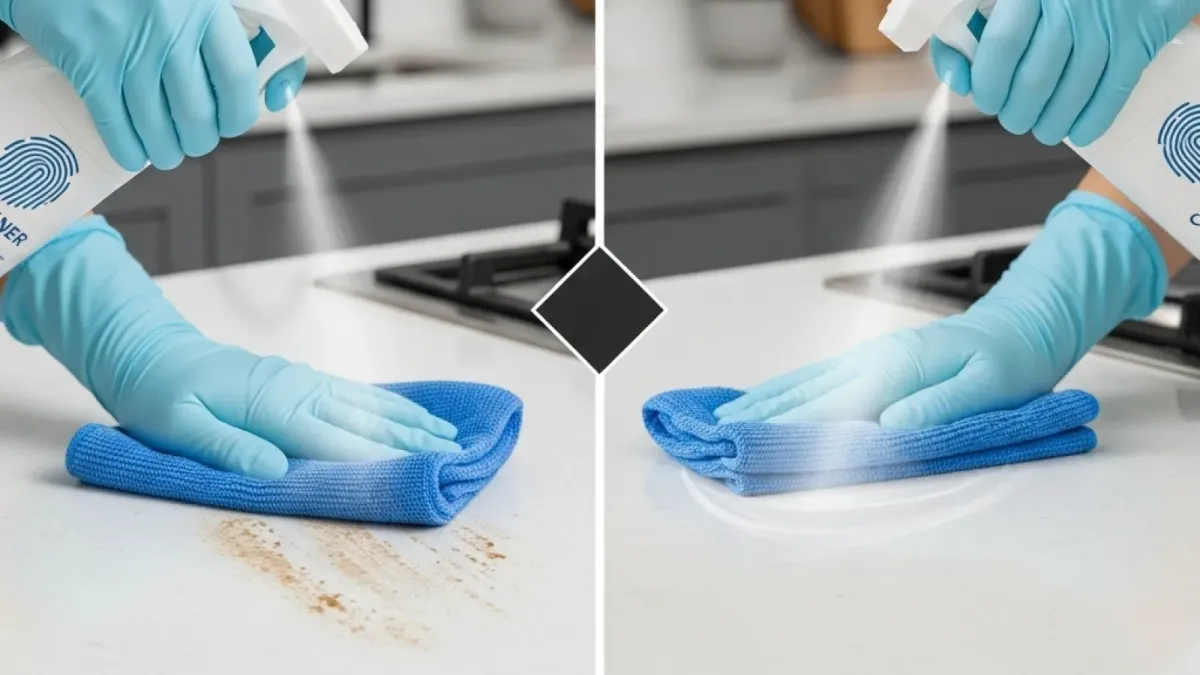
In my experience, this type of cleaner does a good job of lifting grease without leaving residue. It’s not magic—you still need to wipe properly—but it feels safer than using random sprays. One thing I noticed: the smell was stronger than I expected. Not unpleasant, but definitely chemical.
Pros:
- Effective on grease and everyday stains
- Doesn’t dull the surface
- Feels safe for long-term use
Cons:
- More expensive than supermarket sprays
- Stronger smell
- Requires consistent use for best results
Best Cleaner for Quartz Worktops
People often ask about the best cleaner for quartz worktops. Honestly, I don’t think there’s one single product that suits everyone.
- If you cook a lot and deal with grease, professional cleaners are worth it.
- If you just want daily maintenance, supermarket options can be fine.
- If you prefer eco-friendly products, natural cleaners are available, though they sometimes struggle with tougher stains.
From what I noticed, the “best” cleaner is the one you’ll actually use regularly. A fancy bottle doesn’t help if it just sits in the cupboard.
Quartz Worktop Cleaner Tesco
I tried a quartz worktop cleaner Tesco option because it was easy to grab during a grocery run. It was affordable and claimed to be safe for stone surfaces.
It worked reasonably well for light cleaning. Dust, crumbs, and small splashes wiped away easily. But when I tested it on a greasy patch near the hob, it struggled. I had to spray twice and scrub harder than I liked.
Pros:
- Cheap and accessible
- Mild scent
- Good for everyday dust and crumbs
Cons:
- Weak against grease
- Needed more effort on stains
Natural Cleaner for Quartz Worktops
Curiosity led me to try a natural cleaner for quartz worktops. It was marketed as eco-friendly, with plant-based ingredients.
I liked the idea, but in practice, it wasn’t strong enough for heavy cooking mess. It did leave the surface smelling fresh, and I felt better about using it around food. Still, I had to follow up with a stronger cleaner for stubborn marks.
This may not work for everyone. If you’re cooking oily meals daily, natural cleaners might frustrate you. But if you just want a safe, light option, they’re fine.
Best Cleaner for Quartz Countertops UK
Looking at UK options, the best cleaner for quartz countertops UK seems to vary depending on reviews. Some swear by Method, others prefer professional brands sold in specialist shops.
I tried a few UK-specific products, and the main difference was availability. Supermarkets like Tesco and Sainsbury’s stock lighter cleaners, while specialist stores sell stronger ones.
From what I noticed, UK buyers often prefer cleaners that balance effectiveness with eco-friendliness. It’s not always about shine—it’s about feeling safe using it daily.
Quartz Worktop Cleaner and Polish
I experimented with a quartz worktop cleaner and polish. The idea was appealing: clean and shine in one go.
It did add a noticeable gloss, but I wasn’t sure if I liked it. The shine looked nice at first, but it also highlighted fingerprints more. One thing I noticed: the polish layer made wiping spills harder, almost like liquid sat on top instead of absorbing.
Pros:
- Adds shine
- Makes surfaces look newer
Cons:
- Attracts fingerprints
- Can feel slippery
- Not ideal for everyday use
Method Quartz Cleaner
I picked up a Method quartz cleaner because I’d used their other products before. The bottle looked stylish, and the scent was lighter than professional cleaners.
It worked well for daily cleaning. Grease wasn’t a problem, and it didn’t leave streaks. The downside was cost—it’s pricier than supermarket sprays.
In my experience, Method is good if you want something eco-friendly but still effective. It’s not the cheapest, but it feels balanced.
Quartz Worktop Cleaner Sainsbury’s
I also tried a quartz worktop cleaner Sainsbury’s. Similar to Tesco’s option, it was affordable and easy to find.
It handled crumbs and light stains fine, but grease was again an issue. I had to use more product than I wanted. One small detail I noticed: the spray nozzle wasn’t great. It dripped slightly, which was annoying.
Pros:
- Affordable
- Easy to buy
- Mild scent
Cons:
- Weak against grease
- Poor nozzle design
What to Avoid
Through trial and error, I learned what not to use:
- Bleach: too harsh, risks damaging the surface.
- Abrasive creams: leave scratches.
- Generic degreasers: can dull the shine.
One mistake I made was using a bathroom cleaner in a rush. It left streaks that took days to fade.
Pros and Cons Across the Board
Pros of quartz-specific cleaners:
- Safe for the surface
- Reduce risk of dulling or scratching
- Often smell fresher
Cons:
- More expensive
- Not always strong enough for heavy grease
- Some attract fingerprints with added polish
Small Details That Stood Out
- Spray bottles sometimes leak if stored sideways.
- natural cleaners smell nicer but lack strength.
- Professional cleaners feel safer long-term.
- Polish sprays look good but aren’t practical daily.
Who These Products Suit
- Busy cooks: Professional cleaners are best.
- Eco-conscious users: Natural or Method cleaners.
- Budget shoppers: Tesco or Sainsbury’s options.
- Showroom finish lovers: Cleaner and polish sprays.
But none of these are perfect. Each has trade-offs.
Final Thoughts
Using a cleaner for quartz worktops is worth it if you want to keep your kitchen looking fresh. Whether it’s a professional cleaner for quartz worktops, a quartz worktop cleaner Tesco, or a Method quartz cleaner, each has strengths and weaknesses.
None of them are flawless. Some smell too strong, others struggle with grease, and polish sprays attract fingerprints. But in my experience, they all help maintain quartz better than generic cleaners.
If you’re realistic about what they can do, you’ll find them useful. If you expect miracles, you’ll be disappointed.