Finding the right laminate flooring cleaner strategy is essential for maintaining the visual appeal and structural integrity of synthetic wood floors. Laminate flooring consists of a high-density fiberboard core topped with a photographic print layer and a clear protective coat. Because excess moisture can easily seep between plank seams and cause permanent board swelling, choosing the correct tool and solution requires balancing effective dirt removal with strict moisture control.
Spray Mops: Convenience and Quick Daily Maintenance
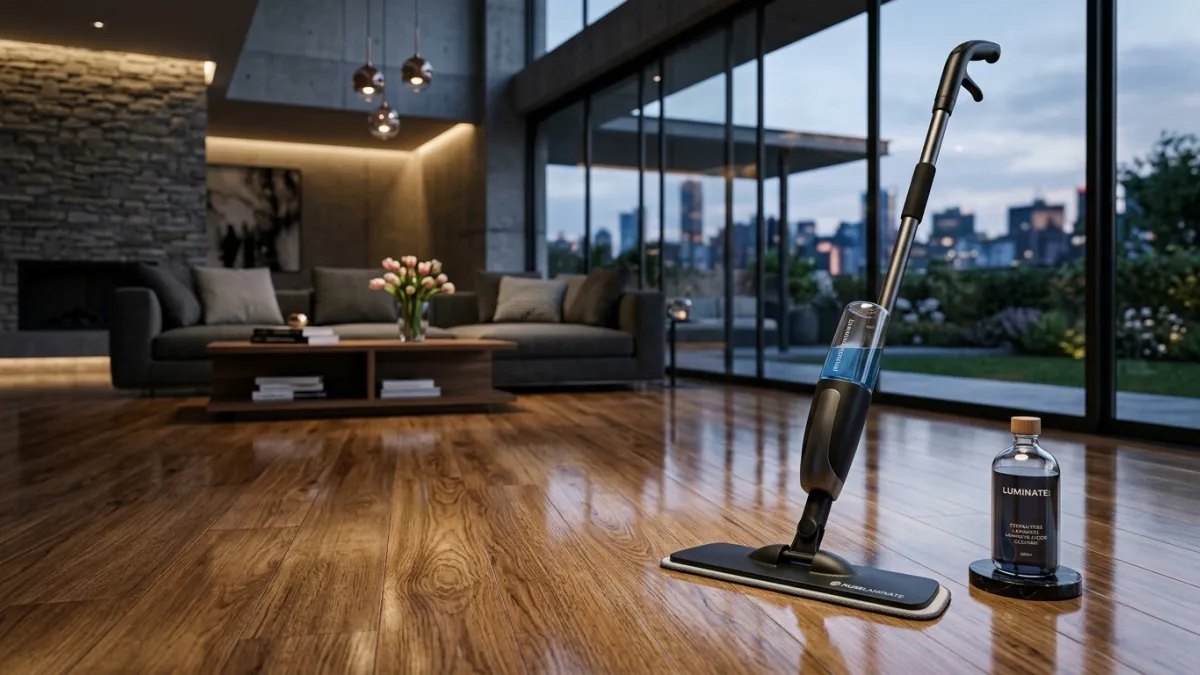
Spray mops—such as the Bona Premium Spray Mop or the O-Cedar ProMist Max—combine an integrated liquid cartridge, a hand-trigger dispenser, and a wide microfiber cleaning head (typically 15 to 17 inches). These floor care systems are designed for quick routine house cleaning and high-traffic spot treatments.
Advantages of Spray Mops
- Controlled Moisture Release: Each pull of the trigger dispenses a fine mist (approximately 1 to 2 mL of fluid), preventing the water pooling that causes edge warping.
- Time Efficiency: Removes the need for heavy water buckets or manual wringing, cutting routine floor care time significantly.
- Reusable Microfiber Pads: High-density microfiber pads lift dust and micro-particles without scratching, withstanding up to 100 machine washes.
Drawbacks of Spray Mops
- Higher Ongoing Costs: Pre-mixed refill bottles cost roughly $0.15 to $0.25 per fluid ounce compared to fractions of a cent for concentrated alternatives.
- Limited Liquid Capacity: Cartridges generally hold 15 to 28 ounces, which may require refilling during large-scale home maintenance tasks.
Concentrated Formulas: Cost Efficiency and Custom Deep Cleaning
Concentrated cleaning liquids—such as Zep Neutral Floor Cleaner or Black Diamond Wood & Laminate Cleaner—are high-yield chemical formulations meant to be diluted in water (typically 1 to 2 ounces of concentrate per gallon of water). Preferred by professional cleaning services, concentrates offer extreme versatility for both light maintenance and intensive deep cleaning.
Advantages of Concentrated Cleaners
- Exceptional Value: A standard 32-ounce bottle of concentrate produces 16 to 32 gallons of usable cleaner, lowering the cost per session to under $0.10.
- Customizable Ratios: Homeowners can dilute formulas into reusable spray bottles or mix them into buckets using eco-friendly cleaners with neutral pH levels (pH 7).
- Zero Residue Build-Up: Premium streak-free neutral surfactants break down oils without leaving soapy films that attract fresh dust.
Drawbacks of Concentrated Cleaners
- Risk of Oversaturation: Applying concentrate via a traditional string mop or oversized bucket increases the risk of releasing too much water onto delicate laminate joints.
- Mixing Steps: Requires accurate measuring; over-concentrating the fluid results in sticky, dulling film on dark plank surfaces.
Head-to-Head Comparison
Use this objective comparison to determine which floor care solution best matches your home layout and budget:
| Feature | Spray Mop Systems | Concentrated Formulas |
|---|---|---|
| Average Initial Investment | $25 – $45 (includes mop & fluid) | $10 – $20 (cleaner bottle only) |
| Cost Per Application | $0.50 – $1.20 | $0.05 – $0.15 |
| Moisture Control | Superior (metered fine mist) | Variable (depends on mop dampness) |
| Streak-Free Rating | High (quick-drying formula) | Very High (when mixed properly) |
| Best Household Fit | Apartments & quick daily touch-ups | Large homes & budget-conscious users |
Step-by-Step: How to Clean Laminate Without Streaks
Follow these practical cleaning tips to keep laminate surfaces spotless and free of haze:
- Remove Loose Debris: Sweep with a soft microfiber broom or vacuum using a hard-floor setting (ensure the motorized beater bar is disengaged to avoid surface scratches).
- Mix Solution Correctly: If using a concentrate, combine 1 ounce of solution with 1 gallon of distilled water in a spray bottle. Distilled water prevents mineral streaks caused by hard tap water.
- Apply Lightly: Spray a fine mist directly onto a 4x4-foot section of flooring or moisten the microfiber pad directly. The floor should never look wet or saturated.
- Mop Along the Grain: Glide the flat mop parallel to the direction of the laminate boards to lift soil from textured micro-grooves.
- Allow Rapid Air Drying: A correctly cleaned laminate floor should dry within 90 to 120 seconds. If damp spots linger, dry immediately with a clean, dry microfiber towel.
Frequently Asked Questions
Can I use vinegar and warm water on laminate floors?
While diluted white vinegar is a common natural cleaner, its acidic nature (pH 2-3) can dull the protective wear layer of laminate flooring over time with repeated exposure. Using a dedicated pH-neutral cleaner is safer for preserving long-term shine.
Why does my laminate floor look cloudy after mopping?
Cloudiness is usually caused by using too much concentrated cleaner, using dirty mop pads, or mopping with hard tap water. To clear film build-up, mop once with plain distilled water using a damp, clean microfiber pad to lift excess surfactant.